Tragic Final Interview of Kyle Busch Takes Haunting Turn as NASCAR Star’s Last Words Prove Eerily Prophetic

For NASCAR fans, grief has begun arriving in layers. First came the shock surrounding Kyle Busch’s sudden death at 41, a loss that already felt impossible for many to process. Then, as tributes continued pouring in, attention returned once more to the death of Chase Pistone earlier this year — another painful reminder that the motorsports world is built not only on speed and spectacle, but on deeply human lives that can disappear with terrifying suddenness.
What makes these losses linger is not simply what happened.
It is the contrast between public image and private fragility.
Kyle Busch spent decades appearing almost indestructible. He was loud, emotional, relentless, and fiercely competitive — the kind of athlete who seemed powered as much by stubbornness as talent. Fans watched him argue over radios, survive brutal wrecks, claw through races while furious, exhausted, or injured, and somehow continue returning every weekend with the same unmistakable intensity.
That becomes part of the mythology in sports.
People stop seeing athletes as vulnerable because the athletes themselves rarely allow vulnerability to remain visible for long.
Yet in the final days before Busch’s death, that illusion began quietly cracking in ways nobody fully understood at the time.
On May 15, 2026, Busch celebrated his 69th Craftsman Truck Series victory at Dover Motor Speedway. The interview afterward initially felt ordinary — another milestone in a career already overflowing with them. Busch joked with reporters, reflected on racing, thanked fans, and stood beneath bright lights like he had hundreds of times before.
Now the footage feels almost unbearable to watch.
Fans studying the clip after his death noticed details they previously overlooked:
the fatigue in his expression,
the swelling in his face,
the roughness in his voice,
the way his energy seemed just slightly dimmed beneath the smile.
None of those things seemed alarming enough in the moment to stop the machinery of racing from continuing.
That is often how tragedy works.
Reality only rearranges itself emotionally afterward.
The most haunting moment came during a simple reflection on winning. Busch explained why victories still mattered to him after more than two decades in NASCAR and said quietly:
“Because you never know when the last one is, you know?”
At the time, it sounded philosophical.
Veteran racers say things like that often.
After his death, the sentence transformed completely.
Suddenly fans replayed the clip not as a sports interview, but as something almost prophetic. Social media filled with comments from people stunned by how different the words sounded only days later.
But perhaps what truly hurt was not the quote itself.
It was the reminder hidden inside it:
none of us recognize final moments while we are living them.
The last race.
The last phone call.
The last family photo.
The final casual thank-you to strangers in a crowd.
Life rarely labels endings clearly beforehand.
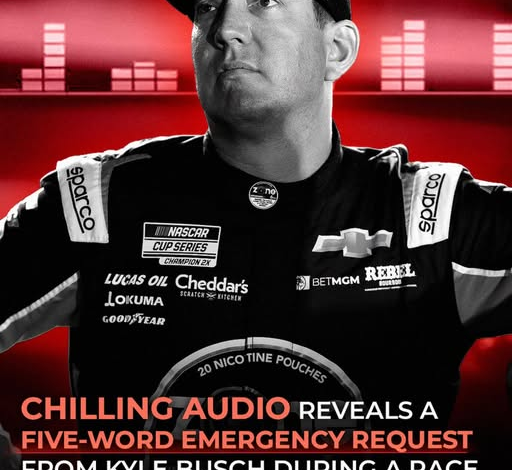
Busch’s final public appearances became even heavier once older radio audio resurfaced from Watkins Glen earlier that month. During the race weekend, Busch was heard asking his crew to locate Dr. Bill Heisel because he would “need a shot” after the race. At the time, FOX Sports reportedly described it merely as a sinus cold.
In hindsight, fans began connecting those moments desperately, trying to create a timeline that might somehow explain the suddenness of what followed.
Humans always search for patterns after loss.
If grief cannot undo death, it at least tries to make death feel understandable.
Yet the official details surrounding Busch’s passing remained painfully limited. NASCAR, Richard Childress Racing, and Busch’s family confirmed only that he had been hospitalized with a “severe illness” before his death was announced publicly later that same day. No official cause of death was immediately released.
That uncertainty deepened the emotional impact.
Fans were left staring at clips from only days earlier trying to reconcile the image of a victorious champion with the reality that he was already approaching the end of his life.
And throughout all of it, Busch’s final social media posts centered almost entirely around family.
His last Instagram message celebrated his son Brexton’s birthday with unmistakable pride and tenderness. Samantha Busch’s birthday tribute to her husband earlier that month described him not as a NASCAR icon, but as a loving husband and father whose strength held their family together.
Those posts changed the emotional framing of his death dramatically.
Fans no longer saw only the driver.
They saw the father who would not watch his children grow older.
The husband suddenly absent from family photos that had seemed so full of future only days earlier.
And perhaps that is why the grief spread far beyond racing statistics or championship records.
Because eventually, after enough years watching athletes, audiences stop connecting only to performance.
They connect to humanity.
That same humanity shaped the mourning surrounding Chase Pistone earlier in the year. Though Pistone never carried the national celebrity of Busch, he represented another equally important side of motorsports culture: grassroots racing, mentorship, family legacy, and the quieter devotion that sustains the sport outside major television broadcasts.
His brother Nick’s emotional Facebook post describing Chase as both his younger brother and best friend shattered people because of its rawness. There was no polished media language, only grief arriving in real time.
And the details surrounding Chase’s life made the loss resonate deeply throughout racing communities.
He came from a family rooted in NASCAR history, the grandson of Cup Series winner “Tiger” Tom Pistone. He started racing at six years old, spent decades competing, building cars, mentoring younger drivers, and helping shape grassroots motorsports culture from the inside.
That kind of contribution rarely becomes nationally famous.
But within racing communities, it matters enormously.
Because sports survive not only through stars, but through builders.
Teachers.
Crew chiefs.
Mentors.
People who spend years helping others chase dreams.
The circumstances surrounding Chase’s death added another layer of heartbreak when his family requested the 988 Suicide & Crisis Lifeline be shared publicly alongside the announcement. Suddenly the conversation expanded beyond mourning into mental health, emotional isolation, and the silent struggles many people carry beneath outward success.
Bubba Wallace’s emotional social media posts reflected that atmosphere directly. He wrote openly about sadness, fragility, and the emotional weight of losing someone from the racing world while simultaneously confronting unrelated violence elsewhere in the news.
The posts felt less like commentary and more like exhaustion.
Collective exhaustion.
Because eventually repeated grief forces even highly competitive cultures to acknowledge vulnerability publicly.
And vulnerability remains difficult inside environments built around toughness.
That may be the hidden thread connecting both Kyle Busch and Chase Pistone’s deaths emotionally for fans:
they shattered the illusion that passion alone protects people.
Racing culture celebrates endurance constantly.
Push through pain.
Keep competing.
Stay focused.
Handle pressure.
But no amount of talent, toughness, or determination grants immunity from illness, emotional struggle, or mortality itself.
Eventually every helmet comes off.
Every engine falls silent.
What remains afterward is not only statistics or trophies, but emotional imprint.
Kyle Busch leaves behind championship banners, unforgettable rivalries, and generations of fans who spent Sundays emotionally invested in his victories and failures. Chase Pistone leaves behind younger racers shaped by his mentorship, family members carrying his memory, and grassroots communities forever altered by his absence.
Different scales of fame.
Same human loss.
And perhaps the deepest sadness underneath both stories is this:
only after someone disappears do we fully understand how much emotional space they quietly occupied in the lives around them.
Now NASCAR moves forward carrying both absences at once.
The races continue.
Cars still line up.
Fans still gather.
Engines still roar.
But somewhere beneath all that noise lives a quieter awareness now —
that every celebration,
every interview,
every ordinary moment under stadium lights
might matter far more than anyone realizes while it is happening.