Used teabags offer surprising value long after your cup is finished, making them a smart item to keep instead of throwing away. From soothing skin irritation to refreshing household surfaces, these seven simple remedies reveal how a small leftover can provide practical, everyday benefits.

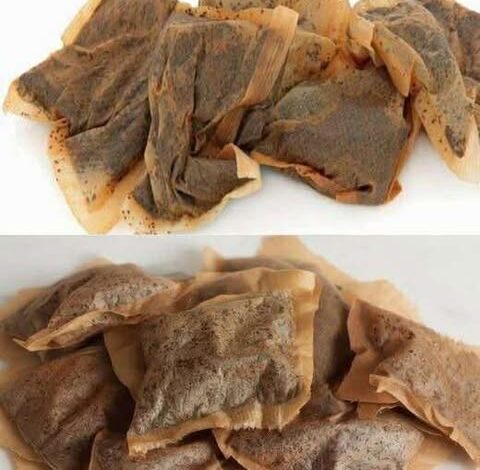
Most people make one simple mistake after brewing a cup of tea.
They throw the tea bag away.
It seems logical. The water has changed color, the flavor has been extracted, and that soggy little sachet appears to have finished its job.
But before you toss it into the trash, take another look.
A used tea bag may still have a few surprisingly practical uses around the home—from soothing tired-looking eyes to helping with greasy dishes and eventually returning organic material to the garden.
The secret isn’t magic.
It’s simply learning to see “waste” differently.
One of the most familiar uses involves cooling the skin.
After steeping, allow a tea bag to cool completely. A cool, damp black tea bag can feel soothing against mildly irritated or sun-exposed skin.
The cooling moisture itself can provide temporary comfort, while tea naturally contains tannins and other plant compounds.
There’s an important limit, though.
A tea bag is not appropriate treatment for a serious burn. Burns that blister extensively, appear deep, cover a large area, involve sensitive locations, or cause significant pain should receive proper medical attention.
For minor discomfort, however, a cool compress—including a cooled tea bag—may simply feel good.
Then there are those mornings when your face reveals exactly how little sleep you got.
Instead of immediately throwing away your morning tea bags, refrigerate them briefly.
Once they’re comfortably cool—not frozen—place them gently over your closed eyelids for several minutes.
The cold can temporarily reduce puffiness and provide a refreshing sensation around tired eyes.
It won’t erase sleeplessness.
But sometimes a few quiet minutes with a cool compress is exactly what exhausted eyes need.
Green tea has also developed a reputation in home-remedy circles because it contains antioxidant compounds.
That has led to claims that used green tea bags can treat everything from acne to warts.
This is where it’s worth separating an interesting idea from established treatment.
Research has investigated compounds derived from green tea for certain skin conditions, but that does not mean an ordinary used green tea bag is a proven cure for a wart.
Persistent, painful, bleeding, changing, or uncertain skin growths should be evaluated appropriately rather than repeatedly treated with kitchen remedies.
But your used tea bag doesn’t need to perform medical miracles to be useful.
Take it into the kitchen instead.
Greasy cookware sometimes benefits from soaking before scrubbing, and adding used tea bags to warm soaking water is a popular household trick.
The warm water does much of the heavy lifting by loosening residue, while tea’s tannins may offer some additional help with grime.
For stubborn grease, proper dishwashing detergent remains the more dependable solution.
Still, if you’re already soaking a pan, giving those tea bags one final job costs almost nothing.
And then comes perhaps their most natural destination:
the garden or compost pile.
Tea leaves are organic material and can contribute to compost rather than heading directly into household trash.
But don’t automatically bury the entire bag.
Some tea bags contain plastic fibers, staples, adhesives, or other materials that don’t readily break down. Check whether the particular bag is genuinely compostable. If you’re uncertain, tear it open and compost the tea leaves while disposing of the wrapper appropriately.
Those leaves can join other compostable kitchen scraps and eventually become part of material that supports healthier soil.
It’s a wonderfully circular ending.
Leaves are grown.
They’re harvested and dried.
You steep them in water.
You enjoy the drink.
Then instead of immediately treating what’s left as garbage, you find another use before returning the organic material to the earth.
None of these ideas will revolutionize your life.
And that’s precisely what makes them appealing.
Reducing waste doesn’t always require buying specialized reusable products or completely reorganizing your household.
Sometimes it begins with one tiny question:
Can I use this once more before throwing it away?
A glass jar becomes storage.
An old towel becomes a cleaning cloth.
Vegetable scraps become compost.
And yesterday’s tea bag gets one final purpose.
There’s also something quietly satisfying about extracting usefulness from an object most people dismiss without thinking.
Not because a tea bag is valuable.
Because the habit is.
It teaches you to pause before discarding something.
To notice what you already have before buying something else.
To recognize that sustainability is often built from hundreds of unremarkable decisions rather than one dramatic gesture.
So tomorrow, when you lift that tea bag from your mug, don’t automatically aim for the trash.
Let it cool.
Reuse it where appropriate.
Compost the leaves if you can.
Then finally let it go.
It may only be a soggy bundle of leaves.
But sometimes living with less waste begins with realizing that “used” and “useless” aren’t necessarily the same thing.