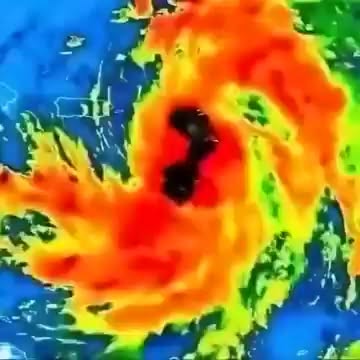
The warning signs are no longer subtle.
Across weather centers, meteorologists are choosing their words carefully, but the concern beneath their calm delivery is impossible to miss. Over warm ocean waters, a wide area of thunderstorms is beginning to organize. What looked scattered only hours earlier is now showing signs of rotation, slowly pulling itself together with every new satellite image.
The atmosphere is giving it room to grow.
Warm seas are feeding it. Moist air is wrapping around it. Upper-level winds are becoming more favorable. Piece by piece, the system is gaining structure, and forecasters are watching closely as it moves closer to becoming something more dangerous than a cluster of storms.
For millions of people from the Gulf Coast to the Carolinas, the forecast has suddenly become personal.
Communities that were quiet a few days ago now find themselves inside shaded areas on weather maps, staring at projected tracks and cones of uncertainty. Every model update brings a fresh wave of questions. Will it turn east? Will it strengthen? Will the worst stay offshore, or will one of those thin forecast lines become the path that changes everything?
Along beaches, barrier islands, and low-lying neighborhoods, preparation has already begun.
Gas tanks are being filled. Generators are being tested. Store shelves are thinning as residents pick up water, batteries, flashlights, and supplies. Phones refresh radar loops again and again, searching for comfort in images that offer none.
Officials continue repeating the same message: do not wait for the final track.
Storms do not need a direct hit to cause disaster. The most dangerous impacts can arrive far from the center, in flooded streets, overwhelmed drainage systems, washed-out roads, and neighborhoods cut off long after the winds have passed. Inland communities can suffer just as deeply as coastal towns when heavy rain stalls and rivers rise.
That is why early preparation matters.
Not panic.
Not last-minute rushing.
Preparation.
As clouds gather and pressure quietly falls, families are being urged to review evacuation routes, secure outdoor items, charge devices, check on elderly neighbors, and make decisions before conditions deteriorate.
Because once the storm fully takes shape, choices become harder.
Roads fill.
Stores empty.
Time disappears.
For now, the system remains under watch, still developing, still uncertain, still capable of changing course. But the message from forecasters is clear: uncertainty is not safety.
The storm does not need a name to be taken seriously.
And for those in its possible path, the safest move is to act before the sky makes the warning impossible to ignore.