Every night, your body spends hours in the same position.
While you’re asleep, your muscles relax, your joints remain relatively still, and your spine depends on the support of your mattress and pillows. That’s why the way you sleep isn’t just a matter of comfort—it can influence everything from back pain and heartburn to breathing quality and how refreshed you feel in the morning.
There is no single “perfect” sleeping position for everyone.
The healthiest choice often depends on your individual body, medical conditions, and personal comfort. Understanding the advantages and drawbacks of each position can help you make small adjustments that support better sleep and overall well-being.
Sleeping on Your Left Side
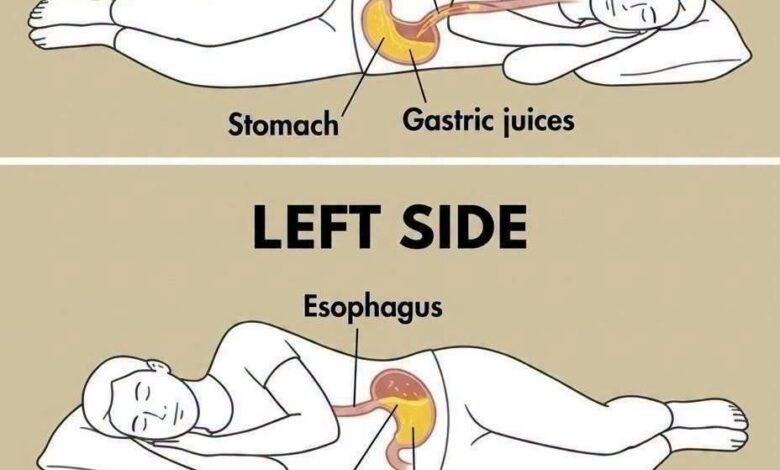
For many people, sleeping on the left side offers several potential health benefits.
One of the most widely recognized advantages is its effect on acid reflux and heartburn. Because of the way the stomach connects to the esophagus, lying on the left side may help keep stomach acid where it belongs, making it less likely to flow backward and cause nighttime discomfort.
Left-side sleeping may also support digestion by allowing food to move more naturally through the digestive tract. During pregnancy, healthcare professionals often recommend this position because it can improve blood flow to the uterus, kidneys, and developing baby while reducing pressure on major blood vessels.
Many people with mild back discomfort also find that side sleeping feels more comfortable, particularly when the spine is well supported.
Sleeping on Your Right Side
Sleeping on the right side is equally comfortable for many people and is not inherently unhealthy.
However, individuals who frequently experience acid reflux may notice that symptoms become worse in this position. Research suggests that lying on the right side can make it easier for stomach contents to move toward the esophagus in some people, increasing the likelihood of nighttime heartburn.
That said, if you don’t struggle with reflux and you sleep comfortably on your right side, there is usually no reason to change your preferred position.
Comfort remains an important part of healthy sleep.
Sleeping on Your Back
Back sleeping is often praised for its ability to maintain a relatively neutral alignment of the head, neck, and spine.
When supported by an appropriate pillow and mattress, this position may reduce pressure on joints and help some people wake with less neck or back stiffness. It also minimizes facial contact with the pillow, which some people appreciate for skin comfort.
However, back sleeping is not ideal for everyone.
For people who snore heavily or have obstructive sleep apnea, lying flat on the back can allow the tongue and soft tissues of the throat to fall backward, partially blocking the airway. This can worsen snoring and interrupt breathing during sleep.
If your partner frequently notices loud snoring or pauses in your breathing, it’s worth discussing these symptoms with a healthcare professional, as they may indicate sleep apnea, a condition that often requires evaluation and treatment.
Sleeping on Your Stomach
Although some people naturally fall asleep on their stomachs, this position is generally considered the least supportive for long-term spinal comfort.
Sleeping face down often requires turning the neck to one side for extended periods, which may contribute to neck stiffness or discomfort. It can also place additional pressure on the lower back because maintaining a neutral spinal position becomes more difficult.
For some people, however, stomach sleeping may temporarily reduce snoring.
If it’s the only position that allows you to sleep comfortably, small adjustments—such as using a thinner pillow or placing a pillow beneath the hips—may help reduce strain.
Small Changes Can Make a Big Difference
Regardless of your preferred position, proper support is essential.
If you sleep on your side, placing a pillow between your knees can help keep your hips and spine aligned, reducing pressure on the lower back.
Back sleepers may benefit from placing a small pillow beneath their knees to maintain the natural curve of the lower spine.
The quality of your mattress and pillow matters just as much as your sleeping position. A mattress that is too soft or too firm can make it difficult to maintain healthy alignment, while an unsupportive pillow may contribute to neck pain.
Listen to Your Body
The goal isn’t to force yourself into a position that feels unnatural.
Instead, pay attention to how you feel when you wake up.
Do you experience frequent heartburn?
Does your back feel stiff every morning?
Are you waking repeatedly because of snoring or breathing difficulties?
Your body often provides valuable clues about whether your sleeping posture is working for you or against you.
Making gradual adjustments is usually more successful than trying to completely change your sleeping habits overnight. A supportive pillow, a slightly different position, or a small change in mattress support can sometimes make a noticeable difference over time.
The Bottom Line
Your sleeping position is far more than a nightly habit.
It quietly influences your breathing, digestion, spinal alignment, circulation, and overall comfort for nearly a third of your life.
For many people, sleeping on the left side may help reduce acid reflux and support circulation. Back sleeping can promote healthy spinal alignment but may worsen snoring or sleep apnea. Side sleeping with proper pillow support can ease back discomfort, while stomach sleeping may increase strain on the neck and lower back.
Ultimately, the best sleeping position is the one that meets your body’s unique needs while allowing you to wake feeling rested, comfortable, and refreshed.
Rather than chasing a perfect posture, focus on finding one that supports your health, minimizes discomfort, and lets your body do what it was designed to do—restore itself while you sleep.
Sometimes the smallest adjustment you make before closing your eyes can become one of the healthiest habits you practice every single day.