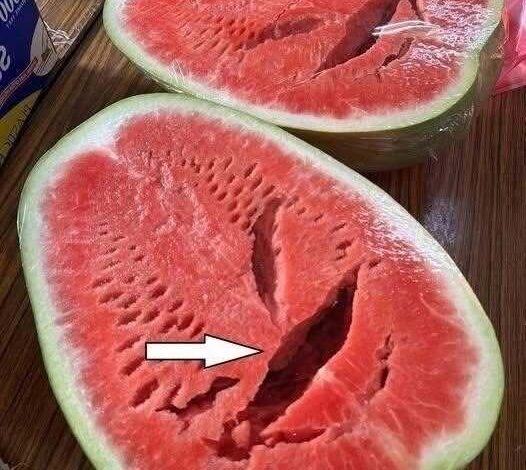
Most people don’t expect a watermelon to spark controversy.
You bring one home from the store, slice it open, and anticipate crisp, sweet, refreshing fruit. So when the knife cuts through the rind and reveals large cracks, hollow spaces, or strange separations inside the flesh, it’s easy to feel alarmed.
For many consumers, that moment is followed by a familiar question:
Is this watermelon safe to eat?
The concern has only grown in recent years as photos of cracked watermelons spread rapidly across social media. Dramatic captions often suggest that internal fissures are proof of dangerous chemicals, contaminated farming practices, or hidden health risks.
The reality, however, is far more nuanced.
While unusual cracks inside a watermelon can sometimes indicate quality issues, they are not automatically a sign that the fruit is unsafe. In many cases, the explanation is much simpler and far less alarming than online rumors suggest.
Why Watermelons Crack on the Inside
One of the most common causes of internal cracking is rapid growth.
Watermelons are highly sensitive to changes in growing conditions. During periods of drought, fruit development may slow significantly. If heavy rain or substantial irrigation suddenly follows, the watermelon can begin expanding faster than its internal structure can comfortably support.
As the fruit grows rapidly, pressure builds inside.
Eventually, the flesh may separate in certain areas, creating hollow spaces, cracks, or internal fissures that remain hidden until the fruit is cut open.
Temperature fluctuations can contribute as well.
When watermelons experience alternating periods of extreme heat and cooler weather, growth may become uneven. The fruit continues developing, but not always in a perfectly uniform way, leading to texture variations and internal separation.
While these cracks may look dramatic, they are often simply the result of natural agricultural processes rather than contamination or disease.
Damage Can Happen After Harvest
Growing conditions aren’t the only factor.
Watermelons are large, heavy fruits that travel long distances before reaching grocery stores and markets. Along the way, they may be dropped, bumped, stacked improperly, or subjected to rough handling.
Even when the rind appears perfectly intact, internal bruising can occur.
The flesh may shift or separate from impact, creating cracks or hollow areas that become visible only after slicing the fruit open.
This is similar to what happens when a peach or apple develops internal bruising despite looking normal on the outside.
The damage isn’t always visible immediately.
Overripeness Can Also Play a Role
Sometimes the issue isn’t how the watermelon was grown or transported.
It’s simply too ripe.
As watermelons age beyond their ideal eating stage, the flesh begins losing firmness. The crisp texture that makes fresh watermelon so appealing starts to break down, sometimes creating softer areas, hollow spaces, or internal separation.
An overripe watermelon may still appear healthy externally.
That’s why examining the fruit after cutting is often more important than relying solely on its appearance before purchase.
The Chlorfenuron Debate
One reason cracked watermelons generate so much online attention is the frequent mention of a chemical called chlorfenuron.
Chlorfenuron is a synthetic plant growth regulator designed to encourage cell division and promote fruit development. Because it can accelerate growth, some consumers associate unusual internal cracking with its use.
The logic is understandable.
If rapid growth contributes to internal separation, a substance that stimulates growth may potentially influence fruit structure.
However, there’s an important distinction:
A cracked watermelon does not automatically mean chlorfenuron was used.
Internal cracks can occur for many reasons unrelated to chemical treatment, including weather patterns, irrigation changes, physical damage, and overripeness. Seeing cracks alone is not enough to determine how the fruit was grown.
This is where many social media claims become misleading.
They often present a single visual feature as proof of something much larger, even when multiple explanations are possible.
What Actually Matters Most: Signs of Spoilage
For consumers, the most practical concern is not whether a watermelon contains cracks.
It’s whether the watermelon has spoiled.
A watermelon with minor internal fissures may still be perfectly edible if the fruit otherwise appears fresh. In contrast, a watermelon with no visible cracks could still be unsafe if it shows signs of deterioration.
After cutting a watermelon, pay attention to several key indicators:
Smell
Fresh watermelon should have a clean, mildly sweet aroma.
If the fruit smells sour, fermented, chemical-like, or unpleasant, it’s best to discard it.
Texture
The flesh should feel moist and crisp.
If it becomes slimy, excessively mushy, or develops unusual soft patches, spoilage may be occurring.
Appearance
Minor cracks alone are not necessarily concerning.
However, visible mold, unusual discoloration, or extensive breakdown of the flesh should be treated as warning signs.
Taste
Watermelon should taste fresh and sweet.
Any sour, bitter, fermented, or otherwise unusual flavor indicates the fruit should not be eaten.
How to Pick a Better Watermelon
While no method guarantees perfection, several signs can improve your chances of selecting a high-quality watermelon.
Choose one that feels heavy for its size. Extra weight often indicates a high water content, which generally contributes to better texture and flavor.
Look for a creamy yellow field spot—the area where the watermelon rested on the ground while ripening. This often suggests the fruit had adequate time to mature naturally.
Inspect the rind carefully.
A good watermelon should feel firm, with no obvious soft spots, major dents, or signs of decay. A dried stem may also suggest that the fruit ripened fully before harvest.
These indicators aren’t perfect, but they can help reduce the likelihood of bringing home an overripe or damaged watermelon.
Why Social Media Often Gets It Wrong
Food-related rumors spread quickly because they tap into something powerful: fear.
A photograph of a cracked watermelon is visually striking. Without context, it can appear alarming. Add a dramatic caption about chemicals or hidden dangers, and people naturally become concerned.
But agriculture is complicated.
Nature rarely produces identical fruits every time.
Watermelons develop differently depending on weather, water availability, soil conditions, harvesting practices, transportation, and storage. Variations in appearance are often normal parts of the growing process rather than evidence of danger.
That doesn’t mean consumers should ignore potential risks.
It simply means that one visual imperfection should not automatically trigger panic.
Knowledge is more useful than fear.
The Bottom Line
Finding cracks inside a watermelon can be surprising, but it isn’t necessarily a reason to throw the fruit away.
Internal fissures commonly result from natural factors such as irregular watering, rapid growth after dry periods, temperature changes, handling damage, or overripeness. While these conditions may affect texture and quality, they do not automatically make the watermelon unsafe.
The most important evaluation happens after the fruit is opened.
If the watermelon smells fresh, feels crisp, and tastes normal, minor cracks alone are generally not a cause for concern. On the other hand, signs such as mold, sliminess, sour odors, or unusual flavors indicate the fruit should be discarded.
In the end, common sense remains the best guide.
Not every imperfection signals danger. Sometimes a cracked watermelon is simply a reminder that natural foods don’t always grow into perfect shapes—and that’s perfectly normal.