A hospital may appear calm from the outside, but beneath that calm is a world of constant motion, split-second decisions, and relentless responsibility. Every corridor, patient room, and nursing station carries its own demands. At the center of it all are nurses—professionals who spend their days caring for patients, responding to emergencies, and keeping healthcare systems running.
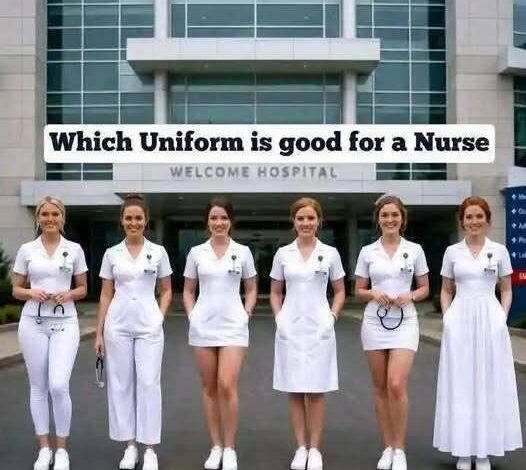
Imagine six nurses standing side by side. Each wears a different uniform. Some choose traditional scrub pants and a loose-fitting top. Others wear more tailored designs with a modern, professional appearance. One wears a skirt-style uniform that reflects a more formal and traditional approach to workplace attire.
At first glance, the differences seem purely visual. All of the uniforms appear neat, professional, and appropriate. But healthcare is not an environment where appearance alone determines effectiveness.
Nursing is a profession built on movement. A typical shift can involve miles of walking, frequent bending, lifting, reaching, and responding quickly to unexpected situations. Nurses move from room to room, assist patients, transport equipment, and react to urgent alarms that can change the course of a day within seconds.
In that reality, a uniform becomes more than clothing. It becomes a tool.
The most effective uniforms are often the ones that allow nurses to focus entirely on their work rather than on what they are wearing. Freedom of movement, comfort during long shifts, durability, and practicality become essential. When healthcare professionals can move easily and comfortably, they are better equipped to meet the physical demands of the job.
This is one reason scrub-style uniforms have become the standard in hospitals around the world. Their design prioritizes flexibility, comfort, and functionality. They are easy to clean, easy to wear, and well suited to the fast-paced environment of modern healthcare.
That does not mean other uniform styles lack professionalism or value. Different healthcare settings may require different attire, and personal preference can also play a role. However, when efficiency, mobility, and comfort are the primary priorities, scrubs consistently prove to be a practical choice.
Ultimately, the discussion is about more than clothing. It reflects the balance between tradition and function, appearance and performance. In healthcare, where every moment can matter, the most successful solutions are often the ones designed to support the people doing the work.
The best uniform is not necessarily the most stylish or the most formal. It is the one that helps nurses perform their jobs safely, comfortably, and effectively—especially when patients need them most.