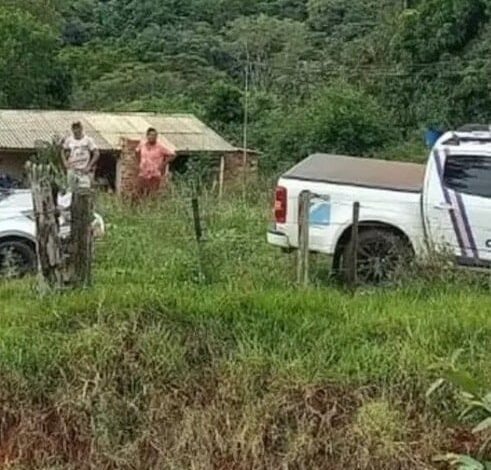
When the missing teens were finally found inside the truck, relief did not arrive cleanly.
People often imagine these moments unfolding with tears, embraces, ambulances pulling away, and families collapsing gratefully into one another’s arms. But real life, especially when tragedy shadows the edges of a search, is rarely that simple. Instead, the discovery left the entire community suspended between opposing emotions so intense they almost canceled each other out:
thank God they were found,
and
what exactly happened inside that truck?
By then, the search had already consumed the town.
For days, neighbors moved through their routines distracted and half-present, checking phones every few minutes for updates that never seemed complete enough. Volunteers walked fields carrying flashlights through cold grass long after midnight. Flyers curled damply on utility poles and storefront windows. Parents who barely knew the missing teenagers still found themselves staring at family photographs online, trying to imagine the terror of not knowing where your child is.
That uncertainty changes communities physically.
Conversations become quieter.
People lock doors earlier.
Every unfamiliar car suddenly draws attention.
Because when young people vanish unexpectedly, ordinary life itself starts feeling unreliable.
The truck had reportedly been discovered in an area many residents thought had already been searched. That detail alone intensified public anxiety immediately. Some neighbors questioned how it could have remained unnoticed. Others wondered whether investigators missed something earlier or whether the vehicle had been moved afterward. Rumors multiplied faster than official information could contain them.
That always happens during high-profile disappearances.
Human beings struggle to tolerate informational voids. When facts remain incomplete, imagination rushes in aggressively to fill the silence.
By the time authorities confirmed the discovery publicly, social media had already fractured into competing theories:
an accident,
a cover-up,
a kidnapping,
an overdose,
foul play,
neglect,
someone hiding evidence,
someone too frightened to come forward.
Each possibility carried its own emotional horror.
And while investigators worked methodically around the vehicle, families stood trapped in the cruelest emotional position imaginable:
close enough to know the search had ended,
but not yet close enough to understand what ending they had actually received.
Witnesses later described the scene around the truck as strangely subdued despite the massive law enforcement presence. There were no dramatic outbursts initially. Just clusters of exhausted people standing silently behind barriers while officers photographed, measured, documented, and moved carefully around the site.
The quiet unsettled people most.
Because silence during a crisis often signals that reality has become heavier than language.
Parents of the teens reportedly asked the same questions repeatedly:
Were they conscious when found?
How long had they been there?
Did they suffer?
Did anyone know sooner?
Questions like those emerge instinctively after traumatic discoveries because the mind searches desperately for details that might soften unbearable possibilities.
Usually none do.
And surrounding all of it was another painful tension:
the conflict between public curiosity and private grief.
Communities understandably want answers after tragedies involving missing teenagers. Fear spreads quickly when details remain unclear because people instinctively measure their own safety against whatever happened. Parents imagine their own children. Teenagers imagine themselves.
But for the families involved, the investigation was not a mystery story.
It was personal devastation unfolding in real time beneath cameras and speculation.
Every rumor became another wound.
Police repeatedly urged patience, emphasizing that evidence needed careful analysis before conclusions could be reached. Yet patience becomes difficult once emotion outruns information. By then, residents had already spent days emotionally invested in the search. Many felt connected to the outcome despite never meeting the teens personally.
That emotional investment transformed the eventual discovery into something communal.
The grief spread outward.
Teachers cried privately before classes.
Store owners discussed the case in hushed voices with customers.
Churches added the families to prayer lists.
Teenagers who previously felt invincible suddenly became quieter around their parents.
Disappearance stories affect young people profoundly because they expose how fragile ordinary freedom really is. One minute someone is driving with friends, texting casually, making plans for next weekend.
Then suddenly entire towns are searching for them beneath helicopters and floodlights.
The recovered truck itself became a symbol larger than the investigation.
Photographs of it circulated everywhere online:
the taped-off perimeter,
the shattered emotional atmosphere around it,
the unbearable ordinariness of the vehicle itself.
That last detail lingered with people especially.
Because tragedy rarely arrives wrapped in cinematic imagery.
Often it looks painfully normal.
An ordinary truck.
An ordinary road.
Ordinary teenagers who likely believed they would return home by evening.
That contrast makes loss harder to emotionally process.
As investigators continued examining evidence, discussions broadened beyond the immediate case itself. Parents began talking more openly about communication, location sharing, mental health, substance use, late-night driving, and the invisible pressures teenagers carry privately.
Not because anyone knew exactly what happened yet.
Because uncertainty forces reflection.
Communities often search for preventative meaning after traumatic events. People want reassurance that tragedy follows identifiable rules:
better supervision,
better choices,
better systems,
better awareness.
Sometimes those conversations genuinely help.
Sometimes they simply help people feel less helpless.
But underneath every theory and debate remained the same painful truth:
real young lives sat at the center of the story.
Not symbols.
Not headlines.
Teenagers.
People with unfinished futures, inside jokes, playlists, insecurities, dreams, arguments with parents that suddenly no longer mattered, and bedrooms waiting exactly as they left them.
That humanity is easy to lose once investigations become public spectacles.
Yet it matters most.
Friends of the teens later described the emotional whiplash of those days vividly. One moment they clung to hope because no official confirmation had arrived. The next, they found themselves staring at news alerts and police tape trying to understand how hope had transformed into mourning so quickly.
Grief after missing-person cases often arrives unusually complicated because families and communities spend so long emotionally suspended between possibilities. Hope survives longer than logic sometimes allows. People convince themselves the missing person will walk through the door exhausted but alive because the alternative feels impossible to survive mentally.
Then reality arrives all at once.
And everyone must emotionally reorganize themselves around absence instead of uncertainty.
The investigation itself may eventually provide answers.
Maybe complete ones.
Maybe only partial truths.
But regardless of what authorities ultimately conclude, the emotional impact on the community has already become permanent.
Because once trust in ordinary safety fractures, rebuilding it takes time.
Parents begin texting children more often.
Friends insist on confirmation messages after late-night drives.
People notice abandoned vehicles differently.
Communities become briefly softer with one another after realizing how quickly ordinary life can collapse into headlines.
That may be the only fragile good that sometimes emerges from tragedy:
renewed awareness of one another.
In the weeks ahead, investigators will continue sorting evidence carefully, separating rumor from fact, constructing timelines, and trying to understand exactly what happened inside that truck. Families will continue waking each morning into a reality they never imagined surviving. Friends will replay old conversations searching for hidden warning signs that likely were never there.
And the community itself will continue carrying the uneasy memory of those days —
the search parties,
the flashing lights,
the unbearable waiting,
and the moment relief finally arrived carrying grief beside it.
Because sometimes finding people does not end the heartbreak.
It only changes its shape.