All Hotly Discussed Male Country Stars at 2026 ACM Awards, Igniting Buzz over Their Red Carpet Looks — Photos

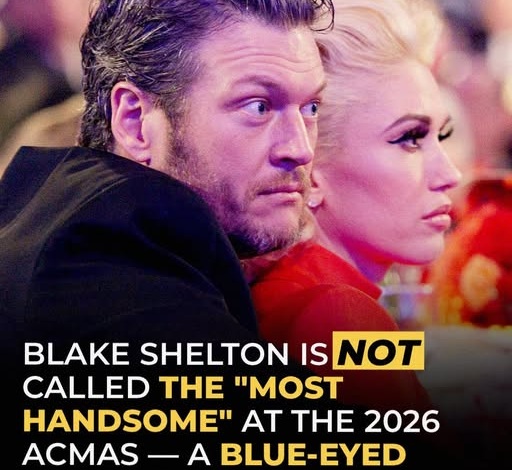
The country music red carpet has become a strange test of identity.
Not just for the artists walking across it,
but for the fans watching from home.
Every outfit,
every hairstyle,
every expression,
every wrinkle,
every pair of sneakers or cowboy boots now carries symbolic weight far beyond fashion itself.
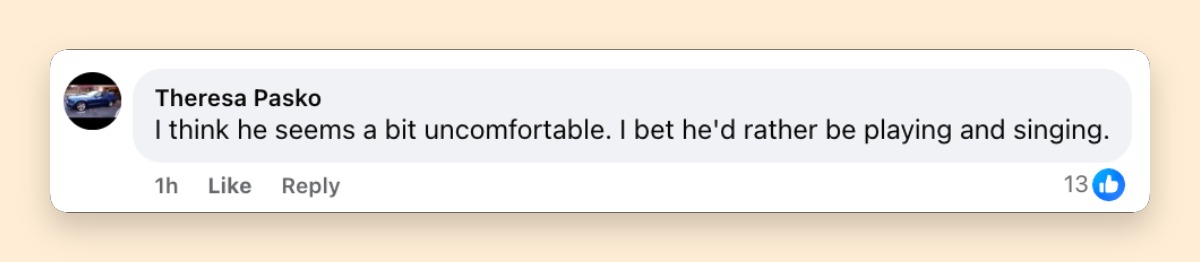
A netizen’s comment about one of the male stars attending the ACM Awards on May 17, 2026 | Source: Facebook/peoplecountry
Chris Stapleton
One photo can launch thousands of comments debating whether someone still looks “country enough,” whether fame changed them, whether they seem happy, aging well, authentic, uncomfortable, polished, or lost.
The 2026 ACM Awards in Las Vegas revealed that dynamic more clearly than ever.
Before the ceremony even officially began, photos of the male stars had already flooded social media, and almost instantly the internet transformed the arrivals into emotional narratives.
Some artists were praised for staying true to traditional country identity.
Others were criticized for evolving too far beyond it.
And some became the center of speculation simply because they looked thoughtful or tired in a photograph lasting less than a second.
In many ways, the red carpet no longer functions merely as fashion coverage.
It has become a giant projection screen for public expectations about masculinity, authenticity, celebrity, and aging inside country music culture.
Chris Stapleton represented perhaps the clearest example of what many country fans still emotionally trust.
He arrived wearing exactly the kind of outfit audiences expect from him:
dark blazer,
black shirt,
jeans,
boots,
long beard,
signature cowboy hat.
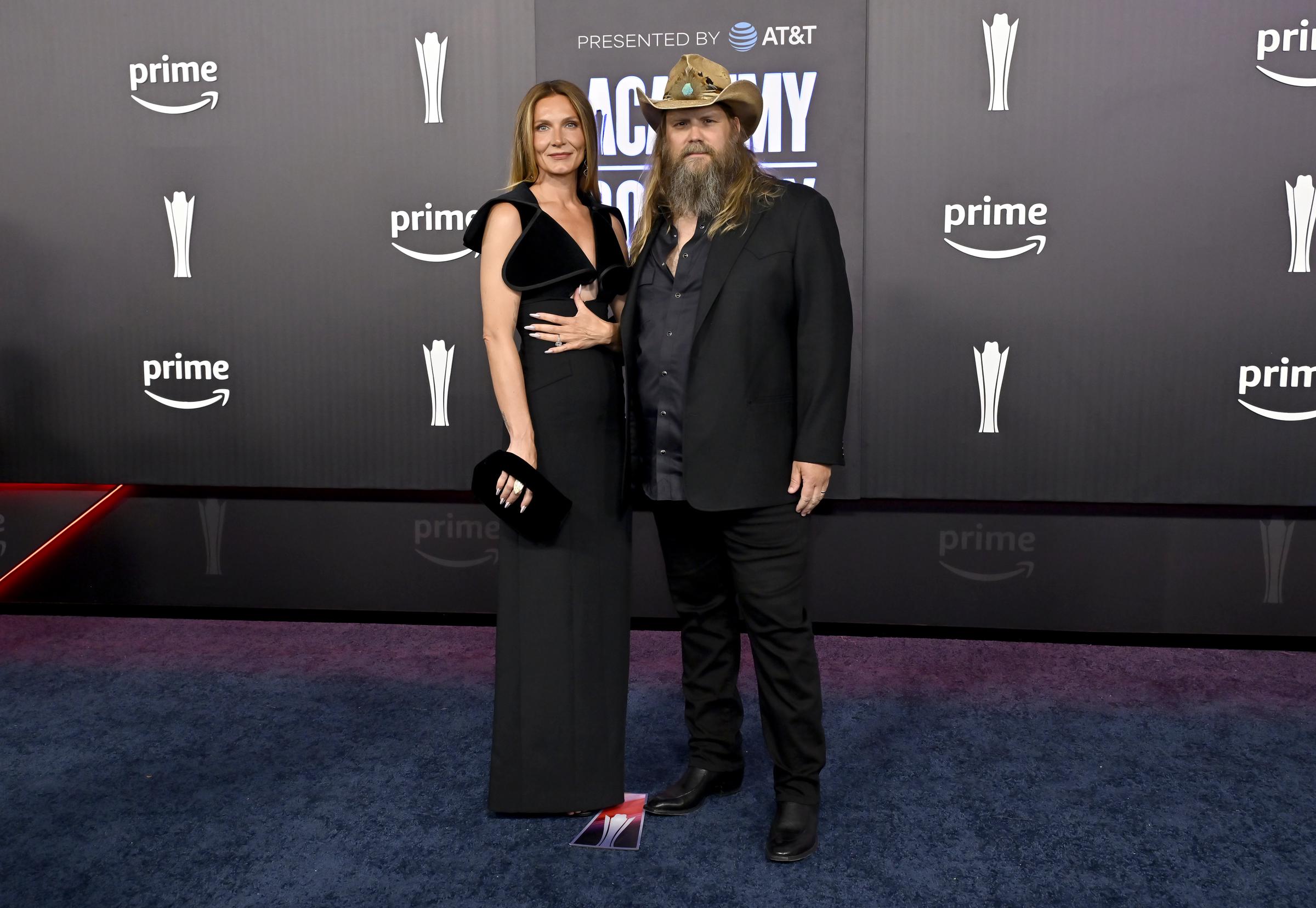
Morgane Stapleton and Chris Stapleton attend the 61st Academy of Country Music Awards in Las Vegas on May 17, 2026 | Source: Getty Images
Michael Bublé
Nothing about the look felt manufactured for internet virality.
And that consistency matters more than people realize.
In a celebrity culture built increasingly around reinvention, Chris Stapleton’s refusal to dramatically alter his image has become part of his credibility.
He dresses like himself.
Or at least like the version of himself audiences believe in.
Beside him stood Morgane Stapleton in a fitted black gown, elegant but understated, allowing the couple to appear coordinated without chasing spectacle.
That restraint itself felt almost refreshing amid the louder fashion moments surrounding them.
Because while Hollywood often rewards dramatic transformation, country music audiences still place enormous emotional value on familiarity.
Fans want growth,
but they also want continuity.
Michael Bublé approached the evening completely differently.
His electric-blue suit immediately separated him visually from the darker, earth-toned palette dominating the carpet.
The outfit felt polished,
Vegas-ready,
deliberately eye-catching.
And importantly, Bublé can pull off that kind of theatrical glamour partly because he exists slightly outside country music’s traditional masculinity expectations.
A country star arriving in the same bright blue tailoring might have faced harsher scrutiny.
That difference reveals something important:
country fashion still operates under emotional rules tied heavily to authenticity and ruggedness.
Certain stars are granted freedom to experiment.
Others are expected to remain symbols of grounded masculinity.
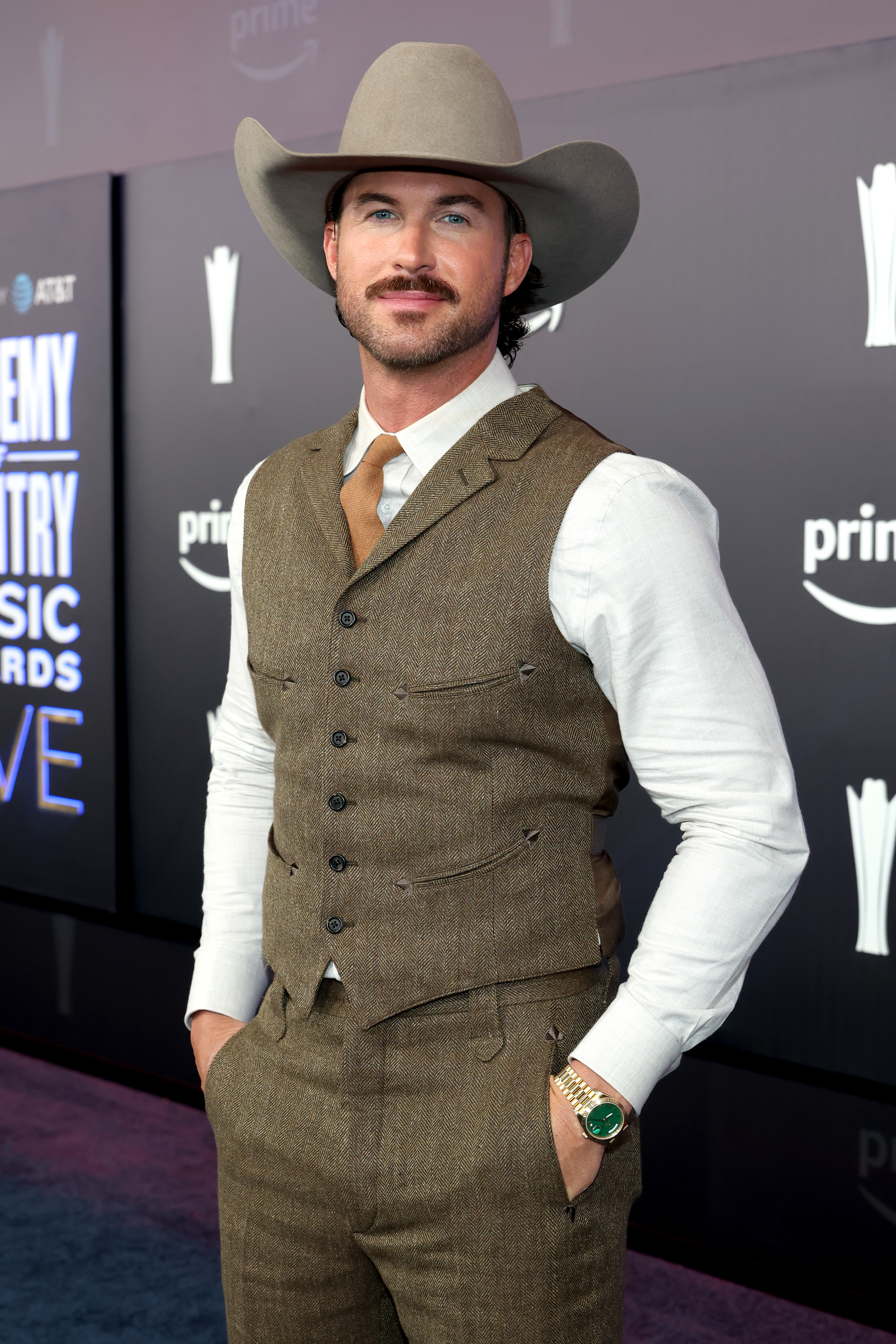
Riley Green attends the 61st Academy of Country Music Awards in Las Vegas on May 17, 2026 | Source: Getty Images
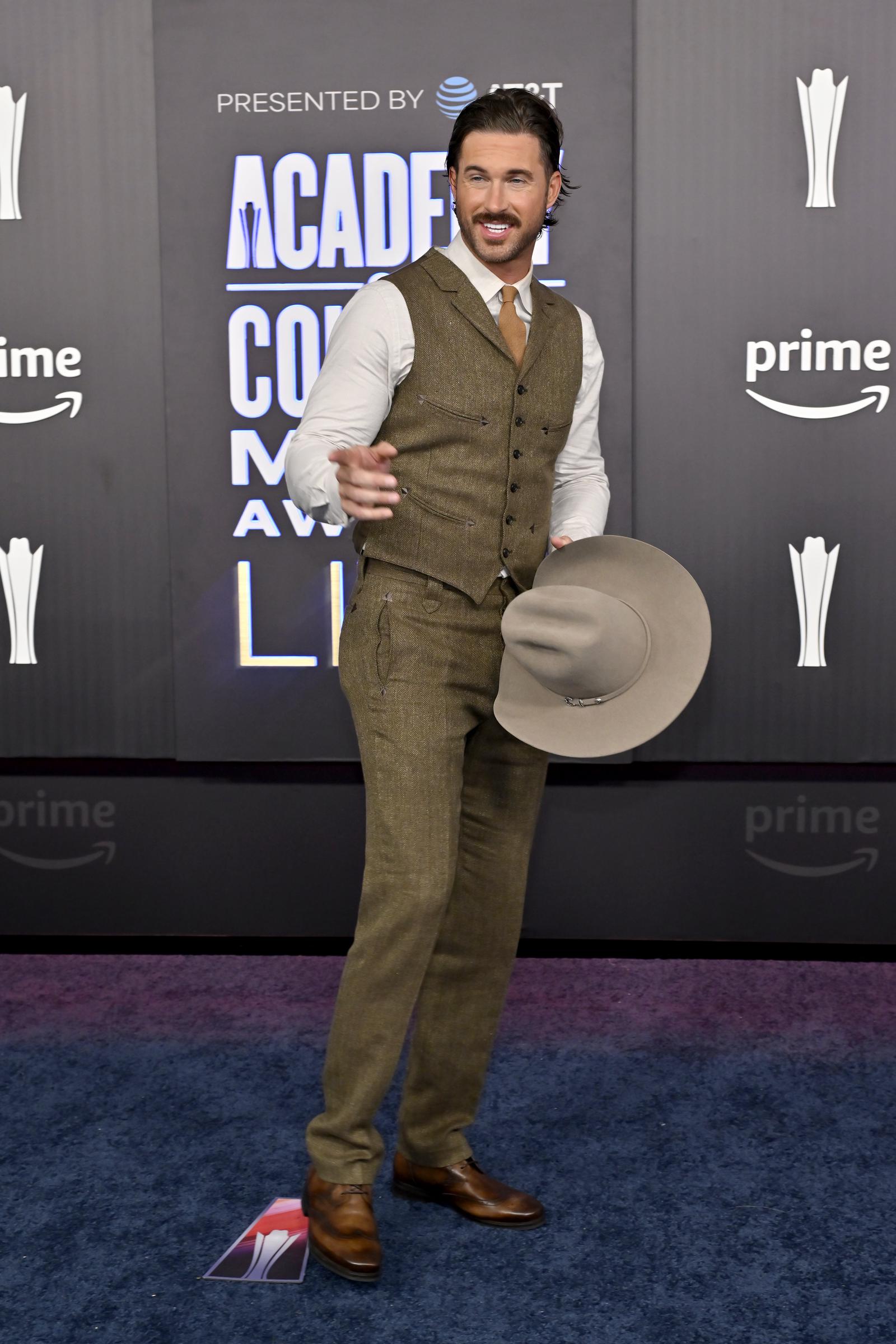
Riley Green poses during ACM Awards arrivals on May 17, 2026 | Source: Getty Images
Shaboozey perhaps represented the clearest sign of how rapidly country aesthetics are evolving.
His black leather coat, layered jewelry, leather pants, and cowboy hat blended Western imagery with modern streetwear influence in a way that would have looked almost unimaginable on a mainstream country carpet twenty years ago.
The look felt intentionally fashion-forward,
confident,
genre-blurring.
And maybe that is exactly where country music itself now stands culturally:
somewhere between old traditions and entirely new visual identities.
Artists like Shaboozey challenge older assumptions about what country masculinity is allowed to look like.
Not every fan feels comfortable with that evolution yet.
But the genre continues changing anyway.
Blake Shelton moved in the opposite direction entirely.
His dark vest, tie, button-down shirt, and acoustic guitar projected simplicity rather than fashion experimentation.
The message seemed almost intentional:
focus on the music.
Certain veteran stars no longer need red carpet risks to command attention. Their identities are already established deeply enough that visual familiarity becomes an advantage rather than a limitation.
Then came Riley Green,
whose appearance sparked one of the internet’s most revealing reaction cycles of the night.
Riley leaned heavily into classic Western masculinity:
brown three-piece suit,
boots,
cowboy hat,
textured tailoring,
hands casually in pockets.
At first glance, the look fit perfectly inside traditional country aesthetics.
Yet online commentary quickly shifted toward his hair and overall grooming.
“His hair always looks greasy.”
“He looks like he just got out of the shower.”
Those comments may sound superficial, but they reveal something larger about modern celebrity culture:
even rugged masculinity must now appear carefully curated.
Country music historically celebrated men who looked weathered,
dusty,
unpolished,
authentic.
But social media changed visual standards dramatically.
Now every image becomes permanent,
zoomable,
analyzable.
Even “effortless” masculinity must somehow appear photogenic.
At the same time, admiration flooded in too:
“He’s gorgeous.”
“Second most handsome man in the world.”
That contradiction defines internet celebrity culture perfectly.
The same image becomes evidence of attractiveness and imperfection simultaneously depending on who is looking.
Kane Brown represented another version of modern masculinity entirely.
His sleeveless pinstripe suit exposed tattooed arms beneath tailored fabric, blending formal styling with contemporary streetwear energy.
The look challenged older country expectations subtly but clearly.
Traditional country fashion often emphasized restraint and rugged simplicity.
Kane’s appearance embraced:
fashion awareness,
body display,
jewelry,
experimental tailoring.
And importantly, younger audiences increasingly accept that broader definition of masculinity naturally.
Tyler Hubbard leaned toward relaxed accessibility instead.
Tan blazer,
white shirt,
light jeans,
boots,
longer hair,
minimal styling.
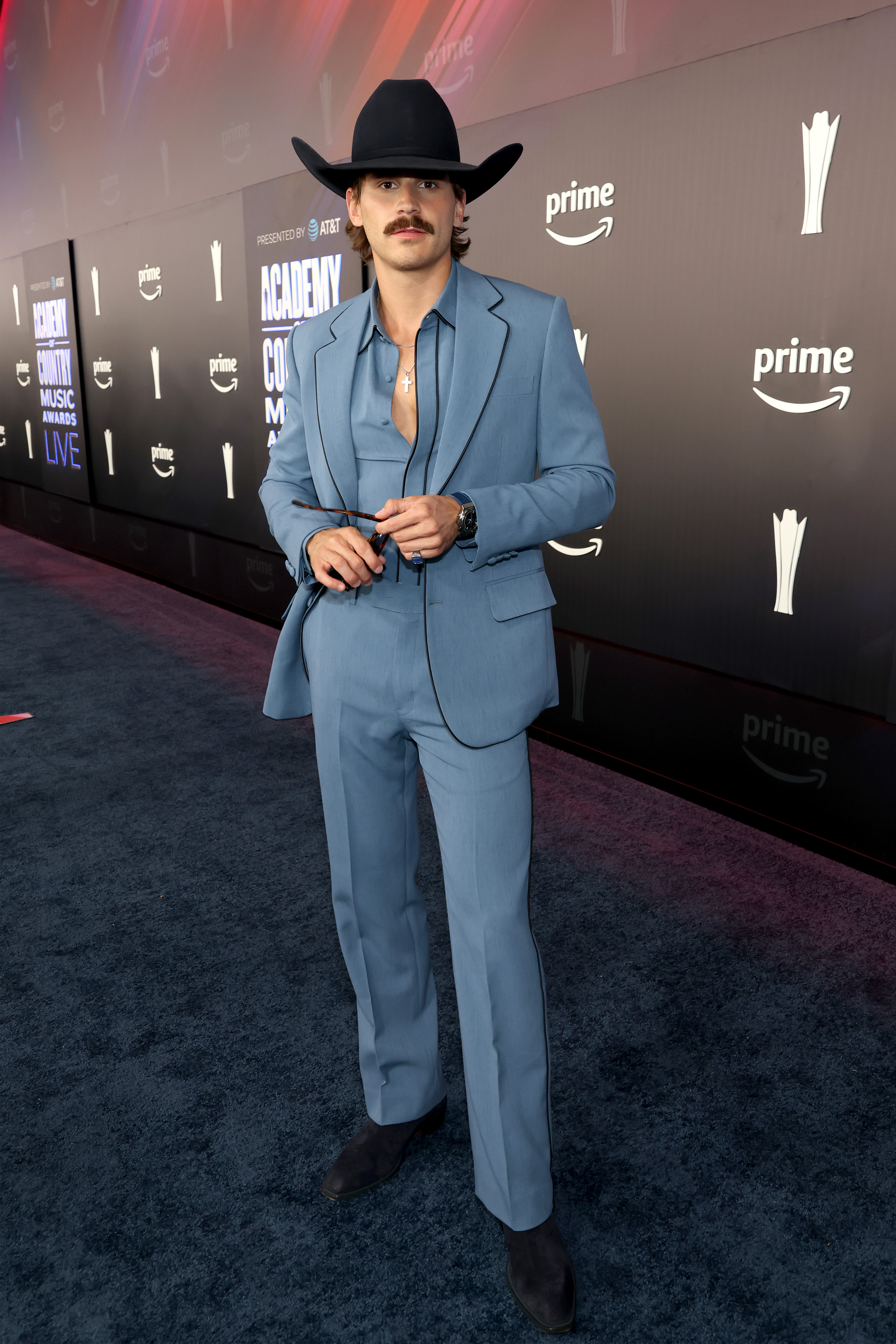
Tucker Wetmore steps onto the ACM Awards carpet in a powder-blue suit and black cowboy hat on May 17, 2026 | Source: Getty Images
Cody Johnson
The look projected the carefully cultivated illusion of effortlessness many celebrities now pursue:
successful but approachable,
famous but still relatable.
That balance matters especially in country music because fans often reject artists who appear too polished or disconnected from ordinary life.
Brooks & Dunn embodied something entirely different:
legacy.
Ronnie Dunn’s denim jacket and sunglasses beside Kix Brooks’s blazer and cowboy hat felt almost frozen outside trend cycles altogether.
They weren’t trying to reinvent country style.
They were preserving it.
Longtime country legends often become emotional anchors for audiences nostalgic for earlier eras of the genre — periods fans remember as simpler, more authentic, less influenced by celebrity culture and internet performance.
Whether that nostalgia reflects reality matters less than the emotional comfort it provides.
Dan + Shay represented country music’s increasing overlap with mainstream pop sophistication.
One wore a light mauve suit.
The other chose darker double-breasted tailoring.
The contrast looked intentional:
clean,
modern,
carefully styled.
Again, country fashion now comfortably exists much closer to Hollywood and mainstream music aesthetics than it once did.
Tucker Wetmore highlighted that shift further with a powder-blue suit paired with a cowboy hat and partially unbuttoned shirt.
The outfit blended traditional Western accessories with youthful modern styling, reflecting how younger country stars increasingly treat cowboy imagery as one fashion element among many rather than the entire identity itself.
Cody Johnson and Parker McCollum stayed closer to traditional visual territory:
blazers,
jeans,
boots,
cowboy hats,
belt buckles.
And perhaps that explains why so many fans emotionally connect with them.
Their appearance reassures audiences that some version of classic country identity still survives amid all the experimentation.
But no male star generated more emotionally loaded online reactions than Keith Urban.
And notably, much of that reaction had little to do with clothing itself.
Keith arrived in a gray blazer,
dark T-shirt,
loose white pants,
and sneakers.
The styling felt relaxed,
almost intentionally anti-formal.
Yet social media immediately focused on something else entirely:
his expression.
“He looks sad.”
“He seems uncomfortable.”
“I feel bad for him.”
That pattern reveals something fascinating about modern celebrity culture.
Audiences increasingly believe they can read emotional truth through isolated photographs.
A thoughtful expression becomes depression.
A neutral face becomes exhaustion.
Discomfort during posed photography becomes evidence of deeper unhappiness.
Fans project entire emotional narratives onto still images captured within seconds.
Interestingly, some commenters interpreted Keith’s appearance differently:
“He hates the photo stuff.”
“He just wants to play guitar and sing.”
That explanation feels psychologically plausible.
Not every performer enjoys celebrity rituals equally.
Some artists thrive on red carpets and media attention.
Others seem more naturally alive while performing than posing.
Keith Urban has always projected the energy of someone more connected to music than spectacle.
And perhaps viewers subconsciously recognize that.
What makes the situation even more interesting is that identical conversations surrounded Keith at the 2025 ACM Awards too.
Photos of him beside Nicole Kidman triggered similar reactions:
“Why so sad Keith?”
“He looks sad in this photo.”
Again, audiences interpreted facial expressions almost like emotional evidence.
Meanwhile, Nicole Kidman faced an entirely different category of scrutiny:
her hair length,
appearance changes,
whether she looked different from previous appearances.
That contrast says something revealing about celebrity culture generally.
Men often face emotional interpretation.
Women face visual examination.
Even when audiences criticize male stars, the focus tends to center on mood,
energy,
confidence,
or authenticity.
With women, scrutiny more frequently begins with bodies,
faces,
hair,
aging,
weight,
or cosmetic speculation.
And perhaps that imbalance reveals the deeper truth underneath modern red carpet culture.
These events are no longer just entertainment coverage.
They are giant social conversations about identity itself.
Country music fans are not merely reacting to clothes.
They are reacting to:
changing masculinity,
aging icons,
fashion evolution,
authenticity,
fame,
nostalgia,
and the fear that the genre they love may be drifting too far from the emotional image they carry in memory.
Some stars reassure them.
Others challenge them.
Most do both at once.
Still, one thing became undeniably clear at the 2026 ACM Awards.
Country music no longer belongs to one visual identity.
The genre now contains:
classic cowboy hats,
tailored luxury suits,
streetwear influence,
leather coats,
sneakers,
tattoos,
oversized belt buckles,
modern tailoring,
and rugged traditionalism all sharing the same carpet simultaneously.
And maybe that variety says something important about country music itself.
The genre is evolving whether audiences fully agree on the direction or not.
But beneath all the fashion debates and viral commentary, fans continue searching for the same thing they always have:
artists who still feel emotionally real beneath the spotlight.