The actor, who is only 112 cm tall, married a woman who was just a few centimeters taller than him. The dwarf couple had two children, although doctors had warned that the children might inherit the dwarfish traits from their parents.

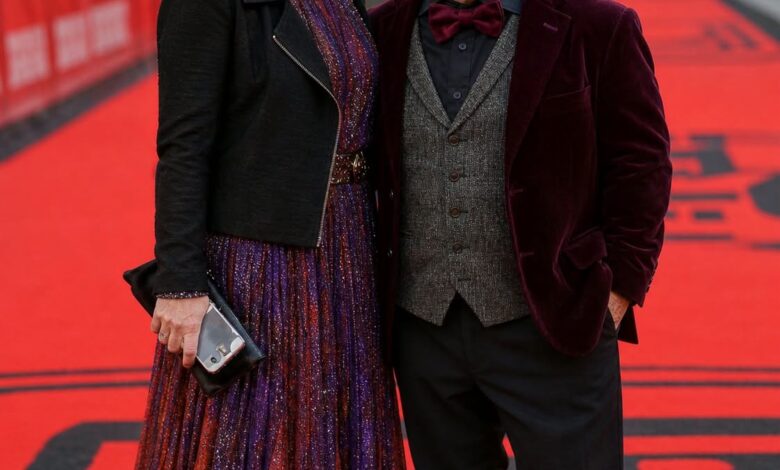
Long before millions of people fell in love with a little blue-and-white droid from a galaxy far, far away, Kenny Baker had already learned what it meant to make an audience look beyond his height.
At just 112 centimeters tall, he entered a world that was often far quicker to notice what made him physically different than to ask what he could actually do.
Kenny learned to answer that world by performing.
He began with small traveling shows, where there were no computer-generated effects to hide behind and no famous franchise to guarantee applause. A performer had to earn attention with timing, movement, personality, and nerve.
For Kenny, those early stages became more than employment.
They became training grounds.
He discovered that the same physical difference strangers might regard as a limitation could become part of his professional identity without defining the entirety of who he was.
He could make people laugh.
He could command attention.
He could turn movement into character.
Most importantly, he could make an audience forget whatever assumptions they had brought into the room.
Those skills would eventually take him somewhere no traveling performer could have imagined.
Inside a machine.
When Star Wars began taking shape, R2-D2 was supposed to be a droid.
Metal.
Mechanical.
Unable to communicate through ordinary human speech.
On paper, it would have been easy for the character to become little more than a moving prop.
Instead, R2-D2 developed a personality so recognizable that audiences could understand what he seemed to be thinking without hearing a single conventional sentence.
He could be impatient.
Loyal.
Sarcastic.
Afraid.
Stubborn.
Brave.
And inside the physical R2-D2 unit for many of those scenes was Kenny Baker.
The irony was remarkable.
A man who had spent his life learning how to be seen stepped into the role that would make him famous while hiding him completely.
Audiences did not see his face.
They saw a cylindrical shell.
They did not see his expressions.
They watched a dome swivel.
They did not see his body.
They watched R2-D2 wobble, turn, react, and hurry into danger.
Yet Kenny was there.
That mattered because the technology available during the original Star Wars productions was nothing like the digital filmmaking tools that would come decades later.
Physical performance mattered.
Movement mattered.
Tiny adjustments mattered.
Kenny had to work within an extraordinarily restrictive environment and still help make the machine feel alive.
Inside R2-D2, comfort was hardly the defining feature.
The space was cramped.
Visibility and movement were limited.
Heat could become oppressive.
Performing inside the shell demanded patience and physical endurance.
The audience saw a charming droid rolling through an adventure.
Kenny experienced the much less glamorous reality required to create that illusion.
And still, R2-D2 somehow became one of the most emotionally expressive characters in the saga.
Watch the character closely and the brilliance becomes apparent.
A slight movement can communicate annoyance.
A sudden turn can suggest alarm.
A stubborn refusal to move can become comedy.
A burst of motion can become courage.
R2-D2 did not need eyebrows or a human mouth.
The character had rhythm.
That rhythm gave him personality.
Kenny understood something performers learn through years of physical comedy:
The body can speak before dialogue does.
That ability was perfect for R2-D2.
Children understood the droid immediately.
Adults did too.
Nobody needed subtitles explaining his emotions.
His electronic whistles and beeps helped create the voice, but movement helped sell the illusion that somewhere inside the machine was a mind.
R2-D2 wasn’t simply equipment belonging to Luke Skywalker, Princess Leia, or anyone else.
He was part of the group.
A friend.
A survivor.
Frequently, the character everyone else underestimated.
That last quality feels particularly fitting when connected to Kenny.
The world had underestimated him too.
People saw height before talent.
The entertainment industry could be especially ruthless about physical appearance, reducing performers who looked different to novelty roles or treating their bodies as jokes.
Kenny navigated that reality without allowing it to erase his ambition.
He worked.
He performed.
He kept moving.
Then he became part of one of the biggest cultural phenomena cinema had ever produced.
The strange thing was that many viewers initially knew R2-D2 better than they knew Kenny Baker.
That is the peculiar fate of performers hidden behind masks, makeup, puppets, costumes, or mechanical shells.
Their success can make them invisible.
If the audience forgets there is a performer underneath, the illusion has worked.
But that success can also mean the human contribution is overlooked.
R2-D2 became instantly recognizable around the planet.
Kenny could still walk into places where people had no idea they were looking at the man who helped bring him to life.
Over time, fans learned.
Conventions helped change that.
Interviews helped.
Behind-the-scenes stories helped.
People who had grown up loving the droid finally discovered the performer inside.
And suddenly Kenny had another audience.
This one could see his face.
For him, Star Wars became much more than a collection of films.
It connected him to generations.
Children who first watched R2-D2 decades earlier grew into adults.
Then they showed the films to their own children.
The technology around the character evolved.
The franchise expanded.
But affection for that stubborn little droid remained.
Kenny became part of something unusually durable.
Yet the role that made him internationally recognizable was only one part of his life.
Away from sets and conventions, there was Yvonne.
She understood Kenny in ways many others could not because she shared some of the same realities he had spent his life navigating.
She was also a person of short stature.
Their relationship was not built around the public fascination surrounding his unusual career.
It was built around ordinary intimacy.
Two people creating a home.
Understanding each other’s frustrations.
Sharing laughter.
Facing uncertainty.
Building a family.
Their children became part of that story.
Genetics had introduced fear into the expectations surrounding parenthood.
There were warnings and uncertainties.
Questions about what their children’s physical development might look like.
But biology is rarely as simple as fear makes it sound.
Their children were born of average height.
For Kenny and Yvonne, parenthood created a world far removed from movie sets.
There were responsibilities no audience applauded.
Days that had nothing to do with science fiction.
Family routines.
Private worries.
Small victories.
The countless ordinary experiences that make up most of a person’s actual life.
Kenny could spend time associated with intergalactic heroes and then return home to the realities of being a husband and father.
Perhaps that contrast kept fame in perspective.
Hollywood can make a person feel enormous one day and irrelevant the next.
Family measures importance differently.
At home, nobody cares how many tickets a film sold when someone needs comforting.
Nobody is impressed by international fame when a child needs a parent.
Those responsibilities are quieter.
They are also deeper.
Then Kenny faced the kind of loss no successful career can soften.
Yvonne became ill.
Eventually, she died.
For a man accustomed to bringing joy to enormous audiences, grief was something altogether different.
There was no performance capable of reversing it.
No clever movement.
No comic timing.
No applause waiting at the end.
Only absence.
The loss of a spouse changes the architecture of ordinary life.
The chair.
The bed.
The routines.
The conversations that no longer happen.
The person who understood the private version of you is suddenly gone.
Kenny did not attempt to replace what he had lost.
His devotion to Yvonne remained part of him.
Rather than beginning another marriage, he carried that love forward through the life that remained.
His children.
His work.
His connection with fans.
His memories.
That choice reflected something deeper than romantic sentimentality.
Some relationships become permanent internal landmarks.
The person dies.
The relationship changes form.
But the love does not simply disappear because the calendar continues moving.
Kenny kept moving too.
Age brought its own difficulties.
Health became more complicated.
The physical demands of performing were no longer what they had once been.
But his connection to Star Wars remained.
Fans continued approaching him with stories.
Some had waited decades to meet him.
They wanted photographs.
Autographs.
Memories.
Often, they wanted to say thank you.
That must have been a strange experience.
A movement Kenny made inside an uncomfortable metal shell decades earlier might have become part of someone’s childhood.
A scene he helped create could remind someone of a parent who had since died.
A character he performed could have comforted a lonely child.
Artists rarely know where their work goes once it leaves them.
Kenny had the unusual privilege of occasionally finding out.
R2-D2’s appeal was never based on physical dominance.
He wasn’t the towering warrior.
He didn’t carry himself like Darth Vader.
He wasn’t the obvious hero.
He was small.
Frequently overlooked.
Sometimes treated as equipment.
Yet when things went wrong, R2-D2 was often exactly where he needed to be.
Opening something.
Fixing something.
Delivering information.
Refusing to retreat.
Helping people much larger than himself survive.
That is perhaps why the character became such an unexpectedly appropriate legacy for Kenny Baker.
Both challenged the same lazy assumption.
That size predicts significance.
It doesn’t.
Kenny’s entire career stood against that idea.
A person can occupy very little physical space and leave an enormous cultural footprint.
He proved it first on small stages.
Then inside R2-D2.
Then in the relationships he built with people who came to appreciate the man rather than merely the character.
There is also something beautiful about the contradiction at the center of his most famous work.
Kenny disappeared so R2-D2 could become visible.
That is what great physical performance sometimes requires.
The performer stops asking the audience to notice the technique.
Instead, the audience believes.
They stop seeing machinery.
They see personality.
They stop thinking about someone operating inside the shell.
They worry about R2-D2.
Laugh at him.
Cheer for him.
That emotional response is the achievement.
Technology would eventually make it possible to accomplish more through remote control, robotics, and digital effects.
But technology alone cannot explain why audiences cared.
Perfect movement is not necessarily meaningful movement.
A character needs intention.
Timing.
Rhythm.
Humanity.
Kenny helped provide that.
His life also complicates the inspirational language often used about people with physical differences.
It would be easy to reduce his story to:
He overcame his height.
But Kenny did not need to overcome being Kenny Baker.
What he had to overcome were assumptions.
Restricted opportunities.
Physical environments designed without people like him in mind.
An industry that could easily have treated him as a novelty instead of a performer.
The limitation was not simply his body.
It was what other people imagined his body permitted.
He repeatedly proved their imagination too small.
That is a much more meaningful legacy.
His stature shaped his career.
It created particular opportunities and particular difficulties.
But it did not determine the scale of his life.
He was a performer.
A husband.
A father.
A widower.
A colleague.
A man who made people laugh.
A participant in a cinematic phenomenon nobody involved could have fully predicted.
And eventually, he became part of the memory of millions of people who never met him.
When Kenny died, the tributes naturally focused on R2-D2.
How could they not?
The character was his most famous contribution.
But the people who knew him understood there had always been a man beyond the metal shell.
That is worth remembering.
Celebrity tends to compress people into their most recognizable achievement.
One role.
One photograph.
One line.
Kenny’s life was larger than the droid.
Just as it was larger than 112 centimeters.
Perhaps that is why his story resonates so strongly.
We live in a world obsessed with visible scale.
Bigger achievements.
Bigger personalities.
Bigger platforms.
Bigger numbers.
Kenny’s life offered a different measurement.
Impact.
How many people did you make smile?
How faithfully did you love?
How much did you create with what you were given?
How did you respond when the world underestimated you?
Who remembered your kindness after the cameras stopped?
By those measurements, Kenny Baker was enormous.
Somewhere, a child watching Star Wars for the first time still sees R2-D2 wobble into danger.
The child does not know about the heat inside the costume.
Doesn’t know about the traveling shows.
Doesn’t know about Yvonne.
Doesn’t know about the medical uncertainties surrounding Kenny’s family or the grief he later carried.
They simply see a little droid refusing to give up.
And they love him.
Perhaps that is enough.
Because behind every tilt and stubborn turn is evidence that someone was there making the machine human.
Kenny Baker spent much of his most famous performance hidden.
Yet invisibility never meant insignificance.
He showed that presence does not require physical size.
That courage does not need to look imposing.
That tenderness can survive grief.
And that sometimes the person audiences cannot see is the person making them feel everything.
R2-D2 became one of cinema’s most recognizable heroes without ever possessing a human face.
The man inside him left behind a similarly simple lesson.
Stature has never been measured particularly well by centimeters.
The better measurements are courage.
Devotion.
Humor.
Persistence.
And the space someone continues to occupy in other people’s hearts long after they are gone.
By those standards, Kenny Baker was never small.