For 63 Years, My Husband Gave Me Flowers Every Valentine’s Day – After He Died, Another Bouquet Arrived, Along with Keys to an Apartment

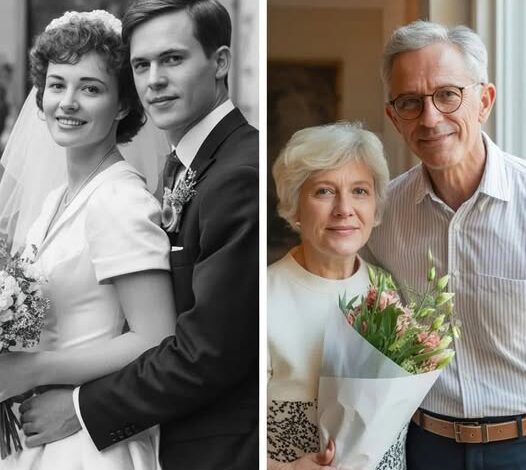
For sixty-three consecutive years, my husband never forgot Valentine’s Day.
Not once.
Whether we were young and struggling to pay rent or older and surrounded by grandchildren, he always found a way to place flowers in my hands. Sometimes they were simple wildflowers gathered from a roadside field. Other years they were elegant bouquets of roses tied with satin ribbon. The flowers changed, but the message never did.
“I love you. I’m here.”
After Robert passed away, I assumed that tradition had finally come to an end.
I was wrong.
Four months after losing him, on the first Valentine’s Day of my life without him, a bouquet of roses appeared at my front door. Alongside the flowers was a letter written in his unmistakable handwriting and a small brass key attached to a tag with an address I had never seen before.
What I discovered at the end of that address changed everything I thought I knew about grief, love, and the man I had shared my life with.
My name is Daisy. I am eighty-three years old.
And this is the most extraordinary gift my husband ever gave me.
Robert proposed to me on Valentine’s Day in 1962.
We were college students then, young and hopelessly in love. He cooked dinner in a tiny communal dormitory kitchen using a borrowed pot and a jar of cheap spaghetti sauce. The garlic bread was burned around the edges, and the ring he slipped onto my finger had cost him two weeks of wages washing dishes after class.
To me, it looked priceless.
From that day forward, we built a life together.
We weathered financial struggles, career changes, family hardships, and heartbreak. We lost people we loved. We endured disappointments we never expected. Through every season of life, Robert remained the same steady, dependable man.
And every February 14th, flowers appeared.
The tradition became so predictable that I would pretend to be surprised while secretly watching for him through the window.
But those flowers meant far more than romance.
They became a symbol.
No matter what happened, Robert always came back.
After arguments.
After stressful days.
After hospital visits.
After funerals.
After the hardest moments of our lives.
He always came back carrying flowers.
Then one autumn afternoon, he didn’t.
A heart attack took him without warning.
One moment he was standing in our driveway debating whether the fence needed repainting. The next, I was riding in an ambulance begging him not to leave me.
The doctors said he passed peacefully.
There was nothing peaceful about what followed.
The silence inside our house became unbearable.
His slippers remained beside the bed.
His reading glasses stayed on the kitchen counter.
Every morning I accidentally reached for two coffee cups before remembering there was only one person left to drink from them.
I spoke to his photograph constantly.
Sometimes I told him about the grandchildren.
Sometimes I complained about things he used to fix.
Sometimes I simply sat there and told him how much I missed him.
Then Valentine’s Day arrived.
The first one without him.
I spent most of that morning staring at the empty chair across from mine.
His chair.
The house felt heavier than usual.
Every ticking second seemed determined to remind me of what was missing.
Then someone knocked on the door.
When I opened it, nobody was there.
Only a bouquet of roses rested on the welcome mat.
Fresh roses.
Wrapped in brown paper.
Exactly like the flowers he had given me more than sixty years earlier.
Beside them sat an envelope.
My hands trembled before I even opened it.
Inside was a key.
And a letter.
The moment I saw Robert’s handwriting, tears blurred the page.
“My love,” it began. “If you are reading this, it means I am no longer beside you.”
I had to stop several times before I could continue.
The letter explained that the key belonged to an apartment across town.
There was something he had kept hidden from me for decades.
And he wanted me to discover it now.
Not before.
Now.
I sat at the kitchen table staring at the address.
Questions flooded my mind.
Had there been another woman?
Another family?
A secret life?
For the first time in sixty-three years, doubt slipped into my memories.
Eventually, curiosity became stronger than fear.
I called a taxi.
An hour later, I stood in front of an aging brick building with a faded green door.
My heart pounded as I unlocked it.
The moment I stepped inside, I smelled something familiar.
Wood polish.
Old paper.
Music.
When I switched on the lights, I froze.
An upright piano stood in the center of the room.
Beautiful. Polished. Loved.
The walls were lined with shelves filled with sheet music, music theory books, recordings, and carefully organized binders.
Everywhere I looked, there was music.
Then I noticed the titles.
Clair de Lune.
Moonlight Sonata.
The pieces I had loved most when I was young.
The pieces I had once dreamed of performing professionally before life pulled me in other directions.
I had abandoned that dream decades ago.
Or at least I thought I had.
On a nearby table sat dozens of recordings.
Each labeled in Robert’s handwriting.
“For Daisy.”
The dates stretched back years.
Some were nearly two decades old.
Nearby lay medical records confirming something I never knew.
Robert had learned months before his death that his heart was failing.
He had known he was running out of time.
And yet instead of spending those final years focusing on himself, he had spent them building something for me.
Then I found the journal.
The first entry was written twenty-five years earlier.
It described a casual conversation I barely remembered.
I had mentioned that I once dreamed of becoming a pianist.
I laughed when I said it.
Robert hadn’t.
He wrote that he saw sadness behind my smile.
That same day, he made a decision.
He would learn piano.
Not for himself.
For me.
Page after page documented the journey.
His lessons.
His frustrations.
His mistakes.
His determination.
His victories.
The entries were often funny.
Sometimes heartbreaking.
Again and again he described practicing for hours after work, struggling through scales, and refusing to quit because he wanted to give me back something I had lost.
Near the end of the journal, the entries became shorter.
The handwriting shakier.
The reality of his illness became impossible to ignore.
One passage nearly broke me.
“My hands shake now when I play. But I keep practicing. For her.”
Another read:
“I don’t have much time left. I need to finish one more piece.”
The final entry was dated just one week before he died.
It simply said:
“I’m out of time. I’m sorry, my love. I couldn’t finish.”
Beside the journal sat a handwritten composition.
His composition.
At the top, in careful script, were the words:
“For My Daisy.”
The music was beautiful.
Tender.
Hopeful.
Filled with longing.
But halfway through the second page, it stopped.
The remaining pages were blank.
Robert had run out of time before he could finish it.
For a long moment, I simply stared.
Then I sat down at the piano.
My fingers hovered over the keys.
At first, they felt unfamiliar.
Then something extraordinary happened.
They remembered.
Decades of forgotten muscle memory slowly returned.
I began playing.
The melody Robert had written filled the room.
When I reached the place where his music ended, I paused.
Then I continued.
I followed where his heart had been trying to go.
I finished the melody.
Completed the harmonies.
Resolved the final phrases.
Together, we finished the composition.
He had written the beginning.
I wrote the ending.
When the last note faded, I noticed a small envelope hidden behind the music stand.
Inside was one final letter.
“My darling Daisy,
I wanted to give you something you couldn’t refuse.
This piano belongs to you now.
This studio belongs to you.
Play again.
Dream again.
And whenever you sit at these keys, know that I am still with you.
In every note.
In every chord.
In every song.
I loved you when we were twenty.
I loved you when we were eighty.
I will love you forever.
Always yours,
Robert.”
Today, I visit the studio twice every week.
Sometimes I play.
Sometimes I listen to Robert’s recordings.
Sometimes I simply sit in the quiet and remember.
Recently, I recorded my first piano piece in over sixty years.
My fingers stumbled.
I made mistakes.
I had to start over more than once.
But I finished.
When the recording was complete, I labeled it carefully and placed it on the shelf beside all of Robert’s.
The title read:
“For Robert.”
For sixty-three years, my husband gave me flowers.
Then, after he was gone, he gave me something even more precious.
He gave me back a dream I thought I had lost forever.
And in doing so, he reminded me that real love doesn’t end when a heartbeat stops.
Sometimes, it keeps playing long after the music should have faded.