My Husband Abandoned His Wife After The Birth Of Five Babies—30 Years Later, DNA Revealed The Truth

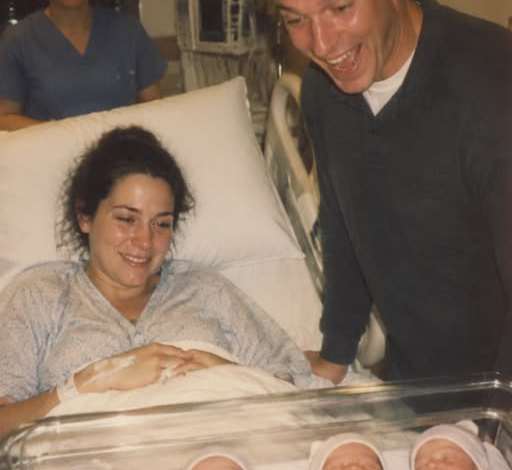
In the spring of 1995, Roberto Vega walked out of a hospital in southern Texas believing he understood exactly what he had seen. His wife had just delivered quintuplet boys — five tiny, fragile newborns whose dark skin and curling hair did not match the image he carried in his mind of what his children were supposed to look like. Standing in that sterile delivery room, with nurses moving quickly around incubators and doctors checking monitors, Roberto made a decision that would destroy six lives and poison the next thirty years of his own.
He accused his wife of betrayal before she had even fully recovered from childbirth.
And then he abandoned her.
At the time, Roberto believed himself justified. That is the tragedy of prejudice: it often disguises itself as certainty. He looked at his sons and saw not possibility, not family, not miracles, but contradiction. In his mind, dark skin could only mean deception. He ignored science. Ignored history. Ignored the trembling woman in the hospital bed swearing through tears that she had never touched another man.
Instead, he trusted his fear.
“You cheated on me,” he shouted.
The nurses froze.
The room turned silent.
And Isabel Vega, exhausted from delivering five premature boys, realized the man she loved cared more about appearance than truth.
Roberto ripped off his wedding ring and threw it onto the bed beside her.
“I will never acknowledge these children,” he said.
Then he walked out.
By the next morning, he had already begun erasing them from his life. Bank accounts were frozen. Isabel was forced from their home. The woman who had just survived a dangerous delivery suddenly found herself nearly homeless with five newborn sons and no husband.
The cruelty of it became legendary in the small Texas community where they had lived.
But small towns do dangerous things with gossip.
People whispered.
Speculated.
Invented stories.
And because Roberto came from a respected family with money and influence, many quietly accepted his version of events instead of hers. Isabel became “the woman whose children looked wrong.” Her sons became targets before they were old enough to defend themselves.
Still, Isabel refused to break.
She returned to the rural town where she grew up and began rebuilding life from nothing. She cleaned houses. Washed laundry for wealthier families. Worked fields during harvest seasons. Her hands became rough and permanently cracked from labor she never imagined doing, but every dollar she earned stretched somehow across five growing boys.
Miguel.
Gabriel.
Rafael.
Uriel.
Samuel.
The quintuplets grew up inseparable because survival required it.
They shared clothes.
Shared schoolbooks.
Shared responsibilities.
And they learned early that the world could be cruel.
Children at school mocked their appearance relentlessly.
“Devil’s children,” some called them.
Others asked where they were “really from.”
Some simply stared.
The boys came home carrying humiliation Isabel could see immediately in their faces.
One evening, Miguel — the oldest by four minutes and already protective of his brothers — finally asked the question haunting all of them.
“Why did Dad leave because of how we look?”
Isabel gathered all five boys into her arms despite her exhaustion.
And there, inside a tiny rented home with peeling paint and barely enough food in the pantry, she gave them the lesson that would shape the rest of their lives.
“Never be ashamed of your skin,” she told them softly.
“It is not a flaw.
It is not a punishment.
It is beautiful.”
Then she made a promise.
“Your father will regret what he did someday.”
At the time, none of them understood how completely that promise would come true.
The boys developed a system built entirely around sacrifice and discipline. If one brother needed help, the others stepped in automatically. When Miguel studied for exams, Gabriel worked extra construction shifts. When Rafael needed school supplies, Uriel sold food at local markets before classes. They carried one another forward like soldiers moving together through hostile terrain.
Teachers began noticing their brilliance.
Scholarship programs noticed too.
The boys excelled not because life became easier, but because hardship sharpened their focus. Education became their escape route. Success became resistance. Every insult pushed them harder.
Eventually, the impossible happened.
All five brothers earned academic scholarships abroad.
Miguel entered surgery.
Gabriel specialized in anesthesiology.
Rafael became a cardiologist.
Uriel focused on nephrology.
Samuel pursued genetics and hepatology.
Together, they became internationally respected physicians known in medical circles as “The Quintet” — five brothers whose combined expertise made them one of the most extraordinary collaborative surgical teams in the field.
Meanwhile, back in Texas, Roberto built what appeared to be a successful life.
He remarried.
Expanded business connections.
Lived in a large home.
Maintained social status.
But beneath the polished surface sat an emptiness he never fully confronted.
His second wife could not have children.
And the man who abandoned five sons because of their appearance spent decades quietly grieving the absence of children in his new marriage without ever fully acknowledging the irony.
Thirty years passed.
Then Roberto got sick.
At first it seemed manageable:
fatigue,
weight loss,
yellowing skin.
But tests revealed catastrophic liver and kidney failure complicated by a rare genetic marker. His doctors warned him the case would require a highly specialized transplant team capable of managing both organs simultaneously.
One cardiologist in Houston finally gave him hope.
“There’s a surgical team operating here temporarily,” the doctor explained.
“Five brothers.
Some of the best specialists in the country.
They call themselves The Quintet.”
Roberto agreed immediately.
He had no idea who he was about to meet.
The consultation room felt strangely cold the day he arrived.
Five men stood when he entered.
Tall.
Dark-skinned.
Composed.
Something inside Roberto reacted before his mind could fully understand why. Their faces carried echoes of someone he once knew — traces of Isabel, traces of himself, traces of a past he had spent decades refusing to revisit.
The man at the center extended his hand calmly.
“I’m Dr. Miguel Vega,” he said.
“These are my brothers.”
Vega.
The surname hit Roberto like physical force.
Then Miguel added quietly:
“We’re quintuplets. Born in 1995.”
The folder slipped from Roberto’s hands.
Suddenly the room tilted.
He stared at them — at the dark skin, the curly hair, the confidence radiating from five men he had once discarded as worthless infants.
And then the door opened again.
A nurse wheeled in Isabel.
Older now.
Gray at the temples.
Still dignified.
Roberto collapsed into a chair.
For the first time in thirty years, he was forced to look directly at the consequences of his choices.
“I was wrong,” he whispered desperately.
“I was completely wrong.”
Samuel, the youngest brother and the genetics specialist, placed a tablet on the table.
A DNA report filled the screen.
PATERNITY PROBABILITY: 99.99%
Then Samuel explained the final humiliation.
During genetic testing related to Roberto’s illness, they uncovered the truth hidden inside his own ancestry. His great-great-grandfather had been an African missionary whose lineage had been deliberately concealed by earlier generations because of racism.
The dark skin Roberto rejected had come from him.
His sons carried features inherited directly from his own bloodline.
He abandoned them for resembling himself.
The silence afterward felt unbearable.
Roberto begged.
Cried.
Promised money, property, anything.
Then Miguel turned toward Isabel.
“What do you want us to do?”
Every brother waited.
And Isabel, the woman who had spent thirty years washing strangers’ clothes and raising five extraordinary boys alone, answered with calm clarity.
“I raised you to save lives,” she said.
“Not destroy them.”
So they operated.
For fourteen hours, the five sons Roberto once called disgusting worked together to save his life. Miguel led the surgery. Gabriel managed anesthesia. Rafael monitored his heart. Uriel handled the kidney transplant coordination. Samuel’s genetic expertise made donor matching possible.
Every son played a role.
And when it was over, Roberto lived.
Days later, after regaining consciousness, he asked to see them.
Instead, a nurse handed him an envelope.
Inside was a single letter.
It explained that they had saved him because of who they were — not because of who he had been. They wanted no money. No reconciliation. No relationship. They had built successful lives without him and no longer needed anything from the man who abandoned them.
“The debt between us has been paid in full,” the letter read.
Then one final instruction:
“Do not look for us.”
Roberto sat alone in his expensive hospital room reading the letter over and over while machines beeped steadily beside him.
For the first time in his life, he truly understood what loneliness meant.
Because loneliness is not the absence of people.
It is the realization that you destroyed the people who once loved you most.
Meanwhile, Isabel and her sons drove home together through the Houston night.
The surgery was finished.
The promise she made decades earlier had finally been fulfilled.
Not through revenge.
Not through cruelty.
Not through public humiliation.
But through something far more devastating:
her sons became extraordinary despite everything he did to stop them.
And that truth would haunt Roberto Vega far longer than death ever could.