On Mother’s Day, a Little Girl Knocked on My Door Holding My Son’s Backpack – She Said, ‘You Were Looking for This, Didn’t You? You Need to Know the Truth’

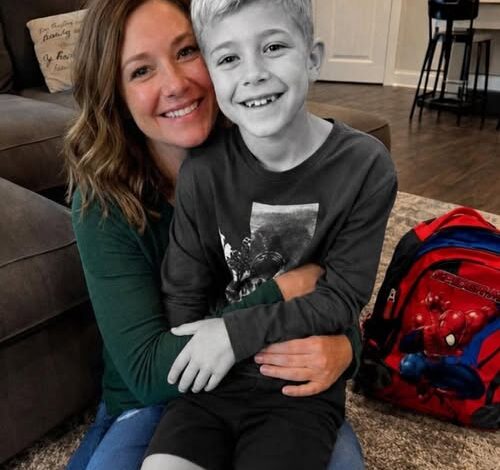
For days after Randy died, Haley survived by holding tightly to one unbearable idea: that nothing could have changed what happened.
Doctors said the collapse was sudden.
The principal spoke gently about tragedy.
Teachers repeated phrases like “there was no way to know” and “sometimes these things just happen.”
Those words became scaffolding around her grief.
Because the alternative—that her son had been frightened, hurting, and ignored—was too devastating to look at directly.
So Haley accepted the official version the way grieving people often do when reality feels impossible: not because it brought comfort, but because it allowed her to keep breathing.
Then Sarah arrived at her front door carrying Randy’s backpack.
And everything shattered.
It was raining lightly that afternoon, the kind of gray, hollow rain that makes silence feel even heavier inside a house already filled with mourning. Haley almost didn’t answer the knock. Since the funeral, people had appeared constantly with casseroles, sympathy cards, flowers, and soft voices that all blended together eventually into one endless ache.
But when she opened the door, she found a little girl standing there alone clutching a faded blue backpack tightly against her chest.
She looked terrified.
“I think this belongs to Randy,” she whispered.
Haley stared at the bag instantly recognizing the small dinosaur keychain clipped to the zipper. Her knees nearly gave out beneath her.
“Where did you get this?”
The girl swallowed hard. “He left it in the nurse’s office.”
Something cold moved through Haley’s body.
The nurse’s office?
No one mentioned Randy had gone there.
Slowly, she invited the girl inside.
Sarah sat nervously at the kitchen table twisting her sleeves while Haley opened the backpack carefully like something sacred. The smell of crayons and paper drifted upward instantly, so painfully ordinary that it almost destroyed her.
Inside were unfinished worksheets.
A crushed juice box.
A hoodie Randy always carried because classrooms felt “too cold.”
Then Haley found the small wrapped box hidden carefully at the bottom.
Mother’s Day.
Her hands began shaking before she even opened it.
Inside sat a handmade bracelet woven unevenly from blue and green string with tiny plastic beads spelling out MOM.
Beneath it was a folded card written in Randy’s crooked handwriting.
“To Mom. Sorry I couldn’t finish it at school.”
Haley pressed a hand over her mouth instantly.
And then she saw the second paper.
A disciplinary form.
Randy’s name written across the top.
A forced apology underneath.
“I’m sorry for disrupting class and making a mess.”
Haley frowned through tears.
What mess?
Randy hated getting in trouble. He apologized if he accidentally bumped into furniture. Teachers described him as gentle, quiet, eager to please.
None of this made sense.
She looked up slowly at Sarah.
“What happened at school?”
The little girl’s eyes immediately filled with tears.
For several seconds she couldn’t speak.
Then finally, in a trembling voice barely above a whisper, she said:
“He said his chest hurt.”
The room stopped moving.
Haley stared at her.
Sarah twisted her fingers together harder. “Ms. Bell thought he was pretending because he wanted to leave math class.”
Every word landed like physical impact.
“He kept putting his head down,” Sarah continued shakily. “And when he accidentally knocked over his markers, she got mad and made him write the apology.”
Haley felt nausea rise violently in her throat.
“He told her he wasn’t lying,” Sarah whispered. “He kept saying, ‘My mom knows I don’t lie.’”
The sentence broke something inside Haley so completely she physically doubled over.
Because that sounded exactly like Randy.
Not angry.
Not dramatic.
Just desperate to be believed.
Sarah cried openly now too.
“He looked really scared,” she admitted softly. “Then later he went to the nurse because he couldn’t breathe right.”
The kitchen fell silent except for Haley’s uneven breathing.
Suddenly all the carefully arranged explanations she’d been clinging to collapsed beneath the unbearable possibility that her son’s final hours were not peaceful or protected—but lonely, humiliating, and filled with adults dismissing his pain.
And worst of all:
he had trusted them anyway.
That realization became impossible to survive quietly.
The next morning Haley went to the school.
Not screaming.
Not hysterical.
That frightened people more.
Grief had sharpened into something colder now.
Purpose.
The principal met her in his office looking deeply uncomfortable before she even sat down. Ms. Bell arrived moments later carrying the stiff posture of someone already defensive.
Haley placed the apology form carefully on the desk between them.
“What was this?”
Neither answered immediately.
Finally Ms. Bell sighed tightly. “Randy was being disruptive during class.”
“He was dying,” Haley replied calmly.
The silence afterward felt enormous.
Haley looked directly at the teacher whose authority her son trusted until the very end.
“My son told you he was in pain.”
Ms. Bell’s face changed instantly.
Not irritation anymore.
Recognition.
The horrible dawning realization that memory had suddenly rearranged itself into something unforgivable.
“He said he felt sick,” she whispered weakly.
“He said his chest hurt.”
The principal shifted uncomfortably.
“Mrs. Reed—”
“No,” Haley interrupted quietly. “Do not manage this for me. Do not soften it.”
Tears finally filled Ms. Bell’s eyes.
“He knocked over supplies and I thought…” Her voice cracked apart. “I thought he was trying to avoid the assignment.”
Haley closed her eyes briefly.
Because that was the tragedy hidden inside so many systems:
children spend their lives trying to convince adults their pain is real.
Sometimes successfully.
Sometimes not.
“What did he say before he left the room?” Haley asked.
Ms. Bell began crying openly now.
“He said…” She struggled to continue. “‘My mom knows I don’t lie.’”
Haley stared at the woman silently while grief and fury collided so violently inside her chest she thought she might collapse.
But strangely, beneath the devastation, there was relief too.
Not relief about Randy.
Nothing could soften that loss.
Relief that the truth finally existed out loud.
Her son had not been dramatic.
Not difficult.
Not dishonest.
He had been a frightened little boy asking adults for help.
And now someone besides Haley had to carry the weight of failing him.
Days later, during a school assembly, Ms. Bell publicly acknowledged what happened.
Her voice trembled in front of students, parents, and faculty as she admitted she had mistaken Randy’s distress for misbehavior. She spoke about assumptions, about listening, about how easily authority can overlook vulnerability when routines become more important than compassion.
The room cried with her.
But Haley barely remembers the speech itself.
What she remembers most is Sarah.
The little girl sat quietly in the front row clutching Randy’s dinosaur keychain in both hands like something precious. Afterward, she walked directly toward Haley looking nervous again.
“I didn’t want him to get forgotten,” she whispered.
Haley pulled her into her arms immediately.
And for the first time since Randy died, something inside her softened instead of shattered.
Because grief changes shape when someone else remembers your child with love.
Over the following months, Sarah began visiting often.
At first for short afternoons.
Then dinners.
Then entire weekends.
She’d sit cross-legged at Haley’s kitchen table eating dry cereal straight from the box while drawing unicorns beside unfinished homework. Sometimes she talked about Randy constantly. Sometimes not at all.
Both felt important.
One evening Sarah asked quietly:
“Do you think Randy knew I was his friend?”
Haley looked toward the crooked bracelet hanging now beside the kitchen window catching late sunlight softly between its uneven beads.
“Yes,” she said firmly. “I think he knew.”
And somehow, inside that ordinary kitchen filled with grief and cereal crumbs and children’s drawings, Haley finally understood something she’d been unable to see before.
Love does not disappear when someone dies.
It changes hands.
It moves outward into the people who remember.
Who protect truth.
Who carry kindness forward after someone is gone.
Randy’s life ended far too soon.
Nothing would ever make that fair.
But the small frightened boy who begged to be believed had not disappeared completely from the world.
He remained in Sarah’s loyalty.
In his unfinished bracelet.
In every child teachers might listen to more carefully afterward.
And in Haley herself, who no longer carried only grief now—
but the fierce, aching determination to make sure her son’s gentleness outlived the cruelty that failed him.