At Prom, Only One Boy Asked Me to Dance Because I Was in a Wheelchair – 30 Years Later, I Met Him Again and He Needed Help

Thirty years ago, a single reckless decision shattered the life I thought I understood. I was only seventeen when a drunk driver ran a red light and slammed into my family’s car. Before that night, my worries were ordinary teenage things — exams, curfews, friendships, dances, and whether my hair would survive prom season. Then suddenly, none of those things mattered anymore. My world became hospital rooms, surgery schedules, pain medication, physical therapy, and doctors speaking in carefully measured tones about injuries they could not fully predict the outcome of. My legs had been destroyed. My spine was damaged. And for the first time in my life, the future no longer felt guaranteed.
The physical pain was brutal, but what hurt even more was the way people started seeing me afterward. Before the accident, I was simply a girl. Afterward, I became “the girl in the wheelchair.” At first, friends visited constantly with flowers, balloons, and promises that nothing would change. But eventually, their lives kept moving while mine stayed trapped inside recovery rooms and rehabilitation centers. They returned to football games, parties, dating, and college applications while I learned how to transfer from a bed to a chair without falling. People called me “strong” and “inspiring” when all I was really doing was surviving the only way I knew how.
By the time prom season arrived, I had already decided I wasn’t going.
I told everyone it was because I was tired or uncomfortable, but the truth was uglier. I was terrified. I couldn’t imagine sitting in a crowded gym watching everyone else dance while I remained parked against a wall like a reminder of everything tragic and broken. I didn’t want pity disguised as kindness. I didn’t want forced smiles or awkward conversations where people spoke too carefully around me.
My mother refused to accept my decision.
One evening, she walked into my room carrying the pale blue dress we had bought before the accident — the dress I thought I would never wear. She laid it gently across the bed and looked at me for a long moment before speaking.
“You deserve one night where you remember you’re still alive,” she said softly.
I told her people would stare.
She answered immediately.
“Then let them stare. Existing is not something you should ever feel ashamed of.”
Those words stayed with me long after she left the room.
The night of prom, she helped me get ready. She adjusted the fabric carefully around my braces and wheelchair while pretending not to notice how humiliated I felt needing help with things that used to be effortless. Through all of it, she kept smiling as though she was determined not to let shame win.
When we arrived at the gymnasium, music thundered through the walls. Colored lights swept across the dance floor while students laughed, posed for pictures, and moved through the room with the careless freedom I missed so badly it physically hurt. A few classmates approached me right away.
“You look amazing.”
“I’m so glad you came.”
“We should take a photo later.”
But after a few polite minutes, they drifted back toward the dance floor and the lives they still recognized as normal. I stayed near the edge of the room pretending not to care.
That was when Marcus walked over.
At the time, Marcus was one of those boys everyone noticed. Athletic, confident, popular without trying too hard. The kind of person teachers praised and students admired. Honestly, I assumed he was coming to talk to someone standing behind me.
Then he stopped directly in front of my wheelchair and smiled.
I looked over my shoulder just to be sure.
He laughed softly.
“No,” he said. “Definitely you.”
I tried to protect myself with sarcasm.
“That’s brave.”
Instead of looking uncomfortable, he tilted his head slightly and asked, “You hiding over here?”
I answered before thinking.
“Is it really hiding if everybody already sees me?”
For a second, something shifted in his expression. Not pity. Not discomfort.
Recognition.
Then, without hesitation, Marcus held out his hand.
“Would you like to dance?”
I stared at him.
“Marcus,” I said quietly, “I can’t dance.”
He nodded once, calm and completely serious.
“Okay,” he replied. “Then we’ll figure out what dancing looks like.”
Before I could talk myself out of it, he wheeled me gently onto the dance floor.
Panic hit me instantly. I whispered that everyone was staring. Marcus grinned and answered:
“They were already staring. Might as well give them something worth looking at.”
Against my will, I laughed.
And somehow, that laugh changed everything.
Marcus moved with me instead of around me. He spun the wheelchair slowly at first, careful not to frighten me, then faster when he realized I was enjoying it. He never treated the chair like something tragic or embarrassing. For those few songs, it was simply part of me — no more important than someone else’s shoes or hairstyle.
For the first time since the accident, I stopped feeling ashamed of existing in public.
That night stayed with me far longer than Marcus probably ever realized.
Not because it was romantic.
Not because it magically healed me.
Because he treated me like a person before treating me like someone broken.
That distinction saved something inside me.
After graduation, my family moved so I could continue rehabilitation near a specialized medical center. Recovery became my full-time existence. I learned how to stand again with braces. Later I learned how to walk short distances through pain. Eventually I learned something much harder: physical healing does not automatically repair emotional damage.
Crowded rooms still terrified me.
Mirrors still hurt.
Dependence still filled me with rage.
But over time, that anger became useful.
As I grew older, I became painfully aware of how inaccessible the world really was. Buildings technically followed regulations while still making disabled people feel unwelcome. Ramps were hidden behind dumpsters. Accessible entrances were treated like inconvenient side doors rather than equal pathways. Every public space quietly reminded people with disabilities that they were tolerated instead of fully included.
That frustration eventually pushed me toward architecture.
College took years longer than expected because I balanced therapy, jobs, and classes all at once. I fought through internships where people underestimated me before I even spoke. Slowly, painfully, I built a career designing accessible public spaces that treated dignity as essential instead of optional.
Eventually, I founded my own firm.
Over the decades, we designed schools, parks, libraries, recreation centers, and hospitals centered around one simple belief:
Accessibility should never feel like an afterthought.
And through all those years, I never forgot Marcus.
Not because I expected to see him again.
But because one act of kindness can quietly redirect someone’s life forever.
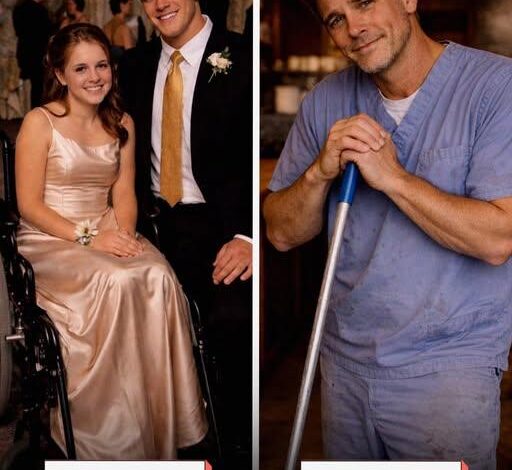
Nearly thirty years later, I walked into a small café near one of our construction sites and accidentally knocked hot coffee across the counter. A man wearing faded scrubs beneath a black apron hurried over with napkins and a mop.
“Don’t move,” he said. “I’ve got it.”
Something about his voice felt strangely familiar.
He looked older now. Tired around the eyes. A slight limp in one leg. But familiar enough that the feeling stayed with me long after I left.
The next day, curiosity brought me back.
When he approached my table again, I finally said:
“Thirty years ago, you asked a girl in a wheelchair to dance at prom.”
He froze instantly.
Then slowly, recognition spread across his face piece by piece until he whispered my name like he couldn’t quite believe it was real.
We talked for hours.
And life, I realized, had not been gentle with him either.
Shortly after graduation, Marcus’s mother became seriously ill. Financial pressure destroyed his scholarship plans before they ever fully began. He worked endless jobs to support her while ignoring injuries of his own until permanent damage settled into his knee. Years slipped away faster than he expected while survival slowly replaced ambition.
Listening to him broke my heart in ways I didn’t expect.
Because the boy who once gave me dignity during the darkest season of my life had spent decades sacrificing his own dreams quietly, without anyone truly seeing him either.
Over the following weeks, we kept meeting.
Eventually, I invited him to consult on one of our adaptive recreation projects. At first he resisted immediately, convinced I was offering pity instead of opportunity.
But once he sat inside those meetings, everything changed.
Marcus understood things no textbook ever could. He understood how injury steals identity from people. He understood frustration, shame, resilience, and invisible grief. During one discussion, he looked around the room and said something that silenced everyone instantly.
“You can make every building technically accessible,” he said, “and still make people feel like they’re entering through the back door of life.”
No one spoke afterward because he was right.
That moment became the beginning of an entirely new chapter for him.
Consulting slowly became permanent work. Physical therapy improved his mobility. Soon he started mentoring injured teenagers at our adaptive recreation center, speaking honestly in ways that connected deeply with kids trying to rebuild themselves after accidents, illnesses, and trauma.
He never treated them like inspirational stories.
He treated them like people.
Months later, while cleaning my office, I found our old prom photograph tucked inside a keepsake box. In the picture, Marcus is laughing while spinning my wheelchair in the middle of the dance floor, completely unconcerned with anyone watching.
When he saw it sitting on my desk, he stared quietly for a long time before asking:
“You kept that?”
“Of course I did.”
Then he admitted something that stunned me.
After graduation, he had tried to find me.
But by then my family had already moved away, and life carried both of us into different storms before either of us had the chance to look back properly.
For a moment, thirty years disappeared completely.
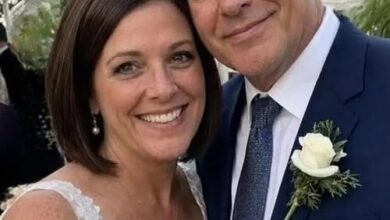
Today, Marcus and I are together.
Not in the dramatic, fantasy-story way people imagine romance. Ours was built slowly, honestly, carefully — by two people who understood how fragile life can become without warning.
We built our relationship from recognition.
We both knew what it meant to lose pieces of ourselves.
We both knew what survival cost.
And we both understood the relief of finally being fully seen.
Last year, during the grand opening of our newest adaptive community center, music drifted softly through the main hall while families explored the building.
Marcus walked toward me through the crowd, smiling exactly the way he had all those years ago at prom.
Then he held out his hand.
“Would you like to dance?” he asked.
And this time, I didn’t hesitate for even a second.
Because after everything life had taken and everything it unexpectedly returned, we finally understood something neither of us knew at seventeen:
Dancing was never really about standing.
It was about meeting someone where they are —
and making sure they never feel invisible there.