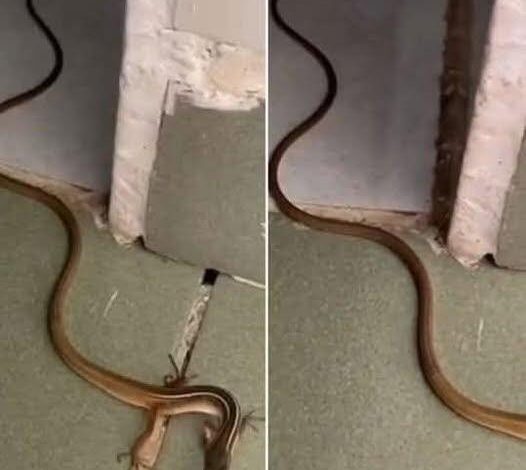
Finding a snake inside your home can feel instantly unsettling, almost primal. One moment everything feels ordinary, and the next you are staring at a creature so out of place that your mind immediately jumps to danger. But in most cases, a snake indoors is not a sign of aggression or some targeted threat. It is usually the result of something much simpler: opportunity. The animal has followed warmth, shelter, water, or prey through an opening small enough that most homeowners would never even notice it existed. A gap beneath a door, a crack in the foundation, an open vent, torn window screening, or a tiny opening around pipes can be all it takes for a snake to wander inside accidentally.
What matters most in that first moment is staying calm.
Fear often pushes people toward the worst possible reactions — trying to trap the snake themselves, cornering it with household objects, or attempting to pick it up without properly identifying the species. Even nonvenomous snakes can bite when frightened, and under stress, people frequently misidentify harmless species as dangerous ones or vice versa. The safest response is not bravery. It is caution and distance.
The first step should always be protecting the people and animals around you. Keep children away from the area immediately, and secure pets in another room. Dogs and cats are naturally curious and may provoke the snake unintentionally, increasing the risk of injury to both the animal and the pet. If possible, close doors to contain the snake within one space rather than allowing it to move freely throughout the house. Limiting its movement makes professional removal much easier and reduces the chances of the animal hiding somewhere inaccessible.
Most importantly, avoid trying to touch or corner it.
A frightened snake does not understand that you are trying to help. It only recognizes threat and escape. Many bites happen not because snakes are naturally aggressive, but because humans panic and force the animal into defensive behavior.
The safest and most responsible solution is contacting professionals trained to handle wildlife removal. Animal control officers, local wildlife rescue organizations, or licensed pest and wildlife specialists can safely identify the species and remove it humanely without unnecessary harm. In many areas, snakes are protected parts of the local ecosystem, and relocation by trained professionals ensures both human safety and the animal’s survival.
After the immediate situation is resolved, prevention becomes the next priority.
A snake inside the home often points to conditions that made the property attractive in the first place. Small rodents, insects, cluttered storage areas, standing water, and overgrown landscaping can all create an environment where snakes feel secure or where their food sources thrive. Even if the snake itself is removed, failing to address those conditions increases the likelihood of future visits.
Carefully inspect the exterior of the house for gaps and entry points. Door sweeps, weather stripping, repaired screens, sealed foundation cracks, and covered vents can dramatically reduce opportunities for wildlife intrusion. Garages, basements, crawl spaces, and sheds deserve special attention because they often provide dark, undisturbed hiding spots that snakes naturally seek.
Yard maintenance also matters more than many people realize. Tall grass, stacked woodpiles, excess debris, and dense shrubbery create ideal shelter for rodents and insects, which in turn attract predators like snakes. Reducing clutter and controlling pest populations around the property can make the area far less appealing to them naturally.
What often gets lost in moments of fear is that snakes themselves play an important ecological role. They help control rodent populations, limit pests, and maintain balance within local ecosystems. Outdoors, they are valuable allies to farmers, gardeners, and natural environments alike. The problem is not the existence of the snake — it is simply that your home is not where either of you expected the encounter to happen.
That perspective can help transform panic into practicality.
Because while the sight of a snake indoors may feel shocking, most situations can be handled safely with patience, distance, and professional assistance. The encounter becomes not a disaster, but a reminder of how closely human spaces still overlap with the natural world around them.
In the end, the goal is not fear or destruction.
It is calm management.
A snake in the house is frightening for a moment.
But with the right response, it can remain exactly that:
a moment —
not a catastrophe.