Michael Jackson’s Daughter Has Finally Broken Her Silence — And What She Revealed Is Not What People Expected

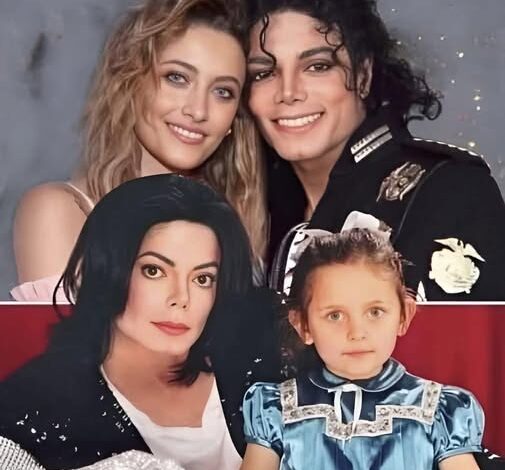
For most of her life, Paris Jackson has carried a name that the world refuses to forget.
Before people learned her story, they already believed they knew it.
Before they heard her voice, they had opinions.
Before they understood who she was, they had already decided who her father had been.
Growing up as the daughter of Michael Jackson meant living inside a legacy larger than almost anyone could imagine. To millions of people across the globe, Michael Jackson was more than a performer. He was a cultural phenomenon. His music crossed borders, languages, and generations. His face was instantly recognizable in nearly every corner of the world.
But to Paris, he wasn’t “The King of Pop.”
He was simply Dad.
And that difference matters more than most people realize.
For years, Paris watched as strangers debated the man she knew best. Television programs analyzed him. Books were written about him. Documentaries revisited old allegations. Social media transformed complicated discussions into endless arguments.
People spoke confidently about Michael Jackson as though they knew every detail of his life.
Meanwhile, the person who had actually shared a home with him remained largely silent.
Not because she had nothing to say.
But because some memories are too personal to hand over to public debate.
When Paris eventually chose to speak openly, many expected a defense of a celebrity icon.
Instead, they heard something much more intimate.
She wasn’t talking about a legend.
She was talking about her father.
The man she described existed far away from stadium lights and screaming crowds.
He wasn’t standing on a stage.
He was standing in a kitchen.
Making breakfast.
Telling stories.
Offering advice.
Trying, often imperfectly, to give his children something he felt he had never truly experienced himself—a childhood.
Paris spoke about a side of Michael Jackson the public rarely saw.
A father who worried.
A father who laughed.
A father who wanted his children to experience normal moments despite living inside extraordinary circumstances.
To her, his life wasn’t measured by album sales, awards, or records broken.
It was measured by sacrifice.
Pressure.
Responsibility.
And loneliness.
Because behind the unimaginable success was a man carrying burdens most people would never fully understand.
From an early age, Michael Jackson lived under expectations that never seemed to end.
Every performance had to be bigger.
Every album had to be better.
Every achievement created pressure for another.
The world celebrated him, but it also demanded more from him year after year.
And fame, Paris suggests, came with a cost.
The same spotlight that made him beloved also isolated him.
Millions adored him.
Very few truly knew him.
That isolation became one of the defining realities of his life.
Yet Paris has never tried to erase the complexities surrounding her father’s legacy.
She understands better than most that public opinion remains deeply divided.
Years after Michael Jackson’s death, debates continue.
Allegations.
Investigations.
Documentaries.
Opinions.
Arguments.
For some people, those discussions define how they remember him.
Paris knows that.
But rather than respond with anger or hostility, she has chosen a remarkably measured perspective.
At one point, she summarized her feelings in a simple statement:
“Everyone has their truth. But I knew my father’s heart.”
Those words reveal the difficult position she has occupied for most of her life.
She carries a surname that instantly triggers strong reactions.
Long before people discover her music, her work, her beliefs, or her personality, many have already formed assumptions based entirely on the family she comes from.
Few people understand what that feels like.
Even her childhood reflected the unusual reality of living inside global fame.
The masks.
The security.
The gates.
The efforts to remain hidden from public view.
To outsiders, these choices often seemed strange or excessive.
To Paris, they were something else entirely.
Protection.
She has explained that her father wasn’t trying to create mystery.
He was trying to shield his children from a world that had rarely shown him privacy.
Michael Jackson understood what relentless public attention could do to a person.
He wanted something different for his children.
Whether people agreed with his methods or not, Paris believes the motivation came from love.
Then everything changed.
In 2009, Michael Jackson died unexpectedly.
Paris was only eleven years old.
At an age when most children are still learning how to process ordinary emotions, she found herself confronting unimaginable grief.
The loss itself was devastating.
But the circumstances made it even harder.
Most children mourn privately.
Paris mourned while the entire world watched.
Every appearance became news.
Every photograph became a headline.
Every visible emotion was analyzed by strangers.
The loss of her father wasn’t just personal.
It became public property.
And that kind of grief leaves scars.
The years that followed were difficult.
Paris has spoken openly about struggles with loss, identity, mental health, and finding her place in the world.
There were periods of pain.
Moments of uncertainty.
Times when the weight of expectations felt overwhelming.
But there was also growth.
Slowly, she began creating a life that belonged to her.
Not Michael Jackson’s daughter.
Not a symbol.
Not a reflection of someone else’s story.
Her own person.
Through music, creativity, advocacy, and self-discovery, she started building an identity independent of the name that had defined her childhood.
And perhaps that has become one of the most remarkable parts of her journey.
She isn’t trying to recreate her father’s career.
She isn’t attempting to become another version of him.
Instead, she has chosen something far more difficult.
She has chosen authenticity.
Today, when Paris speaks about Michael Jackson, she rarely focuses on fame.
She talks about values.
Compassion.
Kindness.
Creativity.
Empathy.
She speaks about lessons that shaped her long after the headlines faded.
The qualities she believes mattered most.
At one point, she offered perhaps the most honest description of all.
“He wasn’t perfect,” she said. “But he loved deeply.”
Those words carry a powerful truth.
Not because they excuse mistakes.
Not because they settle debates.
But because they humanize someone the world often treats as either a saint or a villain.
Paris isn’t asking people to see her father as flawless.
She isn’t demanding universal agreement.
She’s simply asking people to remember something that can easily be forgotten.
Michael Jackson was human.
A son.
A father.
A brother.
A man capable of extraordinary kindness, profound struggles, complicated flaws, and deep love.
In the end, Paris Jackson’s reflections aren’t really about changing history.
They’re about preserving memory.
The difference is important.
History belongs to everyone.
Memory belongs to the people who lived it.
And for Paris, the memories she carries are far more personal than any public narrative.
They remind us that behind every global icon is a private life the public never fully sees.
That behind every legend is a family.
And that behind every headline is a human being who mattered deeply to someone.
To the world, Michael Jackson may always remain one of the most famous entertainers in history.
To Paris, he remains something simpler.
Something more personal.
Not a symbol.
Not a phenomenon.
Not a legend.
Just her father.
And that is the version she continues to carry with her—long after the music fades and the spotlight moves on.