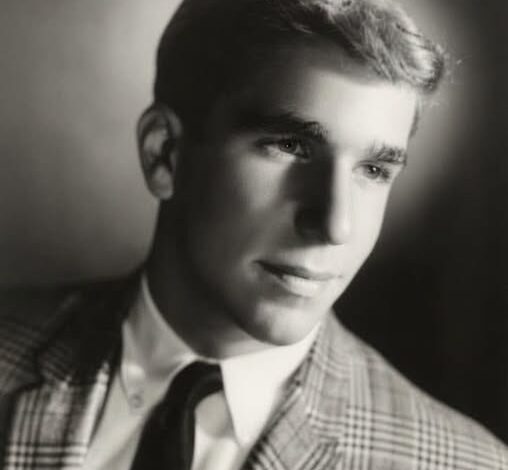
Before Henry Winkler became one of television’s most beloved stars, he spent much of his childhood believing he simply wasn’t smart enough.
Long before audiences knew him as “The Fonz,” he was a young boy struggling to understand why school seemed effortless for everyone else but felt impossible for him. Every assignment became another reminder that he couldn’t read as quickly as his classmates. Words seemed to move across the page, spelling tests ended in frustration, and report cards arrived covered in red corrections that chipped away at his confidence.
No one knew he was living with dyslexia.
At the time, the condition was poorly understood, and many children who struggled to read were simply labeled as lazy, careless, or not trying hard enough.
For Henry, those labels hurt far more than any failing grade.
Born in New York City to parents who had escaped Nazi Germany before World War II, Winkler grew up in a family shaped by survival, sacrifice, and enormous expectations. His parents had rebuilt their lives after unimaginable hardship, and they hoped their son would eventually take over the family’s lumber business.
Education wasn’t simply encouraged.
It was expected.
Yet every day at school became another battle.
No matter how hard he studied, the letters refused to cooperate. Reading assignments took far longer than they should have, written tests became overwhelming, and teachers often mistook his learning difficulties for a lack of effort.
Without an explanation for what he was experiencing, Henry began believing the criticism himself.
If everyone kept calling him lazy…
Maybe they were right.
Still, something inside him refused to give up.
Because reading was so difficult, he developed other strengths almost without realizing it. He became an exceptional listener. He memorized conversations, expressions, and emotions. He learned by observing people rather than relying solely on written words.
Most importantly, he discovered he loved performing.
Onstage, the rules were different.
Emotion mattered more than spelling.
Presence mattered more than perfect grammar.
For the first time, he found a place where he felt capable instead of inadequate.
That dream, however, was anything but easy to pursue.
College after college rejected his applications.
One rejection became five.
Five became ten.
Eventually, 26 colleges had turned him away.
For many people, that would have been the end of the story.
For Henry, it became another reason to keep trying.
Eventually, the Yale School of Drama gave him an opportunity to audition.
Instead of relying on perfectly memorized material alone, he leaned into improvisation, instinct, and creativity—the very strengths he had spent years developing while compensating for his learning disability.
The audition worked.
Yale took a chance on him.
That single opportunity changed the course of his life.
Not long afterward, he landed what seemed like a tiny television role.
He was originally hired for just a handful of lines as a motorcycle mechanic in a new sitcom called Happy Days.
No one expected the character to become the show’s biggest breakout star.
But audiences immediately connected with Arthur “Fonzie” Fonzarelli.
Confident.
Cool.
Charismatic.
Within a short time, The Fonz became one of the most recognizable television characters in the world.
To millions of viewers, Henry Winkler looked effortlessly successful.
Few realized he was still quietly managing the same reading challenges that had followed him since childhood.
Scripts often required extra preparation.
Lines demanded creative memorization techniques.
Behind every polished performance was years of adapting to a world built around written language.
Then, when Henry was 31 years old, something happened that transformed his understanding of himself.
His stepson was diagnosed with dyslexia.
As doctors and specialists explained the condition, Henry listened in disbelief.
The descriptions sounded painfully familiar.
For the first time in his life, everything made sense.
He wasn’t lazy.
He wasn’t unintelligent.
His brain simply processed language differently.
Receiving that understanding didn’t erase the struggles of his childhood, but it gave those experiences something they had never possessed before.
A name.
Instead of hiding from it, Henry chose to embrace it.
He began speaking openly about dyslexia, hoping other children wouldn’t spend years believing the same painful misconceptions he had carried.
Later, he and author Lin Oliver created the Hank Zipzer children’s book series, inspired by many of Henry’s own experiences growing up with an undiagnosed learning difference.
The books introduced young readers to a character who faced school challenges with humor, determination, and heart.
More importantly, they offered reassurance.
Children who struggled with reading finally saw someone like themselves as the hero of the story.
Throughout countless school visits, interviews, and conversations with families, Henry has continued delivering a message that resonates far beyond dyslexia.
A learning difference is not a measure of intelligence.
It is not a prediction of future success.
And it is certainly not a reason to abandon your dreams.
His own life stands as powerful evidence.
The boy once told he would never amount to much became an Emmy Award-winning actor, bestselling author, producer, director, and one of Hollywood’s most respected performers.
His greatest legacy, however, may not be the iconic leather jacket or the unforgettable thumbs-up that made The Fonz famous.
It may be the hope he has given to countless children who see themselves in his story.
Children who struggle to read.
Who doubt themselves because school feels harder than it seems for everyone else.
Who wonder whether they’ll ever find something they’re truly good at.
Henry Winkler’s journey reminds them that success doesn’t always begin with perfect grades or effortless achievement.
Sometimes it begins with perseverance.
With discovering strengths no report card can measure.
And with realizing that the qualities that make you different today may one day become the very reason the world remembers your name.
His story carries a simple but enduring message.
Your brain is not broken.
Your potential is not limited by the way you learn.
And no matter how many obstacles stand in your path, your story is still being written—and it may lead somewhere far more extraordinary than you ever imagined.