“Six Minutes Without a Heartbeat”: A Reddit User Shares a Shocking Near-Death Experience That Raises Questions About Consciousness

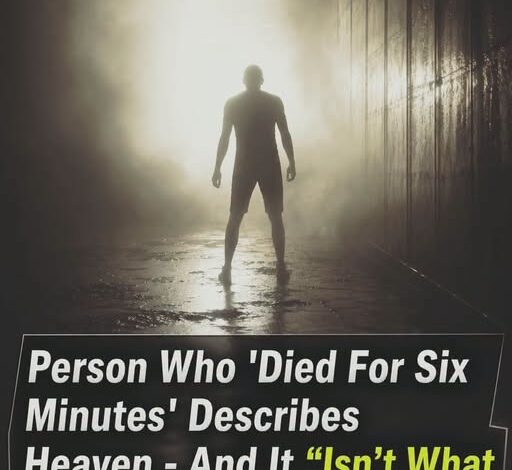
For most people, the idea of death is often wrapped in images of peace.
A bright light at the end of a tunnel.
A feeling of weightlessness.
A sense of calm beyond anything experienced in life.
Across cultures, religions, and generations, stories about what lies beyond death frequently share a common theme: comfort. Whether viewed through spiritual beliefs or personal experiences, many accounts describe a gentle transition from one state of existence to another.
But not every story follows that path.
Some take a darker turn.
And one of the internet’s most unsettling examples continues to resurface years after it was first posted.
Known as “Six Minutes Without a Heartbeat,” the story appeared on Reddit’s famous r/nosleep community, a forum dedicated to immersive horror fiction. Unlike traditional horror stories that openly announce themselves as fiction, r/nosleep operates differently. Writers present their narratives as though they truly happened, while readers engage with them in the same spirit, creating an experience that feels unnervingly real.
That realism is exactly what made this story stand out.
At first glance, it reads like a genuine near-death account.
The narrator claims that in 2003, at just fifteen years old, they suddenly collapsed while walking home. According to the story, emergency responders arrived and found no detectable heartbeat. The implication is chilling: for several minutes, the teenager was clinically dead.
Yet the most disturbing part of the narrative isn’t what happened to the body.
It’s what allegedly happened to the mind.
Most people are familiar with common descriptions of near-death experiences. Reports often include floating sensations, encounters with loved ones, feelings of overwhelming love, or visions of brilliant light. Whether these experiences have spiritual or neurological explanations remains a matter of debate, but they generally share a surprisingly peaceful tone.
“Six Minutes Without a Heartbeat” deliberately destroys that expectation.
Instead of comfort, the narrator describes terror.
Instead of light, there is darkness.
Instead of peace, there is the sensation of becoming trapped inside something deeply hostile.
The story claims that although the body had ceased functioning normally, consciousness somehow remained active. The narrator describes existing in a strange state beyond ordinary perception, fully aware yet unable to escape what unfolds around them.
As the account progresses, the atmosphere becomes increasingly oppressive.
The narrator speaks of a presence.
Not a person.
Not a recognizable figure.
But something vast, intelligent, and unsettling.
Something that seems less interested in helping than in observing.
Within the story, this entity is described through emotional and symbolic language rather than physical details. It is portrayed as something that feeds on fear, manipulates grief, and magnifies emotional pain. Rather than offering answers, it forces the narrator to confront feelings of dread and helplessness.
The horror comes not from graphic imagery but from psychological tension.
Readers are left with the terrifying possibility that consciousness has entered a place where suffering itself becomes the language of communication.
The deeper the story goes, the more disturbing its implications become.
Unlike traditional ghost stories, there are no jump scares or monsters lurking in shadows.
The fear emerges from uncertainty.
What if death isn’t peaceful?
What if the unknown isn’t comforting?
What if consciousness survives only to encounter something it cannot understand?
These questions linger throughout the narrative, creating a sense of dread that remains long after the final paragraph.
Eventually, according to the fictional account, paramedics succeed in reviving the teenager while transporting them to the hospital. The narrator survives physically, but the experience leaves permanent scars.
The story claims that medical complications followed, including the eventual need for a pacemaker. More significantly, it suggests that the experience completely transformed the narrator’s understanding of life, death, and spirituality.
Whether these details are factual is beside the point.
Within the framework of the story, they serve a larger purpose.
They reinforce the central theme that some experiences cannot simply be left behind.
Even after returning to normal life, the narrator remains haunted by what was seen—or believed to have been seen—during those six minutes.
That lingering trauma is part of what makes the story so effective.
The true horror doesn’t end when the heartbeat returns.
It follows the narrator home.
One reason the story continues attracting attention years later is because it directly challenges familiar narratives surrounding death. Most near-death accounts that receive widespread media attention emphasize hope, transcendence, or spiritual reassurance.
This story does the opposite.
It weaponizes uncertainty.
By presenting a version of death that is frightening rather than comforting, it taps into one of humanity’s oldest fears: the fear that we simply do not know what awaits us.
Of course, it is important to remember the context.
“Six Minutes Without a Heartbeat” was published on r/nosleep, a community built around fiction.
The subreddit’s unique culture encourages writers to maintain the illusion of reality, even when telling completely invented stories. Readers participate in this shared experience by responding as though the events truly occurred.
That approach creates a powerful form of storytelling.
The more believable the narrative feels, the more effective the horror becomes.
However, it has also contributed to confusion over the years. As stories migrate away from their original source and spread through social media, YouTube videos, podcasts, and online discussions, many people encounter them without realizing they originated in a fiction community.
This blurring of fiction and reality has become part of the story’s legacy.
Some readers interpret the narrative as a metaphor for humanity’s fear of death.
Others view it as an exploration of trauma, anxiety, or psychological suffering.
Some analyze it as a philosophical thought experiment about consciousness itself.
And many simply enjoy it as an exceptionally well-written horror story.
The scientific community, meanwhile, approaches near-death experiences from a very different perspective.
Researchers studying consciousness and neurology have explored what happens to the brain during periods of extreme stress, oxygen deprivation, and cardiac arrest. Studies suggest that unusual brain activity during these moments may contribute to vivid perceptions, emotional experiences, and altered states of awareness.
However, current scientific evidence does not support the kind of detailed, prolonged conscious experience described in fictional narratives like “Six Minutes Without a Heartbeat.”
That distinction matters.
The story is compelling because it feels believable.
But its power comes from storytelling rather than documented medical evidence.
Yet perhaps that is why it continues to resonate.
Beneath the horror lies a question that has fascinated humanity for thousands of years.
What happens when life ends?
No scientific study, religious tradition, or philosophical theory has completely settled that mystery.
And where certainty ends, imagination begins.
Stories like this thrive in that space.
They transform uncertainty into narrative.
They give shape to fears that are difficult to articulate.
They force readers to confront questions they might otherwise avoid.
Ultimately, “Six Minutes Without a Heartbeat” is not memorable because it claims to reveal the truth about death.
It is memorable because it captures the anxiety surrounding what we cannot know.
It reminds us that the unknown can be both fascinating and terrifying.
And it demonstrates how a well-crafted piece of online fiction can become powerful enough to blur the boundary between imagination and belief.
Whether viewed as horror, metaphor, psychological exploration, or simply entertainment, the story endures because it touches one of humanity’s deepest mysteries.
Not what happens after death.
But why we are so desperate to know.