‘I have a suite in his head’: Barack Obama shares brutal verdict on Trump’s “obsession” with him

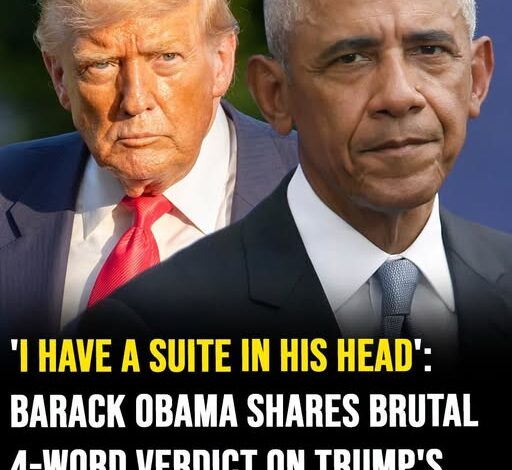
Barack Obama didn’t raise his voice. He didn’t launch into a lengthy attack. Instead, he delivered a response that drew attention precisely because of its restraint.
Without directly mentioning Donald Trump by name, Obama addressed years of criticism with a mix of humor and pointed observation. Joking that Trump seems to have “a room”—before quickly correcting himself to “a suite”—reserved for him in his mind, Obama suggested that the former president’s repeated references to him say more about Trump’s focus than about Obama’s presidency.
The audience laughed.
But beneath the joke was a broader argument.
Obama implied that when a political opponent becomes a constant point of reference, it raises questions about where a leader’s attention truly lies. Rather than engaging every criticism individually, he turned the conversation toward priorities, suggesting that an ongoing fixation on the past may distract from the challenges facing the present.
He then contrasted that approach with his own experience in office.
Reflecting on his presidency, Obama said that he rarely spent time thinking about former President George W. Bush after taking office. His attention, he explained, was consumed by the responsibilities of governing—responding to economic challenges, making policy decisions, handling international crises, and addressing the daily demands of the presidency.
For Obama, that was the central point.
The office of the president, he argued, requires constant focus on the country’s current needs rather than prolonged attention to previous administrations or political rivals.
Supporters viewed the remarks as a sharp but measured response to years of criticism.
Rather than matching confrontation with confrontation, they saw Obama using humor to make a larger point about leadership, priorities, and the weight of presidential responsibility.
Critics, however, interpreted the comments differently.
Some argued that political leaders from both parties frequently reference their predecessors, particularly during campaigns and public debates. From that perspective, comparisons with previous administrations are a common feature of American politics rather than evidence of personal fixation.
The exchange reflects a broader reality of today’s political climate.
Modern campaigns often extend well beyond elections themselves. Former presidents remain influential voices, current leaders continue to compare their records with those who came before them, and political debates frequently revisit decisions made years earlier. As a result, public conversation often shifts between the past and the present, with each side using history to support its own arguments.
Obama’s remarks resonated because they relied less on accusation than on implication.
Instead of directly attacking Trump, he invited listeners to consider what repeated political references might reveal about a leader’s priorities. By framing the discussion around governance rather than personality, he shifted attention away from individual insults and toward a broader question about presidential focus.
Ultimately, the significance of Obama’s comments depends on how audiences interpret them.
Supporters see them as a reminder that effective leadership requires looking forward rather than backward.
Critics argue that drawing contrasts with previous administrations has long been part of political discourse and should not be viewed as unusual.
What is clear is that Obama’s response added another chapter to an ongoing public conversation between two of America’s most prominent political figures—a conversation that continues to shape debates about leadership, accountability, and the direction of the country.
Whether viewed as a clever rebuttal or simply another moment in a long-running political rivalry, the exchange underscores how deeply the nation’s recent presidents remain connected in the public imagination, even years after leaving office.