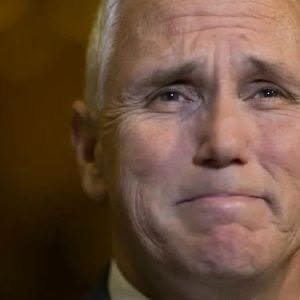
When he stepped away from the podium, the applause had already faded, and so had the version of himself he had spent years constructing. The image the public had come to expect—the unwavering confidence, the measured words, the carefully rehearsed certainty—had finally cracked. Standing in the silence that followed, he no longer felt like the architect of a political career. He felt like a man stripped of every layer that had once protected him from the truth.
For years, every appearance had been another performance.
Every speech had been refined through advisers, polling numbers, strategy meetings, and endless calculations about what voters wanted to hear. Every smile, every pause, every carefully chosen phrase had served a purpose. Winning had become more than an ambition; it had become an identity so complete that he struggled to remember who he had been before public office consumed his life.
The cost of maintaining that image had accumulated quietly.
Family dinners interrupted by urgent calls.
Birthdays missed because of campaign stops.
Friendships reduced to political alliances.
Moments of honesty sacrificed in favor of messages tested by consultants.
Little by little, the distance between the public figure and the private man had grown so wide that even he sometimes struggled to tell where one ended and the other began.
Then came the moment he could no longer avoid.
Standing before cameras that had documented both his triumphs and failures, he finally abandoned the script. There were no carefully crafted slogans waiting to rescue him, no rehearsed sound bites designed to redirect attention, no attempt to disguise disappointment behind polished confidence.
Instead, people saw something they had rarely witnessed.
A human being.
His voice wavered—not from weakness, but from exhaustion. Years of pressure, expectation, and relentless scrutiny surfaced all at once, leaving behind words that sounded less like a politician addressing a nation and more like a husband, a father, and an ordinary person trying to make sense of everything that had unraveled.
The humiliation was undeniable.
Headlines would dissect every sentence.
Commentators would debate every expression.
Political opponents would undoubtedly seize the opportunity to declare the moment a final defeat.
He understood all of that before he even stepped away from the microphone.
Yet beneath the sting of public failure came an unexpected feeling.
Relief.
For the first time in years, he no longer carried the impossible burden of pretending to be invincible. The constant need to anticipate every criticism, satisfy every supporter, and project unwavering confidence had vanished almost overnight.
The performance was over.
As he walked away from the stage, the room remained unusually still.
Staff members lingered near the walls, uncertain whether to approach or quietly give him space. Many had worked beside him through victories, crises, campaigns, and long nights that stretched into dawn. Their professional instincts urged them to organize the next step, manage the next headline, and prepare the next statement.
But this moment required none of those things.
It required simple humanity.
Some offered quiet nods.
Others managed small, sympathetic smiles.
A few fought back tears of their own, recognizing that they had witnessed something far more significant than another political announcement.
One by one, the television lights dimmed.
Camera operators packed away equipment.
Reporters filed their first stories.
The room gradually emptied, leaving behind only scattered chairs, abandoned notes, and the lingering echo of words that had changed everything.
Standing in that growing silence, he realized history often remembers moments differently than the people who live them.
Years from now, scholars might debate policies, elections, legislative victories, or political failures.
They might quote speeches delivered during campaigns or moments of national crisis.
Yet none of those achievements suddenly felt as meaningful as the honesty he had finally allowed himself to speak.
He suspected many viewers would eventually forget the slight tremor in his voice.
The news cycle would move on.
Another controversy would emerge.
Another election would dominate headlines.
Public memory has always been shorter than private memory.
His family, however, would remember.
They would remember not the politician standing beneath bright lights, but the husband who finally came home without needing to defend a public image.
The father who no longer answered every question like a press conference.
The man who could finally admit uncertainty without fearing it would become tomorrow’s headline.
As he stepped through the exit and into the quiet beyond the cameras, he understood something that years of ambition had hidden from him.
Everything he had spent decades building—his reputation, influence, carefully managed image, and political identity—had never truly been the whole of who he was.
Losing those things felt devastating.
Yet it also created space for something that had been missing for far too long.
Authenticity.
The road ahead would not be easy.
There would be consequences, difficult conversations, and painful rebuilding.
Some relationships would never recover.
Others might grow stronger precisely because they were no longer built on appearances.
In the end, public success had given him recognition.
Private honesty offered something far rarer.
Peace.
Sometimes the greatest victory does not come from holding on to power at all costs.
Sometimes it begins only after the applause ends, the cameras stop recording, and a person finally finds the courage to stop performing—and simply become themselves again.