“She is only 127 centimeters tall and she’s a mom” Here’s how the children of the Australian family look today

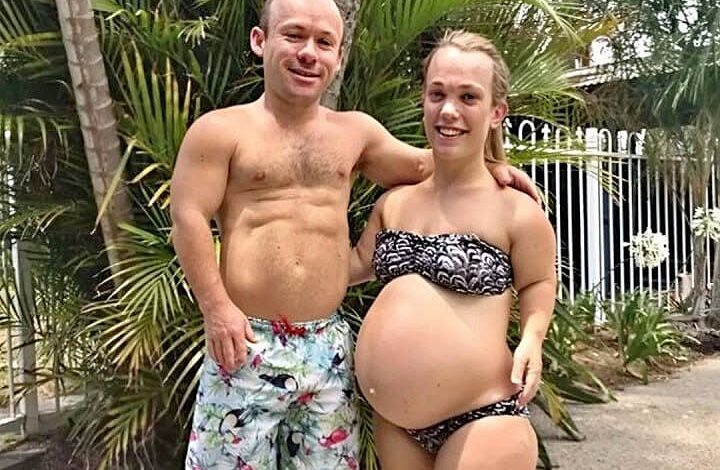
At first glance, the Adams family may seem different from many others.
But spend just a few minutes learning about their lives, and it quickly becomes clear that what defines them isn’t a medical diagnosis—it’s the love they share, the challenges they overcome together, and the positive outlook that has inspired thousands of people around the world.
Charlie and Callan Adams have built a close-knit family while both living with different forms of dwarfism. Along with their two daughters, they have embraced their unique circumstances and transformed their everyday experiences into a source of encouragement for others through their growing online presence.
Recently, the family shared exciting news with their followers.
Another baby is on the way.
The announcement was met with an outpouring of congratulations from supporters who have followed the family’s journey for years.
The couple also revealed that prenatal testing indicated their newest child is not expected to inherit either parent’s genetic condition and is anticipated to grow to an average adult height.
For Charlie and Callan, however, that result was simply another chapter in their family’s story—not something that changed how they viewed their growing household.
One aspect that makes their family especially unique is that Charlie and Callan do not share the same form of dwarfism.
Charlie was born with achondroplasia, the most common type of dwarfism. People with this condition typically have shorter limbs while maintaining an average-sized torso, creating distinctive body proportions that many people associate with achondroplasia.
Callan, meanwhile, has a different condition known as geleophysic dysplasia, which affects growth in a different way and often results in body proportions that appear more balanced despite shorter stature.
Because each parent carries a different genetic condition, each of their daughters inherited a different diagnosis.
Their daughter Tilba inherited Charlie’s achondroplasia, while their younger daughter, Talli, inherited Callan’s condition.
Although each child faces different medical considerations, the family has consistently focused on raising their daughters with confidence, independence, and the belief that their height does not determine their abilities or future.
Rather than allowing their diagnoses to define them, Charlie and Callan have chosen to openly share both the joyful and challenging moments of family life.
Through social media, they offer followers a glimpse into everyday routines, parenting, travel, celebrations, and the practical adjustments that sometimes come with living in a world designed primarily for people of average height.
Their honesty has helped educate countless people who previously knew very little about dwarfism.
Charlie, in particular, has surprised many followers with another passion outside of family life.
Fitness.
Despite her small stature, she has dedicated herself to weightlifting and bodybuilding, proving that physical strength has little to do with height.
Regular trips to the gym have become part of her lifestyle, and over time she has built impressive strength while encouraging others to challenge assumptions about what people with dwarfism can accomplish.
Perhaps even more remarkable, Charlie continued exercising throughout her third pregnancy.
Working closely within appropriate medical guidance, she maintained an active lifestyle because movement had become an important part of both her physical and mental well-being.
For her, exercise isn’t simply about appearance.
It’s about feeling healthy, capable, and strong.
The family’s openness has also exposed them to less pleasant experiences.
Like many people whose appearance differs from societal expectations, they occasionally encounter insensitive comments, prolonged stares, or intrusive questions from strangers.
Rather than allowing those encounters to discourage them, they have chosen to respond with patience, education, and, when possible, humor.
They frequently explain that curiosity is natural, but kindness and respect should always accompany it.
Their message remains simple.
Being different does not make someone less capable, less happy, or less deserving of respect.
Over the years, their online platforms have grown into more than personal blogs.
They have become communities where followers learn about dwarfism, celebrate family milestones, ask thoughtful questions, and witness daily life beyond stereotypes.
By sharing ordinary moments—family outings, birthdays, workouts, school activities, and pregnancy updates—the Adams family reminds people that their lives are far more similar to everyone else’s than many might assume.
They face the same parenting joys.
The same household responsibilities.
The same hopes for their children’s future.
Their story also highlights the remarkable diversity that exists even within medical conditions commonly grouped under the same label.
Not all forms of dwarfism are alike, and every individual’s experience is unique.
By speaking openly about their own diagnoses and those of their daughters, Charlie and Callan have helped increase public understanding while encouraging greater empathy and awareness.
As they prepare to welcome another child into the family, their excitement centers on exactly the same things any expecting parents dream about—a healthy baby, a loving home, and the opportunity to watch another child grow surrounded by care and acceptance.
Whether their children inherit dwarfism or grow to average height has never been the foundation of their family’s happiness.
Love has.
And that, more than any diagnosis or physical characteristic, continues to define the Adams family.
Through resilience, openness, and an unwavering commitment to living life on their own terms, they continue proving that the measure of a family is never found in height—but in the strength, compassion, and joy they share every single day.