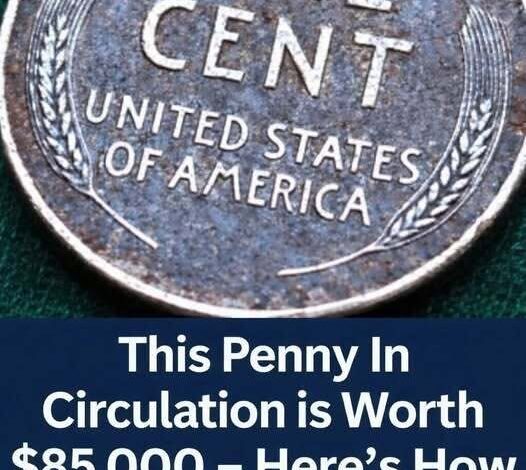
At first glance, a forgotten jar of pennies tucked away in a closet or resting on a dusty shelf seems like little more than loose change. But to collectors and historians, that jar is something far more fascinating: a miniature archive of American history. Every coin tells a story. Its date marks a specific moment in time. Its mint mark reveals where it was produced. Even the metal it is made from can reflect major events that shaped the nation, from economic crises to global wars and technological change.
Few examples illustrate this better than the famous 1943 penny. During World War II, copper became a strategic resource needed for military equipment, ammunition, communication systems, and countless other wartime necessities. To conserve supplies, the U.S. Mint temporarily abandoned its traditional bronze composition and began producing pennies from zinc-coated steel. Millions of these silver-colored steel cents entered circulation, becoming an unusual reminder of a country mobilized for war.
Yet history is rarely perfect. Amid the transition, a tiny number of leftover bronze coin blanks from the previous year remained in the minting equipment. When these blanks accidentally passed through the presses in 1943, they produced what would become one of the most celebrated errors in American numismatic history: the 1943 bronze penny. Only a handful are known to exist, and their rarity has transformed them into legends among collectors. Authenticated examples have sold for hundreds of thousands of dollars, with some reaching prices that rival luxury homes.
Stories like these inspire countless people to search through old coin collections, inherited jars of change, and forgotten piggy banks. The possibility that a life-changing treasure could be hiding among ordinary pennies is undeniably exciting. Every unusual date, strange color, or unexpected detail sparks curiosity and raises the question: Could this be something special?
At the same time, the world of coin collecting teaches an important lesson in patience and skepticism. For every genuine rarity, there are thousands of ordinary coins that merely resemble valuable ones. Some pieces have been altered by individuals hoping to create counterfeit rarities. Others appear unusual simply because of wear, environmental damage, or manufacturing variations that carry little collector value. Enthusiasm alone is not enough to determine whether a coin is truly rare.
That is why professional authentication plays such a crucial role in the hobby. Expert grading services examine coins under magnification, measuring their weight, dimensions, metallic composition, strike characteristics, and countless tiny details invisible to the untrained eye. Their evaluations separate genuine treasures from wishful thinking and provide collectors with confidence in a coin’s authenticity and value.
Even for those who never discover a six-figure rarity, coin collecting offers rewards that go far beyond money. A handful of change can become a doorway into history. One coin may have circulated during the Great Depression. Another may have passed through countless hands during World War II. A third might have been minted during the first years of the Space Age. Each carries traces of the era that created it and the people who once relied on it in everyday life.
In that sense, the true value of a coin collection is not always measured in dollars. It lies in the stories hidden within metal and time. Learning to recognize those stories transforms ordinary pocket change into something extraordinary—a tangible connection to generations that came before us. Every coin becomes a small historical document, quietly preserving moments that textbooks often overlook.
So the next time you come across an old jar of pennies, resist the urge to dismiss it as spare change. Look closer. You may not uncover a legendary rarity worth a fortune, but you might discover something equally meaningful: a piece of history resting in the palm of your hand, waiting for someone to notice what it has been carrying all along.