I never expected to become the kind of person who studies egg cartons before putting one in the shopping cart. At first, it felt unnecessary. An egg was an egg, or so I thought. But one unpleasant meal—and the stomachache that followed—changed the way I looked at something I had bought without a second thought for years.
That experience made me curious.
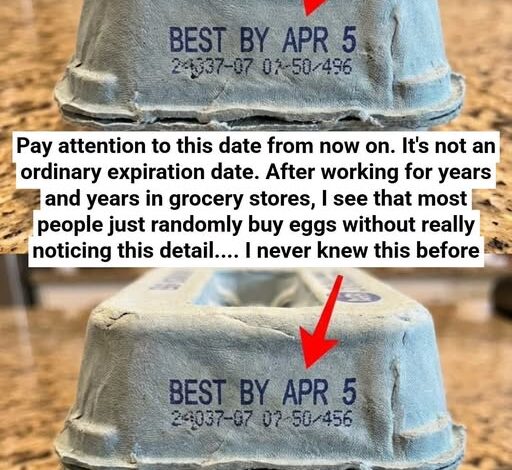
Instead of relying only on the large “sell by” date printed on the carton, I started paying attention to the smaller numbers and codes that most shoppers overlook. What I discovered completely changed the way I chose eggs, and surprisingly, it wasn’t complicated at all.
One of the most useful pieces of information is the Julian packing date.
Printed as a three-digit number, this code represents the day of the year the eggs were packed. For example, 001 means January 1, while 365 represents December 31 in a typical year. Unlike the “sell by” date, which mainly helps stores manage inventory, the Julian date gives shoppers a clearer idea of how recently the eggs were packed.
Once I began comparing cartons, I noticed the difference.
Eggs packed more recently tended to have firmer whites that stayed neatly together in the frying pan instead of spreading across the surface. Their yolks stood taller, and the overall texture felt fresher whether I was scrambling, poaching, or baking with them.
Freshness matters for more than appearance.
While properly refrigerated eggs often remain safe well beyond the printed “sell by” date, quality naturally declines with time. The whites become thinner, the yolks flatten more easily, and the texture changes. Choosing cartons with more recent packing dates simply gives you a better starting point.
Another code on the carton can become especially important during food recalls.
Every carton includes a plant identification number that shows where the eggs were processed and packaged. Most of the time, shoppers never notice it. But if a food safety alert is announced, that number allows consumers to quickly determine whether the eggs in their refrigerator are affected without discarding perfectly good food unnecessarily.
The USDA grade is another detail worth understanding.
Grade AA eggs have the firmest whites and highest, roundest yolks, making them especially attractive for frying or poaching. Grade A eggs are also excellent quality and work well for nearly every household recipe. Grade B eggs, which are rarely sold directly in supermarkets, are generally used in processed food products where appearance is less important.
Many shoppers also pay attention to descriptive labels on the carton.
Terms such as “cage-free,” “free-range,” “pasture-raised,” “organic,” and “vegetarian-fed” often influence purchasing decisions. Some of these labels are backed by specific certification standards, while others simply describe certain production practices without necessarily indicating differences in nutrition or overall quality.
Understanding what those terms actually mean can help shoppers make choices that reflect their own priorities, whether those involve animal welfare, environmental concerns, farming practices, or personal preference.
Even after selecting the freshest carton, proper storage remains essential.
Keeping eggs refrigerated at a consistent temperature helps preserve both quality and safety. Storing them in their original carton rather than transferring them to decorative containers also protects them from absorbing odors and helps preserve the information printed on the package should questions ever arise later.
Many people also use a simple freshness check at home.
Placing an egg in a bowl of water can provide a rough indication of its age. Fresh eggs usually sink and lie flat, while older eggs begin to stand upright as the air pocket inside grows larger. Eggs that float should generally be discarded because they may no longer be safe to eat.
Still, no single test replaces common sense.
If an egg has an unusual odor, cracked shell, or strange appearance after cracking it open, it is always safer to throw it away than to risk foodborne illness.
These small habits require only a few extra seconds at the grocery store, yet they can make a noticeable difference in both quality and peace of mind.
Today, I still find myself turning cartons over and checking the fine print before making a choice. It isn’t because I’m overly cautious or trying to make grocery shopping complicated. It’s simply because I’ve learned that a little attention can go a long way.
The freshest eggs often produce better breakfasts, fluffier baked goods, and more reliable cooking results. More importantly, understanding the information printed on the carton helps you make informed decisions instead of relying solely on marketing or guesswork.
In the end, those tiny numbers and codes are there for a reason. Once you know how to read them, choosing eggs becomes less about luck and more about confidence—ensuring that the meal people remember is the one you carefully prepared, not an unpleasant surprise afterward.