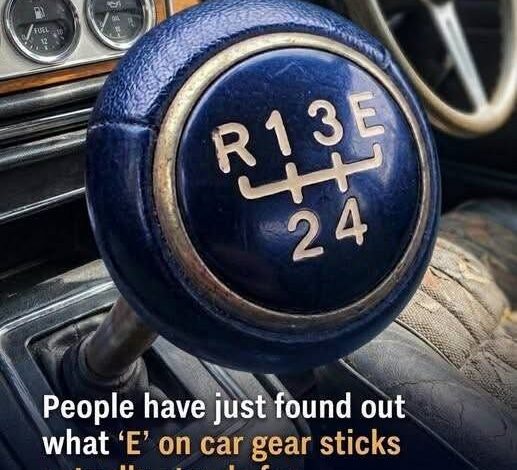
For many drivers, that small letter “E” beside the gear selector was easy to overlook. Yet it represented far more than another transmission setting. It reflected a changing philosophy about driving at a time when powerful engines, oil shortages, and rising fuel costs were forcing motorists to think differently about life behind the wheel. It quietly posed a choice: chase maximum performance, or drive with greater efficiency and restraint.
Selecting E, often short for Economy, subtly changed the car’s behavior. Instead of holding gears longer to deliver brisk acceleration, the automatic transmission shifted earlier. Engine speeds stayed lower, throttle response became gentler, and unnecessary fuel consumption was reduced. The difference wasn’t dramatic enough to transform the vehicle, but it was noticeable. The engine sounded calmer, the ride felt more relaxed, and the fuel gauge seemed to move a little more slowly between fill-ups.
For many owners, it was their first experience with the idea that driving style could directly influence fuel economy. Saving fuel was no longer just about slowing down or planning shorter trips. It became something the car itself could help manage, encouraging smoother acceleration and more efficient use of every gallon. In an era marked by energy concerns and fluctuating fuel prices, that simple setting symbolized a growing awareness that efficiency was becoming just as valuable as horsepower.
As automotive technology evolved, however, the familiar E gradually disappeared from gear selectors. Manufacturers replaced simple mechanical controls with increasingly sophisticated electronic systems capable of making thousands of adjustments every second. Instead of relying on a separate economy position, modern vehicles automatically optimize gear changes, engine timing, fuel delivery, and throttle response based on driving conditions.
The concept never vanished—it simply became less visible.
Today’s vehicles often offer selectable driving modes such as Eco, Normal, Sport, or Comfort, allowing drivers to prioritize efficiency or performance with the touch of a button. Even when no dedicated Eco mode is selected, modern computers continuously balance power and fuel economy in ways that older transmissions could never achieve. What once required a separate shift position now happens quietly in the background, largely unnoticed by the person behind the wheel.
The evolution becomes even more striking in hybrid and electric vehicles, where efficiency is no longer limited to conserving fuel alone. Here, the spirit of the old E lives on through regenerative braking, intelligent energy management, and software designed to maximize driving range. Instead of simply reducing engine speed, these systems capture energy during deceleration, carefully distribute battery power, and help drivers travel farther using the available charge. The goal remains remarkably familiar: use energy wisely without sacrificing everyday practicality.
In many ways, that small letter anticipated a much larger shift in automotive thinking. It marked one of the earliest moments when manufacturers openly acknowledged that performance was not the only measure of a successful vehicle. Comfort, economy, sustainability, and thoughtful energy use deserved a place alongside speed and acceleration.
While today’s dashboards are filled with digital displays, customizable settings, and advanced driver-assistance systems, the underlying principle remains unchanged. Whether labeled E, Eco, or managed entirely by software, the objective is still to help drivers make better use of the energy available to them.
What was once a tiny marking beside a gear lever has become part of a much broader story about the evolution of transportation. It connects the era of fuel-conscious gasoline engines to today’s hybrids and electric vehicles, where efficiency has become one of the industry’s defining priorities. The letter itself may have faded from view, but the idea behind it has only grown stronger, proving that sometimes the smallest symbols point toward the biggest changes still to come.