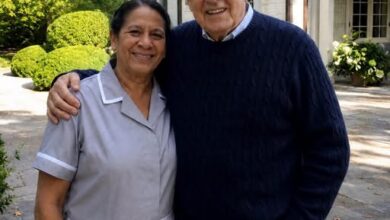
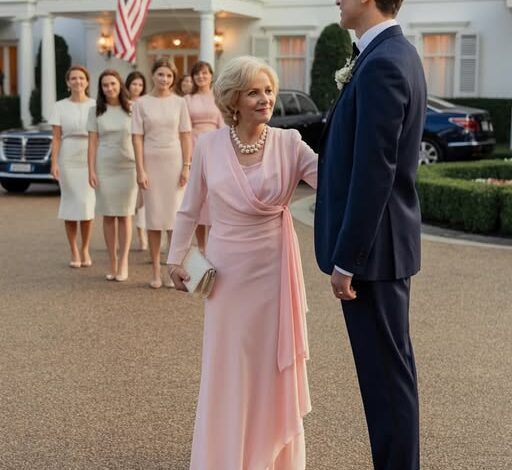
I attended my granddaughter’s wedding. Right at the front entrance, my son stepped into my path and said, “Mom, your name isn’t on the list.” Two hundred guests stood nearby, all of them watching me. I simply said, “It’s alright, son.” Then I turned around, went back home, and called my attorney. By the next morning, a letter was delivered directly to his house.

The morning after Richard and Susan left my building in humiliation, New York looked painfully ordinary.
Sunlight spilled across the sidewalks. Delivery trucks blocked traffic exactly where they always did. Somewhere below my apartment window, a man cursed at a taxi while a woman in running clothes laughed into her phone as though the world had not shifted violently overnight.
And that, strangely enough, was the hardest part.
Disaster never pauses the city.
Heartbreak does not stop elevators from opening.
Betrayal does not cancel brunch reservations.
Humiliation does not silence traffic.
The world keeps moving while your private life collapses in slow motion behind closed doors.
I stood barefoot in my kitchen holding a coffee mug with both hands, staring out over the street twenty floors below, and for the first time in weeks, I allowed myself to admit the truth fully:
My son had not simply hurt me.
He had discarded me.
There is a specific kind of pain that comes when your own child looks at you and sees usefulness instead of humanity. It rewrites old memories. Rearranges years you thought you understood. Suddenly every holiday, every favor, every “We appreciate you, Mom” begins to feel suspicious under new light.
Love survives many things.
But dignity cannot survive permanent humiliation.
And what Richard did at that wedding was not momentary cruelty.
It was revelation.
The signs had existed for years.
I simply refused to see them because mothers are trained to confuse endurance with devotion.
As I stood there that morning, memory after memory returned with awful clarity.
Richard at sixteen demanding a car while Robert and I worried about payroll during a difficult quarter.
Richard at twenty-four borrowing money “temporarily” after another failed business idea.
Susan crying dramatically at my dining table because designer daycare was “so expensive.”
The countless birthdays where I bought gifts for everyone else while receiving supermarket flowers chosen in obvious haste.
Always taking.
Always expecting.
Always certain I would absorb whatever burden appeared next.
And every single time, I did.
Because love, especially maternal love, can become dangerously close to self-erasure if left unchecked.
The phone rang again around ten.
I ignored it.
Then the intercom buzzed.
“Mrs. Parker?” Patrick’s voice came through the speaker. “There’s a florist downstairs asking if you’d like to accept a delivery.”
“A florist?”
“Yes, ma’am.”
I frowned.
“Send them up.”
A young delivery woman arrived moments later carrying an enormous arrangement of white roses and lilies. The bouquet looked expensive enough to make an apology seem respectable.
Attached was a card.
Mom,
We got carried away.
Please let’s fix this privately.
We love you.
—Richard & Susan
I stared at the note for a long moment.
Then I laughed softly to myself.
Not because it was funny.
Because even now, they still misunderstood the problem completely.
Flowers are for accidents.
For forgotten anniversaries.
For thoughtless remarks spoken in anger.
Flowers are not for public humiliation orchestrated carefully enough that your own mother leaves a wedding she paid for under the eyes of two hundred silent witnesses.
The bouquet sat on my counter for exactly twelve minutes before I called downstairs.
“Patrick?”
“Yes, Mrs. Parker?”
“Please donate these flowers to the oncology ward at St. Vincent’s.”
A pause.
Then softly:
“Of course.”
That afternoon, I went through old financial files for the first time in years.
Not because I needed to.
Because I wanted to understand exactly how long I had been financing my own disrespect.
The answer was horrifying.
Over eleven years, I had quietly transferred nearly eight hundred thousand dollars into Richard and Susan’s life.
Housing.
Vacations.
Emergency loans never repaid.
Private schools.
Vehicles.
Credit card rescues.
Boutique business failures.
Eight hundred thousand dollars.
Enough to buy loyalty from strangers.
Apparently not enough to buy decency from family.
I sat back slowly in Robert’s old leather chair and closed my eyes.
Robert would have seen this sooner.
Not because he loved Richard less.
Because he understood people more clearly than I did.
I remembered one particular evening years earlier after Richard stormed out over some argument involving money.
Robert stood at the kitchen sink rinsing dishes while I defended our son automatically.
“He’s under pressure,” I insisted.
Robert dried his hands slowly before answering.
“Denise, there’s a difference between helping someone build a life and helping them avoid becoming responsible for one.”
At the time I accused him of being too harsh.
Now I realized he had simply been honest.
Parents often believe unconditional love means endless rescue.
But rescue without accountability eventually creates entitlement strong enough to devour gratitude completely.
That was what happened to Richard.
Not all at once.
Slowly.
Like mold spreading invisibly behind walls.
The wedding had merely exposed what already existed.
By evening, Martin called again.
“They’re panicking,” he said without greeting.
I smiled faintly.
“I assumed so.”
“They contacted three separate attorneys today.”
“And?”
“No one wants the case. Not after reviewing the property records.”
I walked toward the balcony doors.
Outside, Manhattan glowed gold beneath approaching dusk.
“What exactly are they saying?” I asked.
Martin hesitated.
“Richard claims you manipulated him emotionally for years.”
That almost made me admire the audacity.
“Manipulated him?”
“He says you used money to control the family.”
I laughed outright this time.
A long, tired laugh that startled even me.
“Martin,” I said finally, “if I controlled them with money, why did they humiliate me the moment they thought they no longer needed it?”
Silence answered that question more honestly than words could.
Then Martin cleared his throat.
“There’s something else.”
“What?”
“Clara called me yesterday.”
That caught my attention immediately.
“What did she want?”
“She sounded devastated.”
I sat down slowly.
“Did she apologize?”
“No,” he admitted carefully. “Not exactly. But she cried the entire conversation.”
I looked toward the hallway where Clara used to sleep during summers when she was little.
Back then she followed me everywhere.
Into the kitchen.
Onto the balcony.
Into Robert’s office where she pretended to stamp invoices while he called her his “tiny executive assistant.”
She used to crawl into my lap while I balanced accounting spreadsheets and ask endless questions about adulthood.
Grandma, how do taxes work?
Grandma, why do trucks have different company names?
Grandma, were you scared when you started the business?
She loved hearing stories about struggle back then because children assume hardship always belongs safely in the past.
Neither of us understood yet that she was being raised by people who viewed love transactionally.
“Do you think she means it?” I asked quietly.
Martin answered honestly.
“I think she’s finally beginning to understand what happened.”
That hurt more than if he’d said no.
Because realization arriving after consequences often carries genuine suffering inside it.
And despite everything, Clara still mattered to me.
That night I opened an old cedar chest in my bedroom closet.
Inside were decades of family history:
birthday cards,
school drawings,
holiday photographs,
tiny handprints pressed into clay.
Near the bottom sat a faded recipe card written in Clara’s uneven childhood handwriting.
Grandpa’s Rice Pudding
Underneath, in crooked pencil:
“Grandma says stir slow so it doesn’t burn.”
My chest tightened painfully.
For a moment anger disappeared completely beneath grief.
Because betrayal from family is not only painful for what exists now.
It mourns what once existed too.
I sat on the edge of my bed holding that recipe card while tears finally came properly for the first time since the wedding.
Not dramatic sobbing.
Just quiet grief sliding down an old woman’s face in a silent apartment while the city moved outside without noticing.
I cried for Robert.
For Clara.
For the version of Richard who once held my hand crossing streets and believed I could fix anything.
Mostly I cried because somewhere along the way, my family stopped seeing me as a person separate from what I provided.
That realization wounds deeper than financial betrayal ever can.
Money can be replaced.
Being loved conditionally reshapes the soul.
The next morning, however, something inside me felt lighter.
Not healed.
But clarified.
Pain loses some power once truth fully settles into place.
I dressed carefully and took myself to breakfast at a small café near Central Park.
Alone.
That would have terrified me years earlier.
Widowhood teaches women strange things about visibility. Society often treats older women dining alone as sad by default, as though solitude itself signals failure.
But sitting there beside the window drinking espresso while autumn leaves blew along the sidewalk outside, I realized something profound:
Peace and loneliness are not the same thing.
I had been lonely inside my family long before I ever sat alone in a restaurant.
At least now the loneliness was honest.
The waitress brought my food with a warm smile.
“You celebrating something?” she asked casually.
I almost answered no.
Then I stopped.
Because in a strange way, I was.
Not revenge.
Not estrangement.
Awareness.
“I think,” I said slowly, “I’m celebrating a new beginning.”
She smiled politely without understanding.
But I understood.
And that was enough.
Over the following weeks, the changes became irreversible.
Richard lost access to the life he thought was permanent.
Susan lost the audience she built her identity around.
The beach house became quiet again.
The apartment sold quickly to a young couple who actually seemed grateful just to afford it.
And me?
I became visible to myself again.
That was the real transformation.
Not wealth.
Not revenge.
Recognition.
I started sleeping with the windows cracked open because I liked hearing the city breathe at night. I joined an investment group mostly populated by women twenty years younger than me and discovered they listened carefully when I spoke. I traveled to Florence alone for two weeks and spent entire afternoons wandering museums without apologizing for moving slowly.
One evening in Italy, I sat in a small restaurant overlooking the Arno River while candlelight flickered across old stone walls.
The waiter poured wine and asked softly,
“Your husband is not with you?”
I looked out toward the water.
“No,” I answered gently. “But I think he’d be proud I came anyway.”
And for the first time since Robert died, the memory of him no longer felt tied only to loss.
It felt like permission.
Permission to keep living fully.
Permission to protect myself.
Permission to stop sacrificing dignity in exchange for temporary harmony.
When I finally returned to New York, winter had begun settling across the city.
One evening Clara appeared at my door carrying nothing except a small overnight bag and eyes swollen from crying.
That moment changed everything again.
Because revenge stories are simple.
Family stories never are.
She looked so young standing there despite being a married woman now. Heartbreak stripped away polish quickly. Suddenly I could see traces of the little girl who once spilled cinnamon across my kitchen counter while learning recipes beside me.
“Grandma,” she whispered.
I opened the door wider immediately.
Not because pain had disappeared.
Because love and boundaries can coexist. It simply took me seventy-two years to learn how.
And perhaps that was the final lesson underneath all of it:
forgiveness does not require reopening every door.
But wisdom means leaving at least one unlocked for the people willing to arrive honestly at last.