A Police Officer Spotted a 3-Year-Old Alone on a Highway — What Followed Took Him by Surprise

The officer almost missed him.
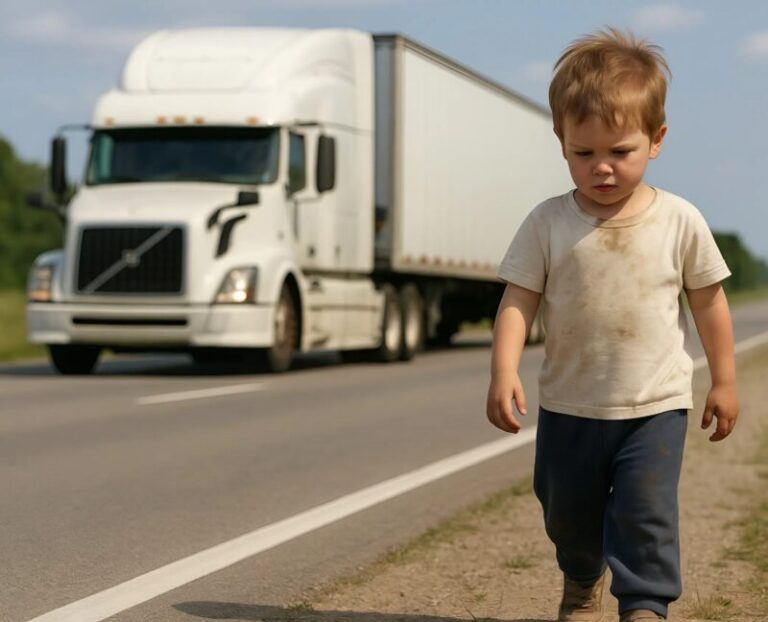
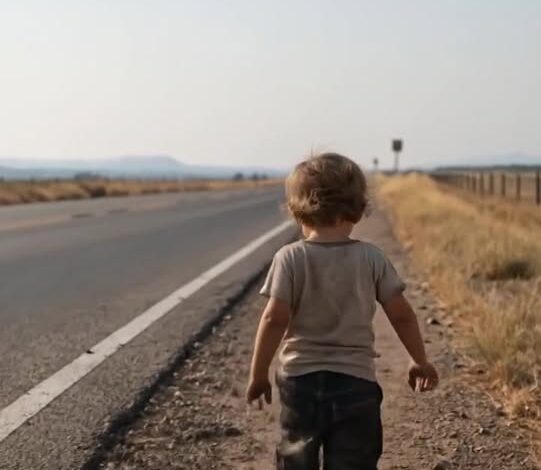
A small figure stood near the edge of the highway, barely visible between the rush of passing cars and the pale dust kicked up by their tires. Trucks roared past at frightening speed, their wind pushing against the tiny child as he stumbled along the gravel shoulder.
He couldn’t have been more than three years old.
His shirt was dirty. His face was streaked with dust and dried tears. One shoe was missing, and the other dragged loosely with every uncertain step. He looked exhausted, confused, and far too small to be anywhere near that dangerous road.
Officer Daniel Reyes hit the brakes immediately.
His patrol car rolled onto the shoulder, lights flashing. For a moment, he simply stared, trying to understand what he was seeing. No adult nearby. No parked car. No frantic parent running after him.
Just a toddler walking alone beside a highway.
Daniel stepped out carefully, raising one hand to slow traffic as he approached.
“Hey, buddy,” he said gently. “It’s okay. I’m here to help.”
The child turned toward him.
His lower lip trembled.
Then he began to cry.
Daniel crouched a few feet away, keeping his voice soft.
“What’s your name?”
The boy only sobbed harder.
“Where’s your mommy?”
No answer.
The officer’s concern deepened.
The child wasn’t just lost. Something was wrong. His small hands were scratched. There were marks on his cheeks and knees. He looked like he had been outside for a long time.
Daniel glanced at the highway.
Every second out here was dangerous.
He carefully lifted the boy into his arms. The child was light, too light, and clung weakly to his uniform as Daniel carried him back to the patrol car.
Inside, the boy curled into the seat, shaking from exhaustion and fear.
Daniel radioed dispatch immediately.
“I’ve located a young child alone near Highway 18. Approximately three years old. No guardian in sight. Request medical evaluation and missing child check.”
At the station, paramedics examined him.
Thankfully, his injuries were minor—scratches, bruises, dehydration, and signs of exposure. But the biggest question remained unanswered.
Who was he?
And how had he ended up alone beside the highway?
Police released his photo through official channels, asking the public for help identifying him. Within hours, a relative came forward.
The boy’s name was Noah.
And then the story became even more alarming.
Noah’s mother had been missing for several days.
She had left home with her son and never returned. Her phone had gone dead. Family members had searched, called, and worried, but nobody knew where she was.
Now Noah had appeared alone.
Alive.
But unable to explain anything.
The investigation shifted immediately.
Officers returned to the stretch of highway where Daniel had found him. At first, there seemed to be nothing unusual. The road curved through rough terrain, bordered by brush, rocks, and deep ravines hidden from view.
Then one officer noticed broken branches below the shoulder.
A search team moved carefully down the slope.
The terrain was steep and dangerous. Loose dirt slid beneath their boots. Thorny bushes scratched at their uniforms. From the road above, almost nothing could be seen.
But halfway down the ravine, they found it.
An overturned car.
Crushed.
Hidden.
Silent.
The vehicle had left the roadway days earlier, plunged down the embankment, and landed where no passing driver could see it.
Near the wreckage, they found Noah’s mother.
She had not survived.
For a long moment, even experienced officers stood quietly.
The hidden crash explained everything and made the child’s survival feel almost impossible.
Investigators believed the accident had happened several days earlier. The car had gone off the road with enough force to conceal it deep in the ravine. From the highway, there were no obvious signs. No smoke. No visible wreck. No clear path.
Somehow, Noah had survived.
Even more astonishing, he had managed to escape the wreckage.
A three-year-old child, injured and terrified, had crawled or climbed out of the damaged vehicle. He had moved through brush, rocks, and uneven ground, likely without food, water, or shelter.
For days, he had been alone.
Perhaps he stayed near the car at first, waiting for his mother to wake up.
Perhaps he cried until his voice gave out.
Perhaps instinct finally pushed him upward toward the sound of traffic.
No one could know exactly what he experienced.
But the evidence told enough.
Small footprints were later found near the ravine. Broken twigs and disturbed dirt suggested he had climbed slowly, falling and trying again. Somehow, through confusion and fear, he reached the road.
And there, by chance or fate, Officer Reyes saw him.
When the news spread, the community reacted with shock and heartbreak.
People struggled to understand how a crash could remain hidden for days. They grieved for Noah’s mother, whose life had ended in a place no one had known to search. At the same time, they felt overwhelming relief that the child had survived.
Daniel couldn’t stop thinking about the moment he first saw Noah.
The tiny figure near the roaring highway.
The missing shoe.
The dusty face.
The exhausted cry.
One minute later, one distracted glance, one more speeding truck—and the ending could have been even worse.
Noah received continued medical care after his rescue. Doctors treated his dehydration and injuries, while specialists focused on the emotional trauma he had endured. Family members gathered around him, determined to give him safety, warmth, and stability after days of terror no child should ever experience.
The case stayed with everyone involved.
For investigators, it was a reminder of how easily tragedy can disappear from view. A vehicle can leave the road, fall into hidden terrain, and remain unseen even as thousands of cars pass nearby.
For the community, it became a story of sorrow and survival.
For Officer Reyes, it became one of those calls that never truly leaves an officer’s mind.
He had started that day on routine patrol.
Just another shift.
Just another stretch of highway.
But one glimpse toward the roadside changed everything.
A child was saved.
A mother was found.
And a family finally received answers, even painful ones.
Noah’s survival did not erase the tragedy of what happened. Nothing could. But it gave the story one fragile thread of hope.
Against impossible odds, a little boy climbed out of darkness and found his way toward help.
And because one officer stopped, noticed, and acted, that child was given a chance to live beyond the worst days of his life.