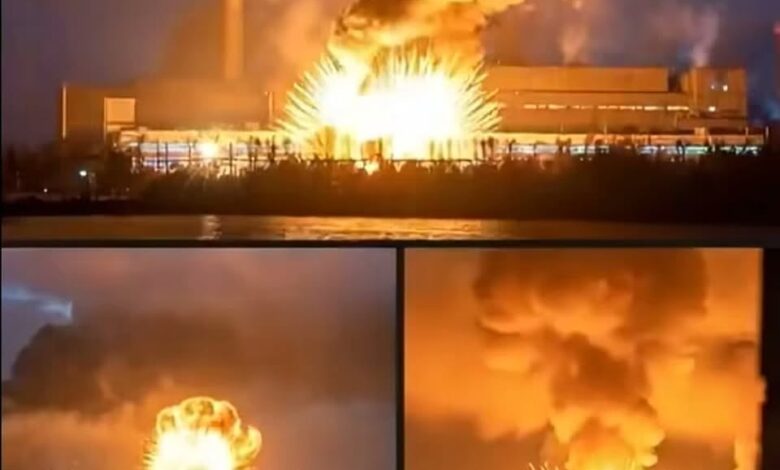
It began with a notification that seemed ordinary enough—a few words appearing on phone screens around the world. There were no air-raid sirens, no emergency broadcasts interrupting television programs, and no official declaration that history had suddenly changed. Yet within minutes, something far less visible had taken hold. Anxiety spread from one screen to another, amplified by endless speculation and unanswered questions. A single phrase began appearing everywhere: global alert.
No one seemed entirely sure what it meant.
Some people dismissed it as another overblown headline. Others refreshed news websites every few seconds, convinced that major events were unfolding beyond public view. Social media exploded with theories, predictions, and dramatic claims, each one competing to be believed first. Before verified information had a chance to catch up, uncertainty had already traveled halfway around the world.
That is often how fear works.
It rarely waits for confirmation.
The alert itself offered few concrete details. There were no verified reports of immediate attacks, no announcements of widespread military action, and no evidence that catastrophe had already begun. Instead, it reflected a period of heightened awareness—a reminder that governments were monitoring developments closely as international tensions evolved.
Ironically, the lack of specific information became its own source of concern.
When people cannot clearly see what is happening, they naturally try to fill in the gaps. Questions multiply faster than answers. Every rumor seems possible. Every anonymous post appears credible to someone. In an age where information travels at extraordinary speed, uncertainty often moves even faster.
As public attention intensified, government leaders approached the situation with deliberate care.
Across multiple countries, officials addressed their citizens in carefully prepared statements. Their goal was a difficult one: acknowledge that circumstances deserved close attention without creating unnecessary panic. They spoke about vigilance, cooperation, and preparedness. Their language remained measured, offering reassurance while recognizing that complex international situations rarely produce simple explanations.
Behind those public appearances, countless professionals were already at work.
Inside government offices, intelligence agencies, military headquarters, and diplomatic missions, specialists reviewed incoming information around the clock. Analysts compared reports from multiple sources. Security advisers evaluated possible scenarios. Emergency planners examined contingency procedures that they hoped would never need to be implemented.
Most of this work unfolded far from public view.
It always does.
While headlines focus on dramatic possibilities, much of crisis management consists of careful analysis, constant communication, and patient decision-making. The objective is not merely to respond when problems emerge but to prevent them from becoming something larger.
Diplomacy quickly became one of the most important tools available.
During periods of international tension, misunderstandings can be as dangerous as deliberate actions. A poorly interpreted statement, an incorrect assumption, or a breakdown in communication can unnecessarily increase risks. For that reason, diplomats often work tirelessly to keep conversations open even when disagreements become difficult.
History has repeatedly shown that dialogue matters.
Many serious confrontations have been eased because governments continued talking rather than allowing silence to create greater uncertainty. Maintaining those conversations requires patience, trust, and the recognition that peaceful solutions often emerge through persistent negotiation rather than dramatic public announcements.
For ordinary citizens, however, the experience felt very different.
Most people simply wanted straightforward answers.
What exactly was happening?
Was there an immediate threat?
Should families prepare for anything unusual?
When clear information remains limited, speculation naturally rushes in to occupy the empty space. Social media platforms filled with screenshots, anonymous claims, edited videos, and dramatic predictions, many of which spread far more quickly than verified reporting.
Experts urged people to slow down before sharing alarming content.
They reminded the public that periods of uncertainty often become fertile ground for misinformation. Sensational headlines attract attention, but attention is not the same as accuracy. A rumor repeated thousands of times does not become more reliable simply because it is widely shared.
Instead, specialists encouraged people to rely on established news organizations, official government communications, and verified public safety updates while remaining cautious about unsupported claims circulating online.
At the same time, humanitarian organizations quietly reviewed emergency response plans.
Although no immediate crisis had been confirmed, relief agencies examined supply chains, evaluated available resources, and coordinated with international partners. Their work reflected preparedness rather than prediction. Responsible planning often happens precisely because organizations hope those preparations will never be needed.
Security analysts also pointed to a broader lesson.
The modern world is more interconnected than ever before. Events occurring thousands of miles away can influence financial markets, transportation systems, energy supplies, communication networks, and public confidence within hours. Geography no longer guarantees emotional distance. A development in one region can quickly become a topic of conversation across every continent.
That reality helps explain why alerts often capture global attention even when direct risks remain uncertain.
People understand that today’s world functions through countless interconnected systems. Stability depends not only on military strength but also on diplomacy, economic cooperation, technological resilience, and effective communication between nations.
As the initial wave of speculation gradually subsided, one message became increasingly clear.
Preparedness should never be mistaken for panic.
Remaining informed is wise.
Allowing fear to replace judgment is not.
Public officials continued encouraging citizens to stay aware of verified developments while avoiding the temptation to assume the worst based on incomplete information. Calm vigilance, they argued, serves communities far better than constant alarm.
Ultimately, the discussion surrounding the alert became less about a single headline and more about an enduring truth. Peace is rarely something that simply exists on its own. It is maintained through continuous effort, careful diplomacy, responsible leadership, and countless decisions made every day—many of them far from public view.
Most of those decisions never become breaking news.
Most negotiations end quietly.
Most crises are resolved before the public ever realizes how close they came to becoming something larger.
Perhaps that is the most reassuring lesson of all.
Moments of uncertainty will always capture attention, but they should also remind us of the enormous work taking place behind the scenes to preserve stability. While headlines often focus on conflict, countless professionals spend every day trying to prevent it.
For the rest of us, the best response is neither complacency nor fear. It is thoughtful awareness—seeking verified facts instead of rumors, exercising patience instead of panic, and remembering that peace is not simply the absence of crisis. It is something that must be protected, strengthened, and renewed through wisdom, cooperation, and restraint, one decision at a time.