For many military veterans, the battle does not end when they return home. Long after the uniforms are folded away, countless former service members continue living with chronic pain, post-traumatic stress disorder (PTSD), depression, traumatic brain injuries, and other conditions that can make everyday life an exhausting challenge. Many describe years spent moving from one prescription to another, attending appointment after appointment, and searching for treatments that ease symptoms without fully restoring their quality of life.
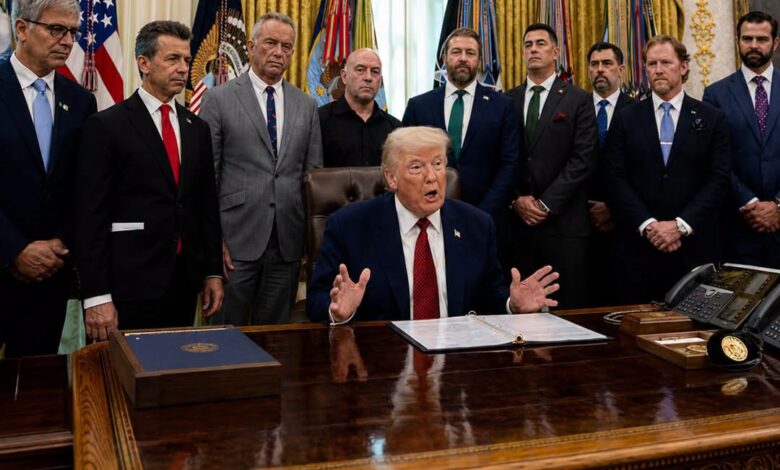
Against that backdrop, a new executive order signed by President Donald Trump has reignited one of the most debated topics in modern medicine: the potential use of psychedelic compounds as therapeutic treatments.
The order directs federal agencies, including the U.S. Food and Drug Administration (FDA), to prioritize and accelerate the review of certain therapies that have already received the agency’s Breakthrough Therapy designation. While the action does not approve any psychedelic treatment for widespread use, it aims to speed the evaluation process for promising therapies that researchers believe could benefit patients with serious conditions, including many veterans.
The announcement immediately sparked discussion among medical professionals, researchers, veterans’ organizations, policymakers, and the public.
For supporters, the executive order represents an opportunity to move innovative treatments through a regulatory system that many believe advances too slowly. They argue that veterans who have exhausted conventional options deserve faster access to therapies that early clinical studies suggest may help address conditions such as PTSD, severe depression, and treatment-resistant mental health disorders.
Many point to years of growing scientific research examining substances such as MDMA and psilocybin under carefully controlled medical settings. Some early studies have reported encouraging results for selected patients when these therapies are combined with structured psychological support and professional supervision.
Advocates believe accelerating the review process could allow more people to benefit if future research continues to demonstrate safety and effectiveness.
To them, the issue is deeply personal.
Every year spent waiting for additional regulatory review may mean another year of suffering for veterans who have already tried numerous medications, counseling programs, and other therapies without finding lasting relief.
Supporters argue that innovation should not be delayed unnecessarily when promising evidence continues to emerge.
Others, however, urge a more cautious approach.
Critics emphasize that the FDA’s approval process exists to ensure new treatments are both safe and effective before becoming widely available. While early research into psychedelic-assisted therapy has generated considerable interest, many scientists stress that larger studies are still needed to better understand long-term outcomes, appropriate patient selection, possible side effects, and potential risks.
Some worry that heightened political attention could create unrealistic public expectations before the scientific process has reached firm conclusions.
Mental health experts also note that psychedelic therapies, when studied, are typically administered in highly controlled clinical environments with trained professionals providing careful preparation, monitoring, and follow-up care. These settings differ significantly from unsupervised or recreational use, making it important that public discussions distinguish between clinical research and non-medical use.
The executive order therefore sits at the intersection of two powerful priorities.
On one side is the desire to deliver promising treatments more quickly to people who may desperately need new options.
On the other is the responsibility to ensure that scientific evidence—not urgency alone—guides medical approval decisions.
Between those positions stand the veterans themselves.
For individuals living with chronic pain, recurring nightmares, anxiety, depression, or other service-related conditions, the debate is more than a policy discussion. It is about hope, uncertainty, and the possibility that future treatments may offer relief where previous approaches have fallen short.
Some welcome any effort to accelerate research that could improve their lives.
Others remain cautiously optimistic, recognizing that promising therapies still require careful scientific evaluation before becoming standard medical care.
Ultimately, the executive order does not settle the debate surrounding psychedelic-assisted treatment.
Instead, it brings a once-taboo subject into the center of national healthcare policy and renews questions about how quickly medical innovation should move when patients continue to face significant unmet needs.
Whether the initiative ultimately leads to broader treatment options will depend on the outcome of ongoing clinical research, regulatory review, and future evidence regarding both safety and effectiveness.
For now, the conversation continues.
Researchers will keep studying these therapies.
Regulators will continue evaluating the evidence.
Healthcare professionals will weigh potential benefits alongside known risks.
And many veterans will continue watching closely, hoping that scientific progress—guided by careful research and responsible oversight—may one day provide new answers for conditions that have shaped their lives long after their military service ended.