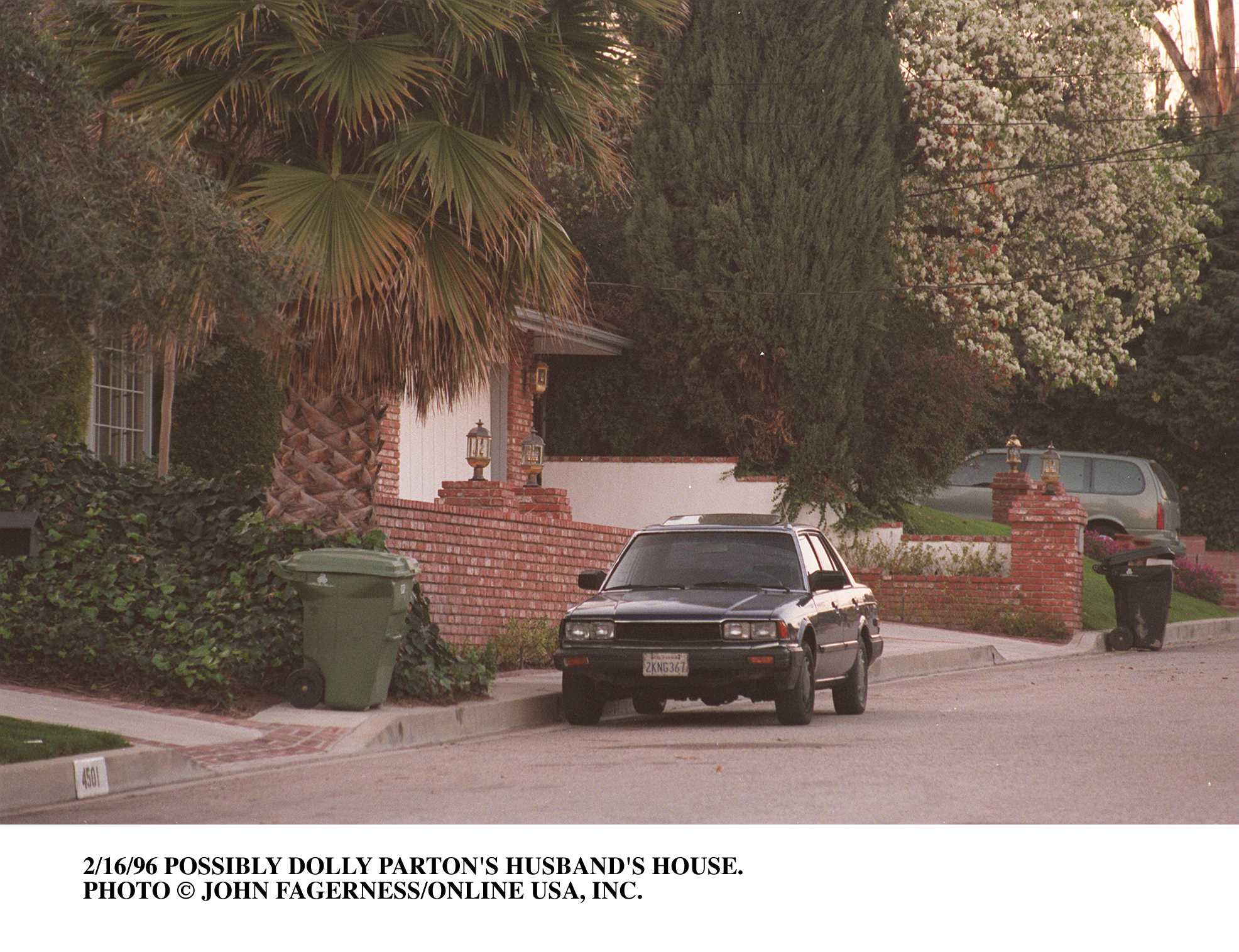
Dolly Parton Spent Nearly 60 Years with Her Husband Until His Passing, Keeping Him Out of the Public Eye — Their Love Story & His Rare Pics

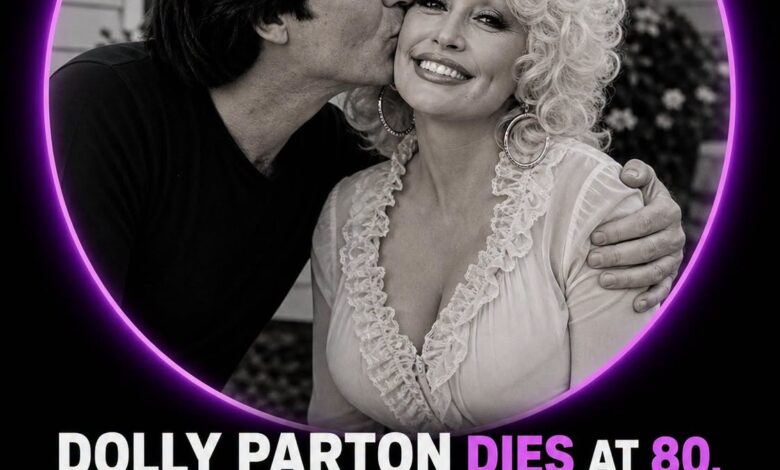
Dolly Parton spent almost her entire adult life loving a man most of the world barely knew.
That was exactly how Carl Dean wanted it.
For nearly sixty years, Dolly lived one of the most public lives imaginable while Carl remained almost completely outside the spotlight. She became a country music legend, film star, businesswoman, philanthropist, and cultural icon. He stayed home, ran his own business, bought and sold vehicles, and avoided the machinery of celebrity whenever possible.
On paper, they looked mismatched.
In reality, Dolly often said that difference was part of what made the marriage work.
Their story began before the fame.
In 1964, Dolly had just moved to Nashville, young, ambitious, and determined to build a music career. She was only eighteen and staying with her Uncle Bill when she met Carl at a laundromat.
The setting could hardly have been less glamorous.
No stage.
No backstage pass.
No record executive.
Just a young woman looking around her new surroundings and a man who called out to her.
Dolly waved.
Carl came over.
And that was the beginning.
She later remembered that he was interested immediately.
She was more cautious.
Dolly had been taught not to disappear somewhere with a stranger simply because he seemed charming, so she did not immediately agree to go out with him.
Instead, she invited him to visit while she was babysitting her nephew.
Carl came.
Then he came back.
And kept coming back.
He sat with her on the porch day after day until Dolly finally agreed to go somewhere with him.
Carl apparently wasted no time once she did.
He drove her to meet his parents.
According to Dolly, he told them he knew from the moment he saw her that she was the one he wanted.
It sounds almost impossibly certain.
But Carl remained certain for decades.
They dated for about two years before marrying in May 1966.
Dolly was twenty.
Carl was twenty-three.
Their marriage began just as Dolly’s professional life was starting to accelerate.
That timing could easily have destroyed them.
Instead, they created an unusual system.
Dolly went outward.
Carl stayed inward.
As her career expanded through work with Porter Wagoner and then through her own music, Dolly spent enormous amounts of time touring, recording, writing, traveling, and appearing publicly.
Carl resisted almost all of it.
He did not want to become a celebrity husband.
He wasn’t interested in red carpets.
He did not seem eager to attend industry events.
He sometimes avoided her performances altogether.
For another couple, that could have felt like rejection.
Dolly understood it differently.
Carl wasn’t rejecting her.
He was rejecting the spectacle around her.
That distinction seems to have protected them.
Dolly once described him as shy and quiet and suggested that what they had together was too good to let fame complicate it.
That sentiment says a great deal about how carefully she separated Dolly Parton the public figure from Dolly the wife.
The world got the rhinestones.
Carl got the woman who came home afterward.
That privacy became one of the most fascinating parts of their marriage.
People naturally wanted photographs.
Interviews.
Stories.
Proof.
But Carl’s absence became almost as recognizable as Dolly’s presence.
Fans knew she was married.
They knew the marriage had lasted.
They simply did not see much of the man.
And Dolly rarely seemed bothered by that.
In fact, she often appeared proud that Carl had maintained a life that belonged to him.
He ran an asphalt paving business.
Later, he spent time buying and reselling trucks and tractors.
He enjoyed independence.
He liked home.
Dolly traveled constantly.
Their marriage did not depend on pretending they were identical.
Quite the opposite.
Years later, Dolly would say the cliché about opposites attracting happened to be true in their case.
She described Carl as unpredictable in ways that still amused her after decades together.
He could surprise her.
Make her laugh.
Remain deeply himself even while married to someone recognized almost everywhere she went.
That security may have been crucial.
Dolly’s public image was enormous.
She wore elaborate clothes.
Her stage persona was flirtatious, funny, exaggerated, and deliberately glamorous.
She was surrounded by musicians, actors, executives, fans, and industry attention.
A deeply insecure spouse could have struggled with that world.
Dolly described Carl as someone who did not.
He knew who he was.
And he seemed to know who she was too.
That allowed their differences to remain differences rather than become threats.
Their home life reflected that contrast.
Away from the stage, Dolly often described enjoying simple things with Carl.
They traveled together in an RV.
She read.
She cooked.
She relaxed in comfortable clothes she jokingly referred to as her “baby clothes.”
For someone whose public image depended on wigs, heels, makeup, and rhinestones, those ordinary private routines mattered.
They gave her somewhere to come down.
Carl, meanwhile, preferred shorter trips.
He enjoyed being away for a while but wanted to return home.
Dolly liked movement.
He liked rootedness.
Instead of forcing each other into the same lifestyle, they allowed space.
That may be one of the most useful lessons hidden inside their marriage.
Love does not always mean doing everything together.
Some couples thrive through constant companionship.
Others need distance.
Dolly and Carl appear to have understood that both closeness and independence could coexist.
While she was away working, he stayed home living a life that did not orbit every moment of her fame.
When she became lonely, she called.
Sometimes he would come see her for a few days.
Then they returned to their own rhythms.
To outsiders, that arrangement might seem unusual.
To them, it worked.
The couple also lived comfortably.
Their home outside Nashville was substantial, situated on extensive property and large enough to accommodate family.
But despite Dolly’s extraordinary success, her stories about Carl rarely centered on luxury.
They centered on ordinary companionship.
Driving.
Cooking.
Talking.
Traveling quietly.
Laughing.
That was another contrast.
The world saw Dolly’s extravagance.
Her marriage appears to have depended on simplicity.
Children were one part of life that unfolded differently than Dolly once imagined.
She spoke over the years about motherhood and adoption, but she and Carl never had children.
Dolly acknowledged that her career demanded a level of travel and commitment that made motherhood complicated for her.
She did not want to bring children into the world only to have someone else raise them while she remained constantly away.
She also considered the possibility of adoption later.
Life ultimately took another path.
Though they did not become parents, family remained central to Dolly’s world.
She came from an enormous family herself and stayed deeply connected to relatives, nieces, nephews, and younger generations.
Carl remained part of that private family structure without becoming a public personality.
As the decades passed, Dolly’s language about him grew more striking.
In the early 1980s, she spoke about the depth of her love in almost absolute terms.
Carl, she said, was the one man in her life.
She wanted to grow old with him.
And if he died first, she suggested she might never marry again because her love for him was that deep.
At the time, it could have sounded romantic in the abstract.
Decades later, those words carried different weight.
They did grow old together.
Year after year, while celebrity marriages collapsed around them and tabloids repeatedly treated permanence as suspicious, Dolly and Carl simply kept going.
Not perfectly.
No marriage lasts nearly sixty years without frustration, disagreement, compromise, and seasons that are harder than others.
But their relationship survived something that destroys many couples:
Difference.
Carl did not need to become Dolly.
Dolly did not ask him to.
She did not need him to become famous for their marriage to feel legitimate.
He did not need her to shrink her ambition in order to make him comfortable.
They remained distinct people.
That independence appears to have created room for affection.
When Dolly explained their relationship after nearly five decades together, she returned to the idea that they had enough in common to hold the differences together.
They both valued a simpler private life.
They both appreciated humor.
They both seemed to understand the importance of giving each other room.
Those shared fundamentals mattered more than identical personalities.
That idea becomes especially meaningful when compared with the way relationships are often presented publicly.
Celebrity couples are expected to perform togetherness.
Matching appearances.
Joint interviews.
Constant photographs.
Public declarations.
Social media posts.
Dolly and Carl never needed much of that.
Their relationship existed whether cameras captured it or not.
Perhaps that was one reason it endured.
Carl’s privacy meant their marriage retained a territory the public could not fully enter.
A conversation remained a conversation.
A disagreement remained theirs.
An ordinary morning did not become content.
That privacy is increasingly rare.
And it may have been one of the most valuable things Dolly protected.
The irony is that Carl became famous partly because he refused fame.
People were fascinated by the husband nobody saw.
But Dolly never treated his absence from the spotlight as something to apologize for.
She seemed to respect it.
He had married her before Dolly Parton became an institution.
He wanted the woman, not the celebrity ecosystem.
And Dolly never forgot the difference.
There is something unexpectedly romantic about that.
Imagine watching the person you married at twenty become internationally recognizable.
Watching strangers adore her.
Watching awards accumulate.
Watching songs become classics.
Watching her face appear everywhere.
Then still being the person who knows what she looks like when she is tired, irritated, hungry, or wearing comfortable clothes at home.
Fame creates mythology.
Marriage deals in reality.
Carl belonged to the reality.
And Dolly appears to have treasured that.
Their love story therefore does not fit the usual celebrity template.
It was not built around public display.
It was built around trust in absence.
Around allowing different temperaments to coexist.
Around understanding that independence does not automatically mean emotional distance.
Around returning to each other after the noise.
That is perhaps why the laundromat matters so much in the story.
It was ordinary.
Before fame complicated everything, there were simply two young people meeting somewhere mundane.
A girl with enormous dreams.
A young man who noticed her.
He called out.
She waved.
He came over.
No one there could have known what Dolly would become.
Carl could not have known the scale of the life ahead of her.
Yet the relationship survived that transformation.
The girl from the laundromat became Dolly Parton.
And Carl still remained Carl.
That was their balance.
By the time they had been married nearly half a century, Dolly could still speak about him with amusement.
That may be one of the most revealing signs of affection.
Not grand declarations.
Delight.
After decades, he could still surprise her.
Still make her laugh.
Still remain interesting.
Love becomes ordinary over time.
That is unavoidable.
The extraordinary thing is continuing to find joy inside the ordinary.
An RV trip.
A meal.
A strange comment.
A husband who would rather stay home while his wife conquered another stage.
Dolly’s career was built on enormous audiences.
Her marriage was built on one person who did not need to be part of the audience at all.
Carl already knew her.
And perhaps that’s why those old words about never marrying again feel so powerful.
They weren’t spoken about some idealized romance.
They were spoken about the man who represented home.
The one who knew the life underneath the costumes.
The one who had been there before most of the world learned her name.
Nearly sixty years is a long time to choose the same person.
Dolly and Carl managed it not by becoming identical, but by letting each other remain different.
She loved the road.
He loved home.
She lived publicly.
He lived privately.
She became one of the most recognizable women in entertainment.
He remained the man she had first met beside washing machines in Nashville.
And somehow, between all those opposites, they built a marriage sturdy enough to last most of a lifetime.
Maybe that was the secret.
Not perfect compatibility.
Not constant proximity.
Not public proof.
Just enough shared values, enough laughter, enough independence, and enough love to keep choosing home in each other.
The world knew Dolly Parton.
Carl Dean knew Dolly.
That was never the same thing.
And for almost sixty years, it seems to have been enough.