For 4 years my parents told everyone I “disappeared” after I stopped sending money home. Then they sent my brother to track me down.

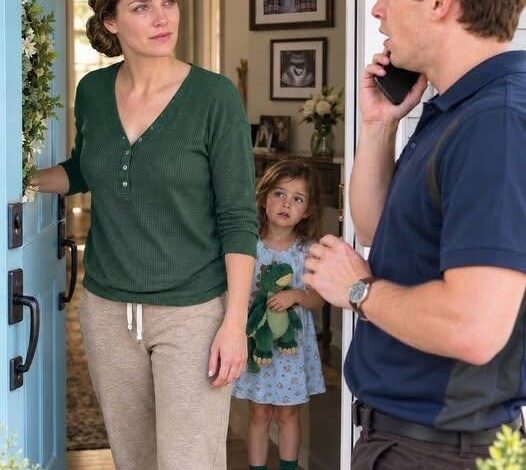
The first time my brother saw my daughter, he went white.
He had knocked on my blue front door expecting to find the sister our family said had “disappeared.”
Instead, three-and-a-half-year-old Marin came running down the hallway in dinosaur socks.
“Mommy, who is it?”
Danny looked past me at her, then at the photographs lining the hall: Caleb smiling in his work clothes, an ultrasound picture, me eight months pregnant with a paint roller in my hand.
Four years of family mythology collapsed on my porch in seconds.
Danny backed down the steps and lifted his phone.
“Mom, you need to see this. She never told us—”
Then he stopped.
Because suddenly he understood.
I had tried.
My mother simply hadn’t listened.
My name is Tori Ives. I work in intensive care in Asheville, North Carolina, and for years my family treated my paycheck like communal property.
It started at my nursing-school graduation.
Mom handed me an empty envelope after dinner.
“For the house,” she said. “You’re the one who made it out.”
I filled it from my first paycheck.
The next month another envelope arrived.
Then another.
Eventually we switched to electronic transfers.
Usually $1,400 a month. Sometimes $2,000.
There was always an emergency: the furnace, Dad’s truck, storm damage, my brother’s car.
I worked holidays because they paid more. Took overtime nobody wanted. Postponed plans.
I kept a notebook recording every dollar because numbers were the only things in my family that didn’t change meaning.
“Loan” changed.
“Emergency” changed.
“Family” changed constantly.
Numbers stayed still.
By the sixth year, I had sent more than $100,000.
Then I met Caleb Brand.
He was rebuilding an entrance at my hospital when he asked me what railing height worked best for patients learning to walk again.
I gave him measurements.
He listened as though my answer mattered.
That was Caleb.
Three years later, he proposed with a brass house key tied to a ribbon. It belonged to a fixer-upper where he imagined us growing old.
I said yes.
Then, one Tuesday in November, a scaffold failed at a job site.
Caleb never came home.
My family didn’t attend the funeral.
Dayton was seven hours away, they said.
Four days later, Mom texted:
So sorry about everything, honey. Will this month’s transfer be late with all this going on?
I sent it on time.
Grief can make old obedience feel easier than conflict.
Two weeks later, I fainted at work.
I was pregnant.
Sixteen weeks.
Suddenly I was grieving the man I loved while carrying the child he would never meet. My blood pressure was becoming dangerous, and my doctor wanted stress reduced.
I needed my money.
I needed stability.
I needed my mother.
So I called.
“Mom, I have to stop sending money.”
I meant to explain everything afterward.
Caleb.
The baby.
My health.
She never let me reach sentence two.
She called me ungrateful. Selfish. Reminded me that I was “the one who made it.”
Then she hung up.
I tried Dad.
“Something’s happened,” I told him.
His answer was quiet.
“Don’t upset your mother.”
Nobody asked what had happened.
So I stopped calling.
Apparently that became the day I “disappeared.”
Back in Dayton, Mom told people she didn’t know where I was.
She cried at church.
Relatives posted vague messages about children forgetting who raised them.
Rumors filled the space where one honest question should have been.
Meanwhile, I gave birth to Marin.
My friend Dena stood beside me.
We named my daughter for a name Caleb had once tried aloud and loved.
Then I bought a modest house in Asheville and painted the front door blue.
Blue like the sky after a night shift.
For four years, I lived.
That was my disappearance.
I raised my daughter.
Paid my mortgage.
Made terrible dinosaur pancakes.
Sent one Christmas card every year to my grandmother June.
Then Danny knocked.
He sat at my kitchen table for two hours and finally asked the question nobody in Ohio had bothered to ask.
“How did Caleb die?”
I told him.
He cried.
Before leaving, he gave me an invitation.
HOMECOMING SUNDAY — FIRST GRACE CHURCH
Mom wanted me there.
That evening she called for the first time in almost four years.
Her solution was astonishing.
Come to church, she said. She would tell everyone I’d been ill.
“It can be a testimony.”
No one needed to know about the money.
That’s when I understood.
She wasn’t offering reconciliation.
She was offering me a role in a revised version of her story.
Then Grandma June called.
“I never believed you disappeared,” she told me. “People don’t disappear, Tori. Sometimes they get erased.”
She had received my letter explaining everything.
She had also received every Christmas card.
And she wanted to meet Marin.
So we drove to Ohio.
June was waiting on her porch wearing oxygen tubing.
Marin walked straight toward her.
June held my daughter’s face between shaking hands.
“There you are,” she whispered.
Later, June brought out her sewing box.
Beneath the thread were all my Christmas cards, rubber-banded together.
Then she told me something that changed everything.
Mom had discovered them ten months earlier.
She had seen my Asheville return address.
She knew where I lived.
And she continued allowing the church to believe I was missing.
I wasn’t lost.
I was useful as a tragedy.
That evening Danny showed me something else: Mom’s old household ledgers.
The money I’d sent for emergencies hadn’t always gone where I’d been told.
Some went toward household needs.
But substantial amounts had also flowed into church donations, committee expenses, assistance for relatives, and other things that helped Mom become known as generous.
My money had helped finance her reputation.
Then Danny showed me an older entry.
Decades earlier, Mom had pawned her wedding ring to help her own parents.
Suddenly I understood something without excusing it.
She hadn’t invented the system.
She had inherited it.
She believed daughters paid.
Understanding that made me sadder, not more obedient.
The next morning, I went to church.
First Grace was packed.
Mom stood at the pulpit in lavender and announced that her “lost lamb” had come home.
Then she invited me forward.
I stood.
But I didn’t take the microphone.
“I didn’t disappear,” I said.
The sanctuary went silent.
“I stopped paying. For six years in my family, those became the same thing.”
Then I told them the number.
More than $100,000.
I told them about Caleb.
About Marin.
About giving birth without my family.
“I wasn’t hiding,” I said. “Nobody asked.”
Then I looked at Mom.
Years earlier, after I’d been three days late sending money because I’d worked a sixteen-hour shift, she’d told me:
You don’t get to be tired. You’re the one who made it.
So I returned the sentence.
“I was allowed to be tired, Mom. Just never here.”
Her face changed.
Some people in the congregation believed me.
Others didn’t.
That was another lesson.
Truth doesn’t guarantee agreement.
It simply prevents the lie from remaining unanimous.
I returned to my pew, took Marin’s hand, and brought her to June.
“This is your great-grandmother,” I told her. “She’s the reason I still believe in family.”
Then we left.
Mom caught me near the aisle.
“Everything I did, I did for this family.”
The heartbreaking thing was that I believed she believed it.
I touched the brass key in my pocket—the one Caleb had given me years earlier.
“Being needed isn’t the same as being loved, Mom.”
Then I walked outside.
Danny followed us to the parking lot.
He didn’t defend her.
Didn’t say, You know how Mom is.
He simply looked at Marin.
“Can I come visit her?” he asked. “No envelopes. Just an uncle.”
“Sundays,” I said. “Bring nothing.”
Six weeks later, June was sitting on my Asheville porch teaching Marin to thread a needle.
Danny had driven her down.
Mom eventually sent me a three-page letter.
There were explanations.
Bible verses.
Pain.
Justifications.
Very little accountability.
I put it in a drawer.
Dad sent something shorter.
I’m sorry I looked away.
I kept that one too.
I haven’t answered yet.
Forgiveness, reconciliation, and access are different things.
I’m allowed to decide each separately.
Yesterday, Marin helped me repaint our front door.
Blue again.
She got paint on her nose, the dogwood, and somehow the cat.
The brass key Caleb gave me hangs framed beside the entrance.
Sometimes I look at that door and think about how long I believed leaving meant failure.
It didn’t.
I hadn’t disappeared.
I had stopped financing a system that required my exhaustion to keep functioning.
And eventually I learned the difference between the family that needed me and the people who loved me.
One came with envelopes.
The other came with nothing.
Just an uncle.
A grandmother.
A friend who stood beside my hospital bed.
A little girl with blue paint on her nose.
That’s what lives behind my blue door now.
Nobody has to pay to come home.