My Best Friend Betrayed Me Once, and I Forgave Her – Years Later, I Handed Her My Wedding Ring and Karma Took Back What She Took from Me

Some betrayals are impulsive.
A drunken kiss.
A reckless night.
A terrible decision made in weakness and confessed afterward through tears.
Those betrayals hurt deeply, but at least they remain recognizable as moments — singular fractures in trust that people can point to clearly.
What happened to Blair was different.
Her betrayal had history.
Repetition.
Practice.
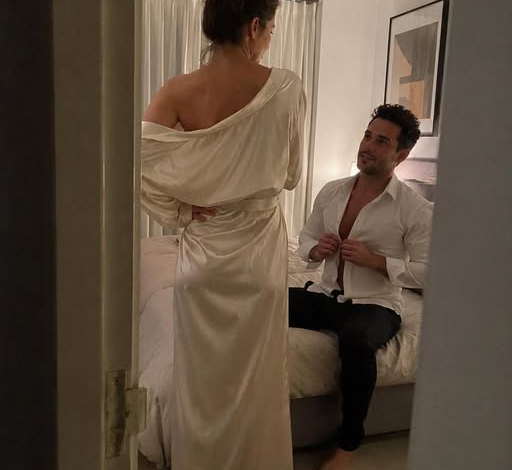
Because the woman standing in Blair’s bedroom wearing her silk robe and touching her husband was not only another woman.
She was the same woman Blair had once forgiven for nearly destroying her life years earlier.
That is what made the scene feel less like discovery and more like realization.
The truth had not suddenly appeared.
It had simply returned wearing older clothes.
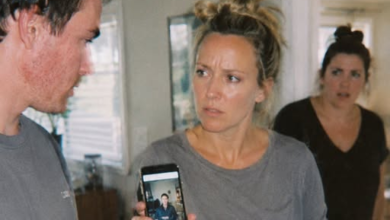
When Blair opened the bedroom door that afternoon, Mara screamed first.
Not from shame exactly.
From interruption.
“Blair! You’re home early!”
The sentence itself revealed something psychologically important. Mara reacted like someone caught trespassing in a role she had already begun emotionally inhabiting.
Daniel stood behind her half-dressed, one hand still hovering near Mara’s waist while his suitcase sat open across Blair’s side of the bed.
But it wasn’t his shirt or the suitcase that shattered Blair most.
It was the perfume.
Her perfume.
The bottle stood uncapped on the dresser, and Mara smelled like her.
That detail mattered because betrayal becomes especially violating when someone tries not merely to steal a relationship, but to imitate identity itself.
Mara had not only entered Blair’s marriage.
She had stepped physically into Blair’s place:
her robe,
her bedroom,
her scent,
her ring.
People often underestimate how psychologically disturbing mimicry becomes inside intimate betrayals. It creates a feeling of erasure, as though someone is rehearsing how to replace you entirely.
Daniel attempted the usual panic language immediately:
“Please. Let me explain.”
But explanations collapse quickly when evidence already fills the room.
Blair’s eyes landed on the jewelry dish near the dresser where her wedding ring had rested earlier that morning while she showered.
Then instinct took over.
Without raising her voice, without crying, she removed the ring herself and placed it directly into Mara’s palm.
“Here,” she said quietly. “You’ve always wanted what was mine.”
That sentence transformed the moment completely.
Because suddenly this was no longer only about Daniel.
It was about history.
The first betrayal happened when they were twenty-four.
Back then, Blair and Mara shared an apartment with unreliable plumbing and the kind of closeness that develops between girls who survive adolescence together.
Mara knew everything:
childhood fears,
favorite songs,
coffee orders,
the exact tone Blair used when pretending not to care about something painful.
Fifteen years of friendship creates emotional access more intimate than many marriages.
That is why betrayal from best friends wounds differently than betrayal from strangers.
Friends are entrusted with maps.
They know where the emotional soft places are before they decide whether to protect or exploit them.
One Friday, Blair came home early with a migraine and found Mara with her boyfriend Duncan on the couch.
The scene looked guilty immediately:
too close,
half-buttoned clothing,
panic arriving before explanation.
Mara cried desperately afterward insisting:
“I was testing him. I was protecting you.”
That line reveals something manipulative people often do instinctively:
they reframe harmful behavior as sacrifice.
Not betrayal.
Protection.
Not selfishness.
Concern.
Blair’s response cut straight through it:
“With your mouth?”
At the time, Mara did not know Blair had recently discovered she was pregnant.
Only Blair knew.
And she had planned to tell Mara first.
That detail adds another emotional layer to the betrayal because trust was already preparing to deepen at the exact moment it shattered instead.
A month later, Blair lost the baby before she fully adjusted emotionally to becoming a mother.
Importantly, she never blamed Mara directly for the miscarriage.
That restraint matters morally and psychologically.
Grief often seeks targets because random suffering feels intolerable. But Blair understood something emotionally mature:
pain and blame are not always mathematically connected.
Still, in her mind the losses fused together:
the baby,
the friendship,
the future she thought she understood.
So she cut Mara out completely.
For three years, Mara disappeared from her life.
Then Blair’s father developed cancer.
Crisis changes emotional boundaries because grief exhausts certainty. People become softer around old wounds simply because survival itself demands support.
One afternoon, Mara appeared outside the hospital room carrying homemade soup and clean socks.
Not demanding forgiveness.
Not defending herself.
Just waiting quietly.
“I don’t deserve to sit here,” she admitted.
That sentence mattered because accountability without pressure often disarms anger more effectively than apologies do.
Blair allowed ten minutes.
Mara stayed all afternoon.
Then something even more emotionally significant happened later.
Blair’s father offered wisdom she would only fully understand years afterward:
“Forgiveness is good, Bee. Just don’t confuse it with handing somebody the spare key again.”
That sentence becomes the emotional spine of the entire story.
Because forgiveness and restored access are not the same thing.
People often confuse the two, especially after grief softens emotional defenses.
Blair forgave Mara emotionally.
But slowly, over time, she also restored trust completely.
And that trust eventually created opportunity for repetition.
Daniel entered Blair’s life during the hardest period of her father’s illness.
He carried oxygen tanks.
Sat beside her during hospital nights.
Fixed porch railings after the funeral.
Trauma bonds people quickly sometimes because vulnerability accelerates intimacy. Daniel appeared dependable precisely when Blair’s emotional world felt unstable.
“You don’t have to be strong every minute with me,” he told her.
She believed him.
And perhaps he even believed it himself at the time.
That complexity matters because not all betrayal begins with malicious intent. Some people genuinely love others while still lacking the integrity required to protect that love consistently.
At the wedding, Mara cried through the ceremony.
Again, hindsight changes emotional meaning completely.
At the time Blair interpreted Mara’s tears as love and happiness. Later she remembered the exact wording:
“I can’t believe you’re getting everything you deserve.”
The sentence sounds affectionate initially.
Later it sounds envious.
That duality reveals something uncomfortable about certain friendships:
admiration and resentment can coexist for years beneath the surface.
Some people love their friends deeply while simultaneously coveting pieces of their lives. If that envy remains unexamined long enough, closeness itself becomes dangerous because proximity creates endless comparison.
Then came Ruth.
Daniel’s grandmother handed Blair the family ring before the ceremony and explained its history:
hard marriages,
good women,
foolish men,
second chances.
Then she said something crucial:
“This ring belongs to the woman who honors this family.”
At first the line sounded ceremonial.
Later it became judgment.
So when Blair placed the ring into Mara’s hand years later, the gesture carried symbolic weight beyond anger.
She was not surrendering.
She was exposing.
The day Blair caught them, Daniel pretended to leave for a work trip to Denver.
That detail matters because elaborate lies require planning:
fake schedules,
fake flights,
hidden reservations,
coordination.
Impulsive affairs become one kind of betrayal.
Sustained deception becomes another entirely.
Blair sensed something wrong when Daniel ignored repeated calls about his forgotten passport.
Trust often fractures internally before evidence appears externally. The body notices inconsistencies long before the conscious mind fully accepts them.
Then came Mara’s car in the driveway.
Then laughter from the bedroom.
Not nervous laughter.
Comfortable laughter.
The sound of someone behaving like they belonged there.
That distinction devastated Blair most because affairs do not only threaten relationships.
They threaten identity and emotional territory.
Inside the motel afterward, Blair began reconstructing reality piece by piece.
No active Denver flight.
Boutique hotel charges.
Canceled work meetings.
Personal time off.
The lies widened rapidly.
Then Daniel’s assistant unknowingly confirmed the truth completely:
there never was a business trip.
What happened next shifted the power balance entirely.
Blair called Ruth.
Not her mother.
Not friends.
Ruth.
That choice reveals deep intuition because Blair understood something important immediately:
betrayal inside families reverberates structurally.
The ring connected Daniel’s actions not merely to marriage vows but to family legacy and moral responsibility.
When Blair asked:
“Where does your ring belong?”
Ruth answered instantly:
“On your hand.”
Then Blair delivered the truth quietly:
“It isn’t on my hand anymore. It’s on Mara’s.”
Ruth’s response became devastatingly cold:
“I’ll ask for it back.”
Older women who survived betrayal often recognize certain dynamics immediately. Ruth understood the symbolism of Mara posting the ring online before Blair even finished grieving the marriage.
The Instagram caption revealed everything:
“Some things are meant to find their rightful owner.”
That line exposed not guilt, but entitlement.
Mara did not behave like someone ashamed.
She behaved like someone victorious.
And psychologically, that distinction changes how betrayal feels to the victim. Affairs rooted partly in envy or competition often create especially deep emotional violation because the affair partner appears to celebrate replacement itself.
The confrontation at the motel the next morning revealed another common dynamic in cheating relationships:
the expectation that the betrayed person still manage everyone else’s reputation.
“How dare you call his grandmother?”
“You made me look like some kind of homewrecker.”
Neither Daniel nor Mara focused first on the betrayal itself.
They focused on exposure.
People who rely heavily on external image often experience consequences as humiliation rather than accountability.
Blair answered with devastating clarity:
“You were in my bedroom wearing my robe and my ring. I didn’t make you look like anything.”
That sentence stripped away all self-deception.
Then came the financial consequences.
Ruth withdrew promised money for the house after seeing the screenshot. Daniel’s carefully managed future began collapsing because his behavior finally reached people unwilling to protect him from consequence.
Importantly, Blair did not orchestrate revenge theatrically.
She simply stopped protecting lies.
That distinction matters ethically.
Too often betrayed people are pressured into silence for the sake of family harmony, professional stability, or public appearance. Blair refused that role completely.
At Ruth’s house, the emotional truth became unavoidable.
Daniel called the affair “a mistake.”
Blair corrected him immediately:
“No. You made a choice.”
That distinction captures the entire moral center of the story.
Mistakes imply accidents.
Choices imply intention.
And repeated deception requires repeated choice:
the hotel,
the lies,
the hidden scheduling,
the emotional secrecy,
the willingness to let someone continue trusting you while privately betraying them.
Even more revealing was Mara’s response:
“So I lose everything because Blair is hurt?”
That sentence exposed how fundamentally she misunderstood the situation.
Blair was not punishing her because of pain alone.
Consequences emerged because trust matters socially, emotionally, and morally.
Ruth understood this instinctively:
“You don’t get family support while destroying your family.”
Eventually Blair filed for divorce quietly.
No screaming scenes.
No public revenge campaigns.
Just legal protection,
boundaries,
and withdrawal.
Outside the courthouse, Mara whispered:
“I loved you like a sister.”
Blair’s answer may be the most psychologically accurate line in the entire story:
“No. You loved standing close enough to take what I had.”
That statement identifies something difficult many people avoid discussing openly:
proximity can intensify envy dangerously.
Some people do not merely want happiness.
They specifically want the happiness belonging to someone they know intimately because shared history creates comparison constantly.
Finally, Ruth offered the ring back.
And Blair refused it.
That final decision matters enormously because it signals emotional transformation.
At first the ring symbolized love and belonging.
Later it symbolized betrayal and performance.
By the end, Blair no longer needed it to validate herself at all.
“I’m finally choosing myself.”
That sentence reveals the real ending of the story.
Not abandonment.
Not loss.
Freedom from constantly fighting to preserve relationships with people willing to consume her trust repeatedly.
For the first time in years, nothing important had been stolen from her anymore because she finally stopped placing her worth inside the hands of people who confused closeness with entitlement.
And perhaps that was the one thing Mara could never take:
the part of Blair that survived betrayal without becoming cruel herself.