My Best Friend Spent Years Caring for My Sister with Down Syndrome Then He Said a Few Words That Changed Everything I Thought I Knew..

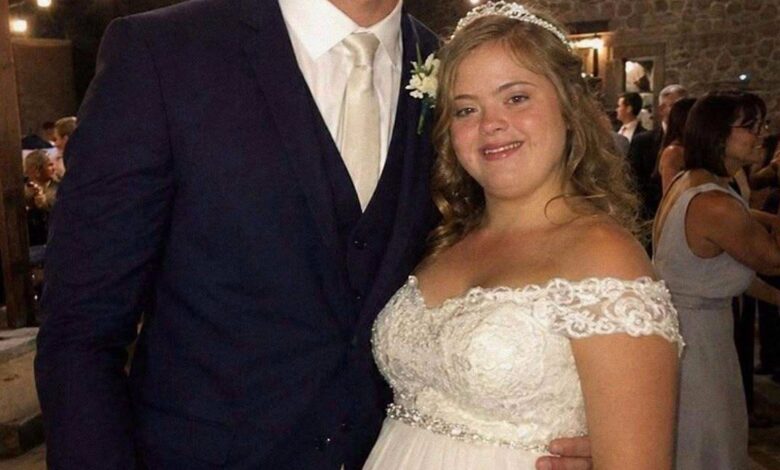
Growing up, Rosie learned early that some people decided who she was before she had the chance to show them.
She had Down syndrome.
To certain classmates, that meant she was different enough to leave out.
Invitations disappeared.
Games became “too complicated.”
Cruel jokes sometimes arrived disguised as curiosity.
Her older sister did everything she could to protect her.
But there was one other person who seemed to understand, even as a boy, that Rosie did not need pity.
She needed to be included.
Ben.
He was her sister’s best friend.
He came to the house constantly, stayed for dinner, helped with homework, played games in the backyard and treated Rosie exactly as he treated everyone else.
If she wanted to join, he made room.
If someone mocked her, he stepped in.
If another child talked over her, Ben waited until Rosie finished.
Once, when they were still young enough for promises to feel permanent, Rosie announced that nobody would ever take her to prom.
Ben rolled his eyes.
“I will.”
She laughed.
“You have to.”
“Fine.”
He held out his hand.
“Promise.”
Years later, he kept it.
By then, the entire family had built another story around Ben.
Everyone assumed he would eventually marry Rosie’s sister.
They had grown up together.
They knew each other better than almost anyone.
Relatives teased them at holidays.
People described them as inevitable.
They were wrong.
Ben fell in love with Rosie.
Not because he felt responsible for her.
Not because he had made some childhood promise.
Because somewhere between growing up and becoming adults, Rosie had become the person he wanted beside him.
She was funny.
Stubborn.
Warm.
She loved old musicals and hated being rushed.
She could remember birthdays nobody else did.
She knew exactly when Ben was pretending not to be upset.
And she had no patience for anyone who spoke about her as though she were not in the room.
When Ben proposed, Rosie said yes before he had finished the question.
The family celebrated.
Or at least, most of them did.
Her parents smiled for photographs.
They paid for parts of the wedding.
They told relatives they were happy Rosie had found someone “so dependable.”
At the time, nobody noticed how strange that word sounded.
Dependable.
Not loved.
Not cherished.
Dependable.
Years passed.
Then Rosie announced she was pregnant.
Twins.
The news transformed the family.
Baby clothes appeared.
Names were debated.
Ben became absurdly protective.
Rosie’s sister cried when she heard two heartbeats at an appointment.
For a while, everything felt uncomplicated.
Then the pregnancy became dangerous.
At thirty-four weeks, Rosie developed complications serious enough that doctors rushed her into emergency care.
The hospital became a blur of movement.
Nurses.
Consent forms.
Monitors.
Doctors speaking too quickly.
Rosie was frightened.
Ben was worse.
He held her hand until staff took her through the doors.
“Stay with me,” Rosie whispered.
“I’m right here.”
“You can’t come in yet.”
“I know.”
She tightened her grip.
Then she said something her sister did not understand at the time.
“If I don’t wake up, tell her.”
Ben went pale.
“Rosie.”
“Promise.”
His eyes filled.
“You’re waking up.”
“Promise me.”
He nodded.
Then she disappeared behind the doors.
Minutes later, Ben and Rosie’s sister stood in the hallway.
Neither spoke.
Finally, Ben reached into his bag.
“I need to show you something.”
She looked at him.
“What?”
“Rosie made me promise.”
He pulled out a folded document.
At first, it looked ordinary.
Legal language.
Names.
Signatures.
Dates.
Then she saw Rosie’s parents’ names.
Then Ben’s.
She began reading.
Her stomach turned.
Years earlier, before Ben and Rosie married, her parents had created an agreement connected to a family trust.
The language was cold.
Clinical.
Rosie was described almost entirely in terms of “care,” “risk,” “future responsibility,” and “financial exposure.”
The arrangement anticipated Ben marrying her.
In exchange, he would receive financial support tied to managing Rosie’s needs.
Her parents would retain influence over certain financial and personal decisions.
The document treated Rosie less like an adult daughter than a liability that needed to be assigned somewhere.
Rosie’s sister looked up slowly.
“You signed this?”
Ben’s face was white.
“Yes.”
For one terrible second, every ugly interpretation arrived at once.
Had he married Rosie for money?
Had the entire relationship been arranged?
Had Ben loved Rosie’s sister and settled for the person her parents were willing to pay him to care for?
She hated herself for the thoughts even as they came.
“You knew?”
“Yes.”
“And you never told me?”
“Rosie asked me not to until we could do something about it.”
She held up the document.
“You married my sister under a contract?”
“Read the rest.”
“I read enough.”
“No. You didn’t.”
His voice cracked.
“Please.”
She looked down again.
The later pages changed everything.
Ben had added conditions.
Legal review requirements.
Independent financial oversight.
Language protecting Rosie’s right to make medical and personal decisions.
Restrictions preventing her parents from removing funds without outside approval.
Correspondence attached to the agreement showed that Ben had repeatedly challenged provisions that would have allowed Rosie’s parents to control where she lived and who made decisions for her.
He had signed only after forcing changes.
And then, over the following years, he had quietly documented every attempt they made to interfere.
Her sister looked up.
“Why?”
“Because if I refused, they were going to put something worse in place.”
“What?”
“They were already talking about moving control of her trust and decisions to a professional guardian.”
Her sister stared at him.
“Rosie never needed that.”
“I know.”
“She can make her own decisions.”
“I know.”
Ben swallowed.
“That’s why I signed.”
He looked toward the operating-room doors.
“They thought I’d become the person controlling her.”
His voice dropped.
“I signed so I could stop them from giving that power to someone who actually would.”
Before she could answer, the elevator doors opened.
Rosie’s parents stepped out.
Her mother immediately noticed the document.
Her face changed.
“What is that doing here?”
Rosie’s sister turned toward them.
“You tell me.”
Her father stiffened.
“This is not the place.”
“No?”
She held up the pages.
“You decided my sister’s future like she was a problem to be transferred.”
Her mother looked at Ben.
“He signed it too.”
That landed exactly as intended.
Ben did not defend himself.
Rosie’s sister did.
“His signature and yours are not the same.”
Her father laughed bitterly.
“A signature is a signature.”
“No.”
She stepped closer.
“You signed because you wanted control.”
Then she pointed toward Ben.
“He signed because he was trying to protect her from you.”
Her mother’s face tightened.
“You don’t understand the responsibility we had.”
“She was your daughter.”
“She needed protection.”
“She needed respect.”
People in the waiting area were beginning to look over.
A nurse slowed nearby.
Rosie’s father lowered his voice.
“Keep your voice down.”
That made her laugh.
“Now you want privacy?”
“Do not make a spectacle.”
“You made paperwork out of Rosie’s life.”
Her mother whispered, “We were trying to make sure she was cared for.”
“No. You were trying to make sure she was manageable.”
Silence.
That was the word nobody wanted spoken.
Manageable.
Rosie’s sister had heard versions of it all her life.
Special arrangements.
Simplified expectations.
Quiet decisions made “for her own good.”
Every phrase sounded kinder than the truth.
Control was still control when spoken gently.
Her father looked at Ben.
“You benefited financially.”
Ben finally spoke.
“I used every dollar for Rosie’s household, medical care, legal reviews, and the twins.”
“You expect us to believe that?”
“I have records.”
He lifted his chin.
“And so does the attorney.”
Rosie’s mother went still.
“What attorney?”
“The independent one Rosie hired.”
The color left her face.
“She knows?”
Ben’s answer was quiet.
“She always knew.”
That may have been the cruelest revelation of all.
Not that Rosie had been controlled.
That her parents had underestimated her so completely they never imagined she understood what they were doing.
Before anyone could respond, a nurse appeared.
“Mr. Carter?”
Ben turned instantly.
“Yes?”
The nurse smiled.
“She’s awake.”
Everything else disappeared.
“And the babies?”
“Both doing well.”
Ben bent forward as though the air had left his body.
Rosie’s sister grabbed his arm.
“Can we see her?”
“She’s asking for both of you.”
They walked away together.
Behind them, Rosie’s parents remained in the hallway.
When the elevator doors eventually closed around them, the space somehow felt lighter.
Rosie looked exhausted when they entered.
But she smiled.
One baby rested beside her.
The other was being checked nearby.
Ben went straight to her.
“You scared me.”
“You’re dramatic.”
He laughed and cried at the same time.
Rosie looked at her sister.
“You read it?”
She nodded.
“I’m sorry I didn’t know.”
Rosie closed her eyes briefly.
“I didn’t want you fighting them before I had everything ready.”
“You shouldn’t have had to deal with it alone.”
“I wasn’t alone.”
She looked at Ben.
That was the answer.
Over the following weeks, the legal structure around Rosie’s trust was reviewed.
Her parents eventually resigned as trustees.
The agreement they had created did not survive serious scrutiny.
An aunt Rosie trusted took over administrative responsibility alongside independent professional oversight.
Most importantly, Rosie retained control over her own life.
Family members who had once accepted her parents’ version of events began asking uncomfortable questions.
Invitations stopped arriving for them.
Excuses stopped working.
People finally saw what had been hidden behind years of respectable language.
At the twins’ dedication, Rosie stood beside Ben holding one baby while he held the other.
Her uncle raised a glass.
“To Ben.”
Ben immediately shook his head.
“No.”
The uncle smiled.
“Let me finish.”
The room quieted.
“Some men become husbands.”
He looked toward Rosie.
“Ben became something better than a protector.”
Ben frowned.
The uncle corrected himself.
“A partner.”
Rosie smiled.
That word mattered more.
Because Rosie had never needed a hero to rescue her from Down syndrome.
Her disability was not the villain of her story.
The danger came from people who used it as justification to decide that her independence mattered less.
Ben understood something her parents did not.
Loving Rosie did not mean taking over her life.
It meant standing beside her while she lived it.
Years later, Rosie’s sister still thought about that document.
For one horrible moment in the hospital hallway, she had looked at Ben’s signature and imagined the darkest possible truth.
Money.
Manipulation.
Pity disguised as love.
The full story was more complicated.
Ben had kept secrets.
That was not comfortable.
He had signed something that should never have existed.
That required legal scrutiny.
But his loyalty had not been performative.
He had spent years quietly creating enough protection for Rosie to eventually step outside the structure her parents had built around her.
And Rosie had been part of that plan.
She had understood more than anyone gave her credit for.
That became the lesson their family carried forward.
Do not confuse disability with helplessness.
Do not confuse protection with control.
Do not make decisions about someone merely because making decisions with them requires more patience.
And never call ownership love.
The twins would grow up knowing a different version of family.
One where their mother’s voice mattered.
Where her boundaries counted.
Where people could help without taking over.
And where Ben was not praised because he had “taken care of” a woman with Down syndrome.
He was loved because he had recognized what everyone else should have understood from the beginning.
Rosie was not a burden.
Not an obligation.
Not a trust to manage.
Not a problem to solve.
She was his wife.
Their mother.
Her sister.
A woman with choices of her own.
And after years of people trying to write her future for her, Rosie finally got what should never have required a fight at all.
The right to write it herself.