My Husband Kept Making Every Jar Impossible for Me to Open When I Learned Why, I Filed for Divorce

The strawberry jam opened with almost no effort.
I twisted the lid, heard the tiny pop of the seal breaking, and froze in the middle of my new kitchen.
Then I started laughing.
Not because anything was funny.
Because for the first time in years, opening a jar hadn’t become a battle.
There was no rubber grip.
No hot water.
No towel wrapped around the lid while I strained until my wrist hurt.
And, most importantly, there was no Eric standing behind me with that smug little smile, taking the jar from my hands and saying the sentence I had once mistaken for affection.
“What would you do without me?”
Six months earlier, I had filed for divorce.
If you’d asked Eric why, he would have told you I ended our marriage over jar lids.
Technically, that was true.
But the jars were never the real problem.
The problem was why he kept tightening them.
It started so gradually that I barely noticed.
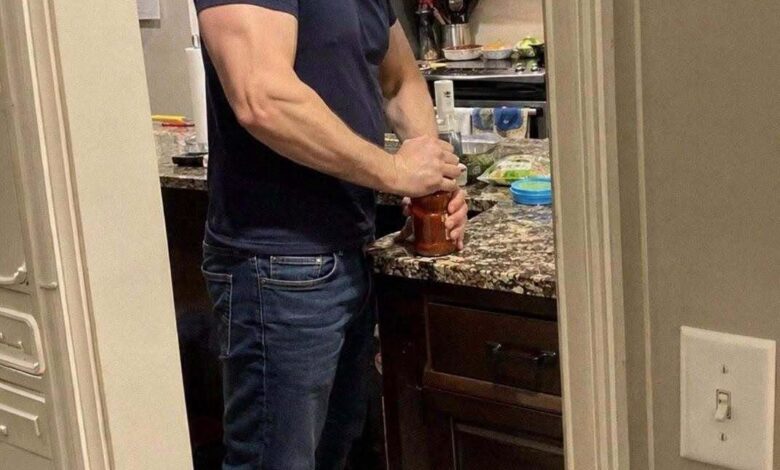
Early in our marriage, I’d occasionally struggle with a jar after Eric had used it. Pickles, pasta sauce, mustard, jam—it didn’t matter. If he closed the container, the lid seemed welded on afterward.
I’d hand it to him.
He’d open it effortlessly.
“Good thing you’ve got me.”
I’d laugh.
It became one of our little routines.
Except eventually, I wasn’t laughing anymore.
The lids became tighter.
And it wasn’t just food.
A jar of face cream.
Food coloring.
A refrigerated face mask.
Anything with a screw-top lid could suddenly become impossible to open.
When Eric was home, he’d rescue me.
When he wasn’t, I was stranded.
I tried everything.
Running lids under hot water.
Tapping their edges against the counter.
Using rubber grips.
Wrapping them in dish towels.
Once, I strained so hard opening pasta sauce that pain shot through my wrist.
Another time, after ten frustrating minutes, I gave up and opened a second jar.
That was when I finally confronted him.
“Eric, you have to stop tightening everything so much.”
He looked genuinely confused.
“I don’t.”
“Yes, you do.”
“I’m just closing them properly.”
“You don’t have to tighten a jar like you’re sealing a submarine.”
He laughed.
“I’m keeping the food fresh.”
I didn’t laugh.
“I’m serious. Please stop.”
He agreed.
For several weeks, things improved.
Then it started again.
When I confronted him the second time, his explanation changed.
Apparently, he wasn’t deliberately tightening anything.
He simply didn’t know his own strength.
“I don’t think about it, Marissa.”
“Then start thinking about it.”
His expression hardened.
“Are we seriously fighting about jars?”
That question became his shield.
Whenever I complained, he reduced the problem until my reaction seemed absurd.
It’s a lid.
It’s mustard.
It’s a jar of pickles.
Why are you getting so upset?
And because each incident was objectively tiny, I started questioning myself.
Maybe I was being ridiculous.
Maybe Eric really was absent-minded.
Maybe I was turning a harmless quirk into something bigger.
Then he left for an eight-day business trip.
On the third evening, I decided to make dinner.
I reached for a jar.
Couldn’t open it.
I tried another.
Same problem.
By the fourth container, I was furious.
My neighbor Mark happened to be outside, so embarrassment finally lost to practicality.
I carried the jar over.
“Can you open this?”
He smiled.
“Sure.”
Then he twisted.
Nothing happened.
He adjusted his grip.
Tried again.
Still nothing.
Finally, bracing the jar against his body, he forced the lid loose.
“What the hell?”
“Eric closes everything like that.”
Mark stared at me.
“Everything?”
I don’t know why, but I suddenly wanted someone else to see it.
So I invited him inside.
We started checking.
Pickles.
Pasta sauce.
Jam.
Mustard.
Salsa.
Nearly every opened container had been tightened with extraordinary force.
At first, Mark laughed.
Then we reached the things Eric didn’t eat.
He hated olives.
The olive jar was practically sealed shut.
He never used my baking supplies.
The food-coloring bottles had been tightened.
Then I pulled out my refrigerated skincare mask.
Mark looked at it.
“Does Eric use this?”
“No.”
“Has he ever?”
“No.”
He tried the lid.
It wouldn’t move.
The humor vanished from his face.
He finally opened it and set the container on the counter.
Then he asked a question I wasn’t prepared for.
“Does he do stuff like this with anything else?”
I almost automatically said no.
Then I started remembering.
The thermostat.
I’d set it where I was comfortable. Later, Eric would change it and insist I must have forgotten what I’d selected.
My car seat.
After he borrowed my car, it would sometimes be positioned so strangely that I’d struggle to get in.
Kitchen items I used every morning would mysteriously migrate to higher shelves.
Settings I’d changed on appliances would somehow be changed back.
None of those things had ever seemed important.
That was the genius of it.
Every incident was too small to accuse someone over.
A thermostat.
A shelf.
A car seat.
A jar lid.
And whenever I became frustrated, Eric appeared with the solution.
He reached the high shelf.
He fixed the setting.
He opened the jar.
Then came the joke.
“What would you do without me?”
Standing in that kitchen, I heard the sentence differently for the first time.
He wasn’t rescuing me from problems life had created.
Some of the problems existed because of him.
I felt sick.
Mark didn’t tell me to leave my husband.
He didn’t diagnose Eric or pretend to know exactly what was happening.
He simply said, “You’ve told him to stop, right?”
“Many times.”
“And he knows these lids hurt your wrist?”
“Yes.”
Mark nodded toward the counter.
“Then that’s the part I’d be thinking about.”
He was right.
I spent the remainder of Eric’s trip paying attention.
Not panicking.
Not inventing explanations.
Just observing.
I photographed some of the containers.
I wrote down incidents I remembered.
I talked to my sister.
For years, I’d been asking the wrong question.
Why does Eric tighten jars so much?
The better question was simpler.
Why did my husband repeatedly do something that made my life harder after I clearly asked him to stop?
I didn’t need to prove what was happening inside his head.
The behavior itself mattered.
When Eric came home, I was waiting.
I told him what Mark and I had discovered.
He immediately became defensive.
“You had another man going through our kitchen?”
“That’s not the issue.”
“You’re making me sound insane because I close jars tightly.”
“Why did you tighten my face mask?”
Silence.
“You don’t use it.”
“I probably moved it.”
“And the food coloring?”
“I don’t remember.”
“The olives you hate?”
His jaw tightened.
“This is ridiculous.”
There it was.
Not an explanation.
A dismissal.
I told him I had repeatedly asked him to stop.
He insisted I was exaggerating.
I reminded him about my wrist.
He accused me of looking for reasons to be angry.
Finally, he laughed bitterly.
“So what? You’re going to divorce me because I tighten jar lids?”
For once, the question didn’t make me doubt myself.
“No.”
He stared at me.
“I’m divorcing you because I told you something was hurting me, and instead of stopping, you kept doing it. Then you convinced me I was crazy for caring.”
His face changed.
I continued.
“And every time you created a problem, you got to become the person who solved it.”
He didn’t have a joke for that.
Our separation wasn’t easy.
People wanted a dramatic explanation.
They expected infidelity, violence, gambling, some spectacular betrayal that could fit neatly into a sentence.
When I tried explaining the jars, I could see confusion on some faces.
“You’re leaving over that?”
Eventually, I stopped trying to persuade people.
They hadn’t lived inside the pattern.
They hadn’t spent years making simple requests and watching those requests become punch lines.
They hadn’t experienced the strange erosion that occurs when someone repeatedly inconveniences you and then insists the inconvenience doesn’t exist.
A marriage rarely dies because of one jar.
Sometimes it dies through a thousand tiny moments in which one person learns that the other’s discomfort carries no consequences.
After the divorce, ordinary life became unexpectedly revealing.
Objects stayed where I put them.
Settings remained where I’d set them.
My kitchen stopped feeling like a collection of small challenges.
Then came that morning with the strawberry jam.
I reached into the refrigerator.
Set the jar on the counter.
Twisted.
Pop.
That was it.
Such a ridiculously small thing.
I stood there holding the lid and smiling.
Nobody appeared behind me.
Nobody congratulated himself for doing something I supposedly couldn’t.
Nobody asked what I’d do without him.
I already knew.
I’d open my own jar.
I’d make my own breakfast.
I’d live in a home where ordinary tasks weren’t secretly transformed into demonstrations of someone else’s power.
And I finally understood why leaving had never really been about lids.
It was about being heard.
It was about boundaries.
It was about the difference between an accident and something that continues after you’ve repeatedly said, “Please stop.”
Not every stubborn jar means something sinister.
People overtighten lids.
People forget.
People have annoying habits.
But loving partners respond when those habits cause pain.
They don’t need to understand why something matters before respecting that it matters to you.
That was what I’d been missing.
I used to feel embarrassed saying I left my marriage because of jars.
I don’t anymore.
The jars simply gave me something tangible enough to finally see the pattern.
Eric spent years asking what I would do without him.
It turned out the answer was remarkably ordinary.
I would live.
I would trust myself again.
And every once in a while, I’d open a jar of strawberry jam without thinking about him at all.