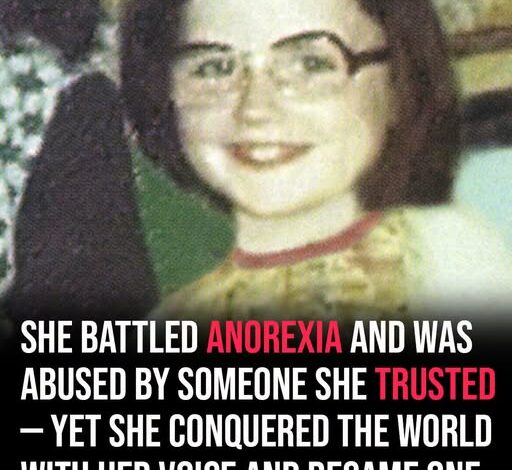
Long before millions of people knew her voice, she was simply a quiet girl growing up in Ireland, searching for somewhere she belonged.
Music became that place.
With an inexpensive keyboard, endless imagination, and a determination that far outweighed her circumstances, she discovered something that felt impossible to explain. Every melody gave shape to emotions she struggled to put into words. Every lyric became a place where fear, hope, loneliness, and resilience could exist together without judgment.
What she didn’t know then was that the same gift that would one day carry her to sold-out arenas around the world would also become the only language capable of expressing wounds that had existed since childhood.
For years, those wounds remained largely invisible.
Behind the remarkable voice was someone carrying painful memories, emotional scars, and questions she would spend much of her life trying to answer. Experiences of childhood trauma, combined with feelings of shame and inner conflict, left lasting marks that did not disappear simply because success eventually arrived.
When audiences later heard her sing with breathtaking intensity, many assumed they were witnessing extraordinary performance.
In reality, they were often hearing genuine pain transformed into music.
That honesty became one of the defining characteristics of her career.
Unlike artists who separated themselves from their songs, she poured her own struggles into every performance. Themes of grief, violence, injustice, loss, and emotional survival appeared repeatedly throughout her work because they reflected experiences she understood deeply rather than subjects chosen simply for artistic effect.
Then came the song that would forever define a generation.
When “Zombie” was released, its haunting melody and unmistakable vocal performance immediately distinguished it from almost everything else on the radio. Written in response to the devastating violence of the Troubles in Northern Ireland, the song became far more than a commercial success.
It became an anthem.
Its raw emotion resonated with listeners around the world, many of whom felt the anguish in her voice long before they fully understood the story behind the lyrics.
The performance sounded almost impossible.
Gentle vulnerability suddenly gave way to explosive power before returning once again to quiet sorrow.
That emotional range wasn’t manufactured.
It reflected someone who understood what it meant to carry both strength and suffering simultaneously.
As her fame expanded across continents, however, life became increasingly complicated.
Success brought sold-out tours, interviews, television appearances, and constant public attention.
But it also intensified pressures that few people could see.
The demands of touring, relentless travel, public expectations, and the emotional exhaustion of repeatedly revisiting deeply personal material began taking their toll. Behind the scenes, panic attacks, overwhelming anxiety, emotional detachment, and periods of profound psychological distress became increasingly difficult to manage.
There were days when simply walking onto a stage required extraordinary courage.
Like many people struggling with mental health challenges, she searched for ways to quiet the relentless noise inside her mind.
Some coping strategies proved helpful.
Others did not.
At times she turned to self-medication, hoping temporary relief might silence thoughts she could no longer control.
Instead, the struggles often became even more complicated.
Years later, she received a diagnosis of bipolar disorder.
For many people, receiving a diagnosis can bring conflicting emotions.
There is relief in finally understanding experiences that once seemed impossible to explain.
But there is also grief for the years spent wondering why life often felt so much harder than it appeared for everyone else.
Understanding a condition does not immediately remove its challenges.
It simply provides a clearer map for navigating them.
Determined to build stability, she embraced treatment and searched for healthier foundations.
Faith became important during certain chapters of her life.
Therapy offered new perspectives.
Motherhood brought purpose and moments of profound joy.
Stepping away from the spotlight whenever possible allowed space for healing away from public scrutiny.
Some seasons brought genuine progress.
Others brought painful setbacks.
Recovery rarely follows a straight path.
There were hopeful periods filled with creativity and renewed optimism.
There were also hospital stays, difficult headlines, and deeply personal struggles that unfolded under the intense gaze of public attention.
For many fans, it became heartbreaking to watch someone capable of creating such extraordinary beauty continue battling invisible pain.
Yet through every chapter, one thing remained remarkably consistent.
She never stopped singing honestly.
Her music continued reflecting both her resilience and her vulnerability, refusing to hide either one.
Those closest to her often described someone whose warmth, humor, compassion, and generosity coexisted with tremendous emotional burdens.
Like countless individuals living with mental illness, she was never defined by a single diagnosis.
She was a mother.
A songwriter.
A performer.
A friend.
A woman whose life contained laughter alongside sorrow, hope alongside heartbreak.
That complexity made her deeply human.
On the final evening of her life, there were moments that appeared surprisingly ordinary.
Plans were discussed.
Conversations were shared.
There were reasons to believe another chapter might still lie ahead.
Nothing suggested the devastating loss that would soon follow.
Later, investigators concluded that her death resulted from accidental drowning associated with alcohol intoxication.
There was no final public explanation.
No carefully written farewell.
No single statement capable of summarizing everything she had carried throughout her life.
Instead, she left something far more enduring.
Her music.
Every album.
Every performance.
Every lyric that refused to hide difficult emotions.
Listening today, many fans hear those songs differently than they once did.
What first sounded like extraordinary artistry now also reveals remarkable honesty.
Moments where her voice trembles before rising again.
Verses where vulnerability and strength exist side by side.
Quiet confessions hidden inside unforgettable melodies.
Perhaps that is why her work continues touching listeners years later.
It reminds us that suffering is often invisible.
People who appear fearless may be fighting battles no audience ever sees.
Those capable of giving hope to millions may still struggle to find it for themselves.
Her story also challenges many common misconceptions surrounding mental illness.
Recovery is rarely linear.
Good days do not erase difficult ones.
Smiles do not always reveal inner peace.
Compassion remains essential because we seldom know the full weight another person is carrying.
Today, her legacy extends far beyond record sales, awards, or chart positions.
She remains remembered as one of the most distinctive voices in modern music—a woman whose courage lay not only in the songs she sang but in her willingness to fill them with uncomfortable truths.
Her life was marked by extraordinary talent, remarkable resilience, painful struggle, and profound humanity.
She proved that a person can be both deeply wounded and astonishingly gifted.
That vulnerability and strength are not opposites but companions.
And that sometimes the most unforgettable voices are the ones brave enough to sing honestly, even while quietly carrying burdens the world could never fully hear.