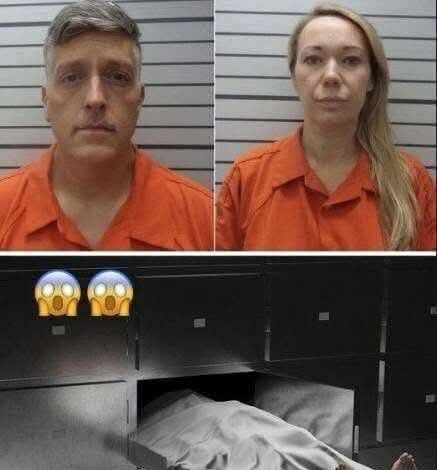
Families came to them during the darkest moments of their lives, believing they had found professionals who would honor the people they loved. Instead, prosecutors say Jon and Carie Hallford transformed unimaginable grief into a business opportunity, betraying the very trust that funeral directors are expected to protect.
What many families believed were respectful, environmentally conscious “green burials” concealed a horrifying reality.
Behind the closed doors of the Hallfords’ funeral home, authorities say 191 bodies were left unrefrigerated and improperly stored for extended periods, hidden from public view behind locked entrances and covered windows. While loved ones believed final arrangements had been carried out with dignity, investigators allege the deceased had instead been abandoned in conditions that shocked even experienced law enforcement officials.
For the families, the emotional devastation did not end there.
Many had carefully planned heartfelt farewells, convinced they were receiving the cremated remains of parents, spouses, children, or close friends. Some displayed urns in their homes, scattered what they believed were ashes in meaningful places, or found comfort believing they had fulfilled their loved one’s final wishes.
Investigators later alleged that in some cases, those urns contained dry concrete or other substitute materials rather than human ashes.
The revelation shattered families all over again.
The grief they thought they had begun to heal was suddenly reopened by the realization that the final act of care they believed they had given their loved ones had never truly happened.
For many, the emotional damage proved impossible to measure.
A funeral is more than a service.
It is a final promise.
It allows families to say goodbye, honor a life, and begin the difficult process of healing. When that promise is broken, the loss extends far beyond financial fraud—it reaches into the most deeply personal moments of mourning.
As investigators continued examining the business records, the allegations expanded beyond the treatment of the deceased.
According to prosecutors, money paid by grieving families—and additional federal pandemic relief funds intended to help struggling businesses during the COVID-19 crisis—was instead spent on personal expenses that included vacations, luxury purchases, jewelry, and online shopping.
What initially appeared to be an isolated funeral home scandal quickly became a case involving both state and federal criminal charges.
Authorities alleged the Hallfords enriched themselves while families waited for services that were never properly performed.
The public reaction was one of disbelief and outrage.
People questioned how such conduct could continue for so long without being discovered.
Others wondered whether existing oversight of funeral homes was sufficient to protect vulnerable families placing extraordinary trust in funeral providers.
In court, Jon and Carie Hallford admitted responsibility to a staggering number of criminal charges.
They pleaded guilty to 191 felony counts of abuse of a corpse under Colorado law and also admitted guilt in the related federal wire fraud case. Together, the convictions expose them to significant prison sentences, with sentencing ultimately determined by the courts.
Yet for many of the victims’ families, no prison term can fully repair what has been lost.
No verdict can recreate a funeral that never happened.
No sentence can return the peace of believing a loved one’s final wishes were honored.
The emotional wounds left by the case continue long after the criminal proceedings.
Beyond the individual families affected, the scandal has prompted broader conversations across Colorado about funeral home regulation, consumer protections, and professional accountability. Lawmakers, regulators, and advocates have called for stronger oversight, more frequent inspections, and clearer standards designed to ensure that funeral homes entrusted with human remains meet their legal and ethical responsibilities.
Many believe the case exposed weaknesses in the system that allowed misconduct to continue undetected for far too long.
For countless families, those reforms come too late.
Their loss can never be undone.
Still, many hope that meaningful changes will spare others from enduring the same heartbreak.
At its core, the Hallford case is about far more than financial crimes or regulatory failures.
It is about trust.
Families place extraordinary faith in funeral professionals during moments when grief makes every decision more difficult. They believe their loved ones will be treated with dignity, compassion, and respect from beginning to end.
When that trust is violated, the damage reaches far beyond a courtroom.
It changes the way communities view one of society’s oldest and most sacred responsibilities: caring for the dead with the honor they deserve and giving the living confidence that their final goodbye was real.
For many in Colorado and beyond, this case has become a painful reminder that compassion alone cannot protect the vulnerable. Accountability, transparency, and meaningful oversight are equally essential—because every family deserves the certainty that the last act of love they offer a loved one will be treated with the dignity, respect, and care it was always meant to represent.