At first, your brain insists there is nothing to find.
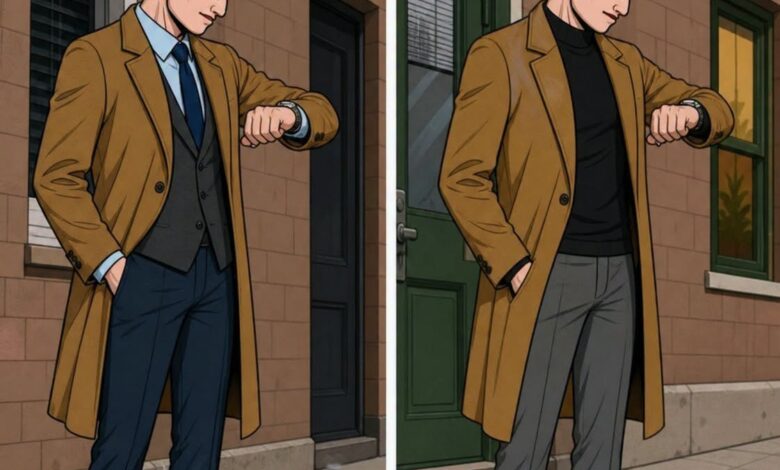
Two pictures sit side by side. The same man. The same outfit. The same posture. The same bright red fire hydrant beside him.
You glance from one image to the other.
Identical.
Or so it seems.
Then comes that nagging little feeling:
Something is off.
That sensation is exactly what makes spot-the-difference puzzles so difficult to abandon. Once your brain knows there is supposed to be a change somewhere, walking away feels almost impossible. The missing detail becomes a challenge between what your eyes are actually seeing and what your mind has already decided must be there.
And your mind is surprisingly good at deciding too quickly.
Human vision does not examine every object with equal attention. That would be exhausting. Instead, the brain constantly takes shortcuts. It notices the important features of a scene, compares them with familiar patterns and rapidly constructs an overall impression.
Man.
Clothes.
Fire hydrant.
Background.
Everything looks normal.
Move on.
That efficiency is enormously useful in everyday life. We would struggle to function if we consciously analyzed every button, shadow, shoelace and patch of pavement in front of us.
But a spot-the-difference puzzle turns that efficiency against us.
The puzzle designer knows what your brain wants to ignore.
A tiny feature can disappear from a jacket.
A fold can change direction.
A shoe can gain or lose a detail.
Something about the man’s posture may shift just enough to escape immediate notice.
The hydrant may appear identical until you stop seeing it as “a hydrant” and begin examining its individual parts.
That is the trick.
The moment your brain labels an object, it tends to stop studying it closely.
You do not keep seeing every component of the fire hydrant. You simply recognize fire hydrant and move on.
You do not inspect the man’s clothing thread by thread. You register same outfit.
The puzzle asks you to reverse that process.
Stop recognizing.
Start observing.
Look at the man’s head first.
Then his shoulders.
His sleeves.
His hands.
His waist.
His legs.
His shoes.
Move to the hydrant.
Examine the top.
The sides.
The bolts.
The base.
Then scan the background rather than repeatedly staring at the center.
This systematic approach often works better than wildly flicking your eyes between the two pictures and hoping the answer suddenly reveals itself.
Because after enough frantic searching, something strange happens.
You can look directly at the difference and still fail to see it.
Your brain has become too committed to its original interpretation.
It expects the two pictures to match, so it effectively fills in what it believes should be present.
That is why stepping away for a moment can sometimes help.
Look somewhere else.
Blink.
Return to the pictures.
Suddenly the detail that had been invisible becomes obvious.
And once you see it, you cannot unsee it.
That may be the most satisfying part of the entire puzzle.
The click.
One second, nothing makes sense.
The next, the difference practically glows.
You wonder how you missed it.
It was there the entire time.
That tiny burst of realization is the reward the puzzle has been withholding from you.
And it explains why these games can become so addictive.
They create a miniature mystery with an achievable solution.
There is no complicated rulebook.
No specialist knowledge.
No equation.
You simply have to look carefully enough.
Some people find the difference in three seconds.
Others need thirty.
Some stare for several minutes before finally giving up and checking the answer.
Speed can make the challenge entertaining, especially when friends compete against one another, but speed is not really the most interesting part.
The puzzle exposes the difference between looking and seeing.
We look constantly.
At phones.
Screens.
Traffic.
Faces.
Advertisements.
Rooms.
Photographs.
But much of what passes through our vision receives only partial attention.
Our brains select what appears important and discard enormous amounts of detail.
Usually, that is helpful.
Inside a puzzle, it becomes the enemy.
The challenge effectively says:
“Your first impression is wrong. Look again.”
There is something useful in practicing that mental movement.
Not because one picture puzzle will magically transform memory, intelligence or eyesight. Claims about simple games dramatically “rewiring” the brain should be treated cautiously.
The benefit is more modest.
For a few minutes, you are practicing deliberate attention.
You are resisting the urge to skim.
You are checking assumptions.
You are moving methodically through information rather than trusting the first conclusion your brain produced.
Those habits matter far beyond puzzles.
Think about how often mistakes happen because someone assumes they already know what they are looking at.
A missing word in an email.
A number copied incorrectly.
A changed road sign.
A small detail in instructions.
A familiar object placed somewhere unusual.
Our brains love familiarity because familiarity allows them to operate quickly.
But familiarity can also make details disappear.
Spot-the-difference puzzles exploit exactly that weakness.
The man looks familiar after the first glance.
The hydrant looks familiar.
The entire scene becomes familiar.
Then the puzzle asks you to make it unfamiliar again.
Break it apart.
Question it.
Inspect what you previously dismissed.
That is why the best strategy is often patience rather than sharper eyesight.
Divide the picture into sections.
Compare one section at a time.
Do not repeatedly scan the entire scene.
Ignore what seems important and inspect what seems boring.
Edges and corners are particularly easy to overlook because attention naturally gravitates toward the central figure.
And if frustration begins taking over, stop forcing it.
A short visual reset can be surprisingly effective.
Then comes the moment everyone wants.
You return to the picture.
Your eyes move across the man’s outfit.
Past his posture.
Toward that bright red hydrant.
And suddenly—
there.
The difference.
The entire puzzle changes instantly.
What had seemed perfectly identical now looks obviously mismatched.
You may even laugh at yourself.
“How did I not see that?”
But that question is really the point.
You did not miss it because your eyes failed.
You missed it because your brain had already decided what belonged there.
For a few minutes, a simple picture forced you to challenge that decision.
Whether you solved it immediately or needed the answer revealed hardly matters.
The real reward happened when the hidden detail finally clicked into place.
Because the picture did not change.
Your attention did.
And sometimes seeing something differently begins with nothing more complicated than refusing to believe you’ve already seen everything.