Most people walk past them without giving them a second thought.
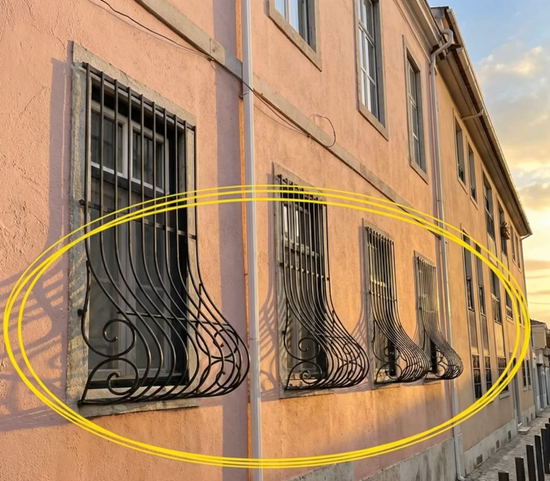
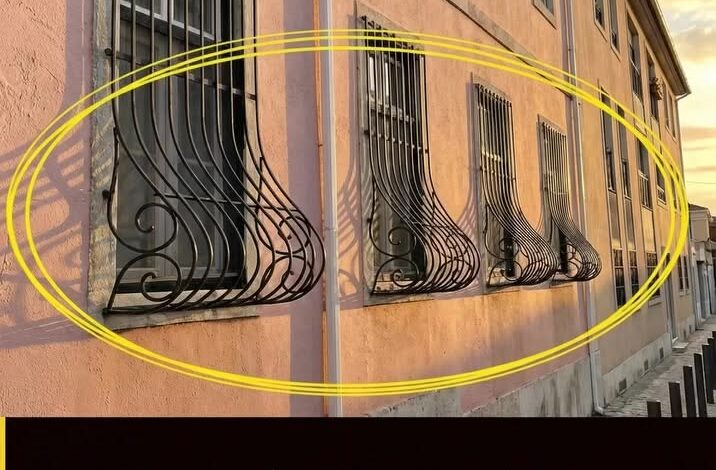
Mounted on the windows of older homes and apartment buildings, these iron bars often blend into the architecture so naturally that they become almost invisible. Yet every now and then, someone notices something unusual. Instead of lying flat against the window, some bars bulge outward near the bottom, forming a rounded basket-like shape.
At first glance, the design can seem strange.
Why would anyone intentionally make security bars stick out from a building?
Were they decorative?
Were they built incorrectly?
Or did they serve a purpose that has simply been forgotten over time?
The answer reveals a fascinating intersection of security, practicality, and everyday urban life.
A Simple Security Solution
Window bars have existed for centuries. As cities grew larger and more crowded during the eighteenth and nineteenth centuries, homeowners sought ways to protect their homes from theft and unauthorized entry.
Early window bars were straightforward and functional. Blacksmiths forged iron rods and mounted them directly across window openings, creating sturdy barriers that discouraged intruders while allowing light and air to enter.
Their purpose was clear: keep unwanted visitors out.
However, while these flat bars provided security, they also introduced limitations.
Residents quickly discovered that turning a window into a barrier changed how they interacted with the outside world. Looking out became more restrictive. Accessing the exterior side of a window became difficult. Small daily activities that once seemed simple suddenly required creative solutions.
As urban living evolved, so did the design of window bars.
The Birth of the Potbellied Design
The outward-curving style eventually became known as the “potbellied” window bar because of its rounded shape.
Rather than sitting flush against the building, the bars extended outward several inches before curving back toward the wall. The result created a small pocket of space between the window and the bars.
At first glance, the difference appears minor.
In reality, it transformed the usefulness of the window.
Instead of acting solely as a security feature, the bars became an extension of living space.
In dense neighborhoods where every square foot mattered, that extra space proved surprisingly valuable.
A Mini Garden Above the Street
One of the most common uses for potbellied window bars was supporting flower boxes and potted plants.
For residents living in crowded cities without yards, gardens, or balconies, the outward curve created a secure platform where flowers and greenery could thrive.
Suddenly, a simple window could become a miniature garden.
Bright geraniums, trailing ivy, herbs, and colorful seasonal flowers transformed otherwise plain building facades into vibrant displays of life.
These gardens offered more than beauty.
They provided residents with a connection to nature in environments dominated by brick, stone, and concrete.
Many historic neighborhoods became known for their window flowers, with entire streets gaining character through the collective efforts of homeowners tending small gardens behind protective ironwork.
Improved Ventilation and Fresh Air
Before modern air conditioning became common, fresh air was essential for comfort.
In many urban apartments, windows served as the primary source of ventilation during warm months.
Flat bars limited how residents could use their windows, especially when they wanted to lean out, adjust shutters, or position fans.
Potbellied bars solved this problem by creating additional room between the occupant and the barrier.
The design allowed windows to function more naturally while preserving security.
Residents could enjoy breezes, sunlight, and outdoor views without sacrificing peace of mind.
For people living in busy city neighborhoods, this balance between openness and safety was invaluable.
A Front Porch in the Sky
In many older communities, windows played a social role that modern architecture often overlooks.
People watched neighborhood life unfold from their windows. They greeted neighbors, monitored children playing outside, and participated in daily street activity without leaving their homes.
Potbellied bars enhanced this experience.
The extra space created by the outward curve allowed residents to lean closer to the outside world while remaining safely indoors.
In effect, the bars created a miniature front porch suspended above the street.
Especially in cities where homes lacked traditional porches or yards, this design helped maintain a sense of community connection.
Residents could remain engaged with neighborhood life while preserving privacy and security.
Practical Uses Beyond Decoration
The usefulness of potbellied bars extended beyond flowers and conversation.
In many homes, residents used the extra space for drying laundry, storing small items temporarily, or positioning decorative objects.
Sunlight and airflow made the area ideal for hanging delicate garments, towels, or linens.
In crowded apartments where indoor space was limited, every opportunity to utilize exterior space mattered.
The bars effectively expanded the functional footprint of the home without requiring additional construction.
It was a simple architectural innovation that addressed multiple challenges simultaneously.
Artistry in Iron
As the design became popular, blacksmiths and metalworkers began incorporating artistic elements into their creations.
What started as a practical adaptation gradually evolved into a form of decorative craftsmanship.
In regions such as Spain, Italy, Portugal, and throughout Latin America, potbellied bars often featured intricate scrollwork, floral patterns, geometric motifs, and elegant curves.
Each set reflected the skill of the craftsman who created it.
Some homeowners commissioned elaborate custom designs that transformed ordinary windows into architectural focal points.
Even when security remained the primary purpose, beauty became an important consideration.
The bars protected the home while contributing to its visual identity.
Regional Variations Around the World
Although the concept remained consistent, potbellied window bars developed distinct regional characteristics.
In Mediterranean countries, ornate wrought-iron designs became common, reflecting centuries-old traditions of metalworking artistry.
Throughout Latin America, colonial-era homes frequently featured outward-curving bars adorned with decorative flourishes and vibrant flower displays.
In historic American cities such as New Orleans, Boston, and New York, similar designs appeared on row houses and apartment buildings where outdoor space was limited.
Each region adapted the concept to suit local architectural styles, climate conditions, and cultural preferences.
Despite these differences, the underlying purpose remained remarkably similar: combining safety with functionality.
A Lesson in Human-Centered Design
Perhaps the most remarkable aspect of potbellied window bars is how effectively they solve multiple problems with a single design adjustment.
The outward curve did not require complex engineering or expensive materials.
It simply recognized an important reality:
People need more from their homes than protection alone.
They need light.
They need air.
They need beauty.
They need connection.
Good design acknowledges these human needs rather than forcing people to choose between them.
The potbellied bar demonstrates how even modest architectural changes can significantly improve everyday life.
Modern Relevance
Although security technology has advanced dramatically, potbellied window bars remain relevant today.
Modern homeowners continue to appreciate their practical advantages.
The design provides secure space for plants and decorations, improves airflow, and preserves visibility while maintaining protection.
Architects renovating historic buildings often preserve these bars as important cultural and architectural features.
Meanwhile, contemporary designers sometimes incorporate similar concepts into modern homes, recognizing the enduring value of their functionality.
Their continued presence demonstrates that effective solutions rarely become obsolete.
When a design addresses genuine human needs, it tends to endure.
A Small Detail With a Big Story
What appears at first to be a simple metal bulge on a window is actually the result of generations of practical problem-solving.
Every curve tells a story about city life, limited space, neighborhood interaction, and creative adaptation.
These bars helped residents remain connected to the world outside while protecting what mattered inside.
They supported flowers, welcomed fresh air, encouraged conversation, and enhanced daily life in countless subtle ways.
Their beauty lies not only in their appearance but also in their purpose.
The next time you pass an older building and notice window bars curving outward beneath a windowsill, take a moment to look closer.
You are not just seeing ironwork.
You are seeing a centuries-old solution created by ordinary people striving to make their homes safer, more comfortable, and more connected to the communities around them.
And that small architectural detail serves as a reminder that the best designs are often the ones that quietly improve life without demanding attention.