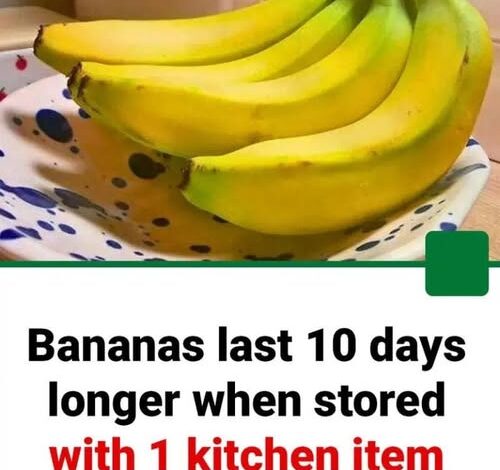
For the longest time, I thought bananas were simply impossible to keep.
No matter how carefully I shopped, they seemed to leap overnight from perfectly yellow to bruised, spotted, and collapsing into mush. One day they were ideal for breakfast; the next they looked like something destined for banana bread I never actually planned to make. I blamed bad luck, grocery stores, even the weather. What I didn’t realize was that my own “healthy” fruit display was quietly speeding up the process.
The problem was sitting right there in the center of my kitchen:
a crowded fruit bowl filled with bananas, apples, avocados, and pears all pressed together like roommates with terrible chemistry.
What I eventually learned is that many fruits release ethylene gas naturally as they ripen. Ethylene itself isn’t harmful — in fact, it’s part of how fruit matures. But bananas are especially sensitive to it, and when multiple ethylene-producing fruits sit together in a confined space, the ripening process accelerates dramatically.
In other words, my fruit bowl wasn’t preserving freshness.
It was creating a tiny ripening chamber.
Apples, pears, avocados, peaches, and bananas all produce ethylene to varying degrees. Packed tightly together, they essentially encourage one another to age faster. The bananas, already naturally quick to ripen, become the first casualties.
Once I understood that, the first solution turned out to be surprisingly simple:
give bananas space.
Instead of placing them in the middle of the fruit bowl, I moved them to their own spot on the countertop away from other produce. That small change alone noticeably slowed the browning process. Suddenly they stayed yellow longer, the texture remained firm, and I stopped feeling like I had a 24-hour countdown to eat them before they collapsed.
But the real breakthrough came from something even simpler:
wrapping the stems.
At first it sounded almost too ridiculous to matter. A little foil or plastic wrap around the top of the banana bunch hardly seemed capable of changing much. Yet scientifically, it makes sense. Most of the ethylene gas bananas release escapes through the stems. Wrapping them slows the gas dispersal significantly, reducing how quickly the fruit ripens overall.
The effect surprised me immediately.
Instead of racing toward brown spots after only a few days, the bananas held steady far longer. Sometimes nearly a full extra week. In some cases, close to ten additional days before becoming overripe.
For something that takes less than thirty seconds to do, the payoff felt strangely satisfying.
There’s also an emotional element to small kitchen habits people rarely talk about. Food waste carries a quiet frustration:
throwing away groceries,
watching money spoil,
feeling perpetually one step behind basic routines.
When produce spoils too quickly, it creates low-level guilt people often normalize without noticing. You buy healthy food with good intentions, then life gets busy and suddenly the bananas are blackened before you’ve eaten half the bunch.
So solving the problem feels bigger than preserving fruit alone.
It creates a tiny sense of order.
Competence.
Relief.
A few other adjustments made a noticeable difference too.
Keeping bananas attached as a bunch helps because separating them exposes more surface area at the stems, allowing ethylene to spread faster. Refrigeration also works differently than many people expect. Putting bananas in the fridge too early can darken the peel rapidly and affect texture before the fruit has ripened properly. But once bananas reach the exact ripeness you like, refrigerating them can dramatically slow further softening inside, even if the peel turns brown externally.
That distinction matters because appearance often tricks people into throwing away perfectly edible fruit. A refrigerated banana may look overripe outside while remaining ideal internally for several more days.
The entire process gradually turned into a kind of quiet ritual:
separating bananas from the fruit bowl,
wrapping the stems carefully,
checking ripeness each morning.
Tiny actions.
But strangely calming ones.
Modern life moves quickly enough that people often underestimate how much emotional satisfaction comes from small systems that simply work reliably. A countertop where fruit lasts properly. A kitchen routine reducing waste instead of creating frustration. These are minor victories objectively, yet they contribute quietly to a sense of stability at home.
And perhaps there’s something symbolic about bananas specifically.
They’re one of the most optimistic grocery purchases:
bright,
simple,
healthy,
ready for breakfasts and snacks and good intentions.
When they spoil too fast, it feels oddly defeating — another reminder that life is moving quicker than expected. But stretching their freshness even a little changes the emotional rhythm. Instead of urgency, there’s ease.
Now, instead of waking up to fruit already halfway toward the trash, I wake up to bananas exactly where I want them:
firm,
sweet,
ready when I’m ready.
Not rushed.
Not wasted.
Just quietly lasting longer because of a few small changes that turned out to matter far more than I expected.