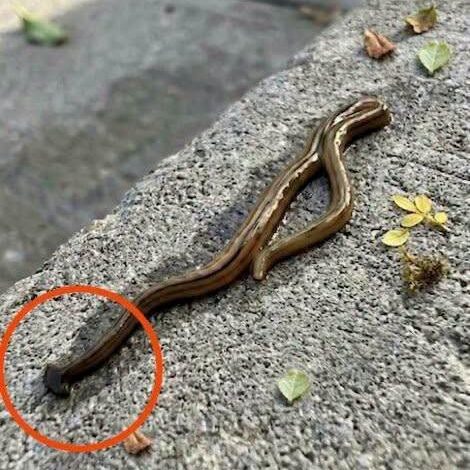
At first glance, it looks like nothing more than an unusual worm inching its way across a sidewalk after the rain. Most people would probably pause for a second, shrug, and continue walking. But that strange creature with its broad, shovel-shaped head may be telling a much bigger story about what’s happening beneath your feet.
Hammerhead worms are among the most unusual creatures found in gardens, lawns, and wooded areas. Their long, flat bodies and distinctive head shape make them easy to recognize, and once you’ve seen one, it’s difficult to mistake it for an ordinary earthworm. Although they often appear harmless as they glide silently across damp soil or pavement, these flatworms play a very different role in the environment than the beneficial worms many gardeners welcome.
Unlike earthworms, hammerhead worms are predators.
They hunt other soil-dwelling creatures, with earthworms making up a large part of their diet. Using chemical receptors to track their prey, they follow slime trails through moist soil before capturing and consuming the worms that help keep gardens healthy.
That matters because earthworms perform an important job beneath the surface.
As they burrow through the ground, they loosen compacted soil, allowing air, water, and plant roots to move more freely. Their activity also helps recycle organic matter, creating nutrient-rich soil that supports flowers, vegetables, shrubs, and trees. Healthy populations of earthworms are often considered a sign of productive, living soil.
When hammerhead worms become established in an area, they can reduce local earthworm populations, particularly where invasive species of hammerhead worms are abundant. Their presence doesn’t automatically mean a yard is in danger, but it may indicate that the underground ecosystem is changing in ways that aren’t immediately visible from the surface.
For gardeners, that’s worth paying attention to.
The health of a lawn or flower bed depends on far more than what can be seen above ground. Beneath every patch of grass lies a complex community of insects, fungi, bacteria, roots, and countless other organisms working together to maintain healthy soil. Even small changes to that delicate balance can influence how well plants grow over time.
Hammerhead worms bring another concern as well.
Some species produce tetrodotoxin, a powerful neurotoxin that is also found in certain marine animals. The amount present in hammerhead worms is generally not considered a significant danger through casual contact, but it can irritate the skin in some people and may pose a risk if pets or wildlife attempt to eat them. Because of this, experts generally recommend avoiding direct contact whenever possible.
If you encounter one, it’s best not to pick it up with your bare hands.
Instead, use gloves, tongs, a shovel, or another tool if you need to move or remove it. Wash your hands thoroughly afterward, especially if accidental contact occurs.
One common mistake is treating hammerhead worms like ordinary earthworms.
Cutting one into pieces will not necessarily eliminate it. Many species have remarkable regenerative abilities, meaning fragments of the body can sometimes regenerate into new worms. For that reason, simply chopping them apart may make the problem worse rather than solving it.
Recommendations for safe disposal can vary depending on the species and where you live.
Many agricultural extension offices, environmental agencies, and invasive species programs provide guidance specific to local conditions. In areas where hammerhead worms are considered invasive, officials may recommend collecting the worm with gloves or tools and disposing of it using methods approved by local authorities. Following local guidance helps reduce the chance of spreading invasive populations while protecting native ecosystems.
If you’re unsure whether the animal you’ve found is a hammerhead worm, taking a clear photograph and contacting your local cooperative extension service or natural resources agency can often help with identification.
Fortunately, spotting a single hammerhead worm doesn’t necessarily mean your entire garden is under threat.
Like many wildlife sightings, context matters. Occasional individuals may simply be passing through favorable habitat after rainfall or periods of high humidity. However, repeated sightings or large numbers of these flatworms may warrant closer attention, particularly if local officials identify them as an invasive species in your region.
Ultimately, the appearance of a hammerhead worm serves as a reminder that the world beneath our feet is every bit as active and important as the landscape we see above it.
Every lawn, flower bed, vegetable garden, and forest floor depends on an intricate network of living organisms working quietly together. Earthworms enrich the soil. Microorganisms recycle nutrients. Plant roots stabilize the ground. Predators help regulate populations. Each plays a role in maintaining the balance that supports healthy ecosystems.
That odd, shovel-headed creature crossing your driveway may seem like a fleeting curiosity, but it offers a glimpse into that hidden world.
It reminds us that even the smallest corners of nature are connected, and that paying attention to the life beneath the surface can help us become better caretakers of the landscapes we call home.