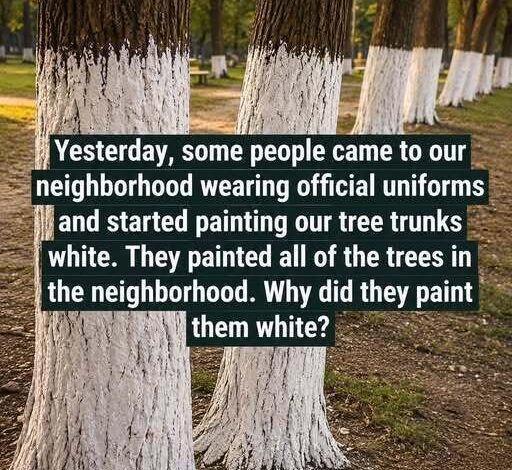
If you have ever driven past an orchard, garden, or rural property and noticed trees with white-painted trunks, you may have wondered whether the markings were decorative or symbolic. While the pale coating can look unusual at first, it actually serves a practical purpose. For generations, gardeners, farmers, and arborists have used this simple method to help protect trees from weather-related stress and support healthier growth.
One of the main reasons tree trunks are painted white is to prevent a problem known as sunscald. This condition often occurs during colder months when bright sunlight warms the bark during the day, only for temperatures to drop quickly after sunset. That sudden shift can stress the bark and cause it to crack or split. Once the bark is damaged, the tree becomes more vulnerable to insects, disease, and environmental injury.
The white paint helps by reflecting sunlight instead of absorbing it. This keeps the trunk temperature more stable and reduces the risk of bark damage caused by rapid heating and cooling. Young trees are especially vulnerable because their bark is thinner and less developed, which is why white-painted trunks are commonly seen in orchards or newly planted landscapes.
Tree caretakers typically use diluted, water-based latex paint rather than oil-based paint, which can harm the tree. The mixture is usually applied to the lower trunk, where the bark receives the most direct sun exposure and is most likely to suffer damage. In some cases, additional tree-safe treatments may be used depending on the climate, tree species, or pest concerns.
Although some people assume painted trees are related to construction, property markings, or landscaping design, a white trunk is often simply a sign of careful maintenance. It shows that someone is taking steps to protect the tree from harsh weather and give it a better chance to grow strong and healthy.
So the next time you see a tree with a white-painted base, you will know it is not just for appearance. It is a small, inexpensive form of protection—one that helps shield the bark, reduce stress, and support the tree’s long-term health.