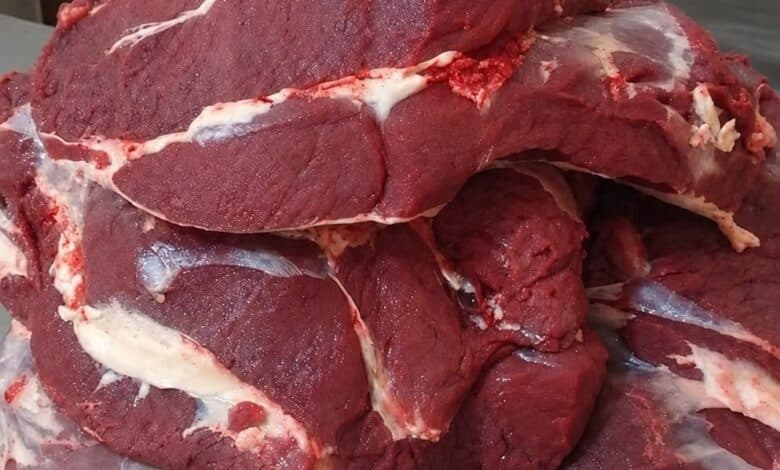
The brightest package of beef in the supermarket case is not automatically the freshest one.
That may sound strange because most of us have been trained, almost unconsciously, to judge meat by color.
Bright cherry red?
Fresh.
Dark red or purplish?
Suspicious.
Brown?
Probably bad.
It feels simple.
Unfortunately, meat is not that simple.
The color of beef is influenced by chemistry, oxygen, packaging, temperature, storage time, and even the lighting above the display case. A perfectly safe piece of beef can look darker than expected, while a beautifully red package can still be approaching the end of its usable life.
The first thing to understand is that freshly cut beef is not always bright red.
Deep inside the muscle, before much oxygen reaches it, beef can appear dark red or purplish.
That color comes largely from myoglobin, a protein in muscle tissue that stores oxygen.
When beef is vacuum-packed, very little oxygen is present around the meat. Under those conditions, myoglobin remains in a form that gives the beef a darker purple-red appearance.
That can look alarming if you’re accustomed to supermarket meat glowing bright red beneath display lights.
But dark purplish beef inside an intact vacuum package is not automatically spoiled.
Open that package and expose the meat to air, and something interesting happens.
Oxygen begins interacting with the myoglobin.
Within a relatively short time, the surface can “bloom” into the bright cherry-red color shoppers typically associate with fresh beef.
Same meat.
Different oxygen exposure.
Different appearance.
That alone should tell us something important:
Color is information.
But color is not a verdict.
Supermarkets know consumers prefer bright red beef.
Packaging technology has therefore evolved partly around maintaining an appearance shoppers find appealing.
Some meat is sold on foam trays covered with oxygen-permeable plastic film. Oxygen reaches the surface and encourages that familiar red color.
Other products may use modified-atmosphere packaging, in which the gases surrounding the meat are carefully controlled to help preserve quality and appearance.
None of that automatically means someone is trying to deceive you.
Packaging has legitimate purposes.
It can protect food from contamination, extend shelf life, reduce waste, and help maintain quality.
But it does mean the color you see has been shaped by more than the age of the meat.
Then there is lighting.
Retail displays are designed to make food attractive.
That shouldn’t surprise anyone.
Bakeries arrange bread beautifully.
Produce sections use lighting that makes fruit and vegetables look vibrant.
And meat cases can also be lit in ways that emphasize appealing red tones.
Again, attractive presentation does not automatically mean dishonesty.
But the lesson is the same:
Don’t allow your eyes to make the entire decision.
A shopper who chooses meat only because one package looks brighter than another may be judging packaging chemistry and display conditions as much as freshness.
Brown color deserves similar nuance.
As beef sits exposed to oxygen, myoglobin can change again, producing metmyoglobin, which has a brownish color.
That means some browning can happen naturally.
A small brown patch does not automatically prove that meat is unsafe.
On the other hand, widespread discoloration combined with other signs of spoilage is different.
This is where the rest of the package matters.
Start with the date.
Depending on where you live and how the product is labeled, you may see a sell-by, use-by, best-before, or similar date.
These labels don’t all mean exactly the same thing, but they provide useful context about storage and intended use.
If you’re buying meat you don’t plan to cook immediately, think ahead.
Will you use it soon enough?
If not, freezing it while it is still in good condition may be the better option.
Next, examine the package itself.
Is it intact?
A torn wrapper, broken seal, leaking tray, or damaged vacuum package deserves caution.
Vacuum packaging should generally remain tightly sealed around the meat. A package that has unexpectedly lost its seal may have been exposed to conditions different from those intended by the manufacturer.
Be cautious with packaging that appears unusually swollen or bloated as well.
And look at the amount of liquid.
A small amount of purge—the liquid naturally released from meat during storage—can be normal.
But excessive leaking or a package swimming in fluid may be a reason to choose another one, especially when other signs don’t look right.
Once you bring beef home, storage becomes your responsibility.
Get refrigerated meat cold promptly.
Don’t leave raw beef sitting for hours in a warm car while finishing errands.
Refrigerator temperature matters because harmful microorganisms can multiply much more quickly when food spends too long at unsafe temperatures.
If you aren’t using the meat within the recommended refrigerated storage period, freeze it rather than hoping it remains fine indefinitely.
Raw meat should also be kept separate from foods that will be eaten without further cooking.
That package of ground beef should not be dripping onto salad vegetables, fruit, cheese, or leftovers.
Use a separate bag at the store if necessary.
At home, store raw meat where any accidental leakage cannot contaminate other foods.
Cross-contamination is far less visually dramatic than spoiled meat, but it can be just as important to prevent.
Then comes the moment when you open the package.
Your senses can provide useful clues.
A strong, unpleasant, rotten, or distinctly abnormal odor is a warning sign.
So is a persistently sticky, tacky, or slimy surface.
If meat clearly smells spoiled or has developed a suspicious texture, don’t attempt to rescue it.
Don’t rinse it.
Don’t taste a tiny piece “just to make sure.”
Don’t assume cooking will magically turn spoiled food back into fresh food.
When in doubt, throwing questionable meat away is cheaper than gambling with foodborne illness.
But there is another important caution.
Meat can contain harmful bacteria without looking or smelling spoiled.
That is why the reverse rule matters too:
Normal appearance and smell do not guarantee safety.
Food safety depends on proper handling, refrigeration, avoiding cross-contamination, and cooking meat appropriately—not merely passing a sniff test.
Ground beef deserves particular care because grinding mixes surface bacteria throughout the product.
A steak and ground beef are not microbiologically identical situations.
Whatever meat you’re preparing, use safe cooking guidance rather than relying only on color inside the meat.
A burger can turn brown before reaching a safe internal temperature.
Another can remain somewhat pink even after it reaches one.
The more reliable approach is a food thermometer.
This is really the larger lesson hiding inside that supermarket meat case.
Our brains love shortcuts.
Red equals fresh.
Brown equals bad.
Pretty equals safe.
Ugly equals dangerous.
Those rules feel satisfying because they remove uncertainty.
But biology and chemistry don’t organize themselves around supermarket aesthetics.
Fresh beef can be purple.
Safe meat can darken.
Spoiled meat can occasionally look surprisingly normal.
Packaging can preserve color.
Lighting can exaggerate it.
Oxygen can transform it.
The smarter shopper doesn’t panic over every dark patch.
But they don’t blindly trust the brightest red package either.
They look at the whole picture.
Date.
Seal.
Temperature.
Packaging condition.
Storage.
Odor.
Texture.
Handling.
Cooking.
That extra minute of attention isn’t paranoia.
It’s informed shopping.
Because the best piece of meat in the case isn’t necessarily the one glowing brightest beneath the lights.
Sometimes the safest choice begins when you stop asking:
“Which one looks the reddest?”
And start asking:
“What else is this package telling me?”