For years, I believed the greatest danger in the ocean was obvious. I imagined towering waves, violent storms, or deep water stretching far beyond the shoreline. Anything deeper than my knees felt threatening enough, and I kept my distance, convinced the sea was simply waiting for the chance to pull me under. It wasn’t until much later that I learned a far more unsettling lesson: the ocean’s greatest hazards are often the ones that look perfectly calm.
The realization began with a simple conversation.
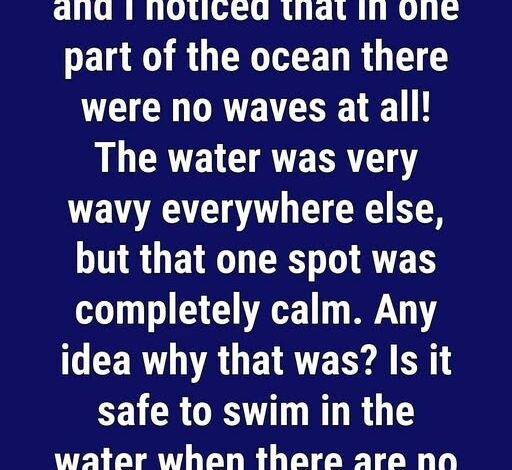
A friend described standing on the beach when they noticed something unusual—a narrow stretch of water where the waves seemed to disappear. While the rest of the shoreline churned with white, crashing surf, this section remained strangely smooth. At first glance, it looked like the safest place to enter the water.
In reality, it was anything but.
What my friend had seen was most likely a rip current, one of the most dangerous natural hazards found along many beaches. Unlike towering waves that immediately signal caution, rip currents often hide in plain sight. They can appear as peaceful channels cutting through breaking waves, quietly carrying water back toward the open sea with surprising speed and force.
That contrast is what makes them so deceptive.
As waves continually push water toward the shoreline, all of that water must eventually find a way back offshore. Sometimes it escapes through narrow channels, creating fast-moving currents that flow away from the beach. To someone unfamiliar with rip currents, those calmer-looking lanes can seem inviting because there are fewer breaking waves. In truth, they may mark the very place where the water is moving most powerfully.
Learning how rip currents form completely changed the way I look at the ocean.
Now, instead of searching only for large waves, I pay attention to subtle clues. A gap where waves consistently fail to break. Water that appears darker because it is slightly deeper. Foam, seaweed, or debris steadily moving away from shore instead of washing back in. None of these signs guarantees the presence of a rip current, but together they can help beachgoers recognize areas that deserve extra caution.
Perhaps the most important lesson, however, concerns what to do if you are caught in one.
The instinctive reaction is often to fight directly toward the beach with all your strength. Unfortunately, rip currents can move faster than many people can swim, and exhausting yourself by battling the current head-on can become extremely dangerous.
Instead, water safety experts generally recommend remaining as calm as possible and swimming parallel to the shoreline rather than directly against the current. Rip currents are usually relatively narrow, so moving sideways may allow you to escape the strongest flow before turning back toward shore. If swimming becomes too difficult, floating or treading water while signaling for help can conserve valuable energy until assistance arrives or the current weakens.
Knowing these principles does not eliminate every risk.
The safest choice is always to swim at beaches where trained lifeguards are on duty, obey warning flags and posted advisories, and avoid entering the water if conditions appear hazardous. Checking local surf forecasts before heading to the beach can also provide valuable information about current conditions and potential dangers.
For me, understanding rip currents did not erase my lifelong respect for the ocean.
I still find myself pausing at the shoreline, watching the waves before deciding how far I want to venture. My heart still beats a little faster than it probably should. But there is an important difference now. The fear is no longer built entirely on uncertainty. It has been replaced by knowledge, awareness, and a healthier understanding of what truly deserves caution.
The ocean commands respect because it is powerful, unpredictable, and constantly changing.
Yet it is also a place of extraordinary beauty that millions of people enjoy safely every year by learning its rhythms and recognizing its hazards. Education does not remove every danger, but it gives us the tools to make better decisions when we encounter them.
In the end, the quiet stretch of water that once looked so harmless taught me one of the most valuable lessons I have ever learned. Nature does not always announce its dangers with dramatic warnings. Sometimes the greatest risks appear calm, inviting, and deceptively ordinary. By understanding how rip currents work and recognizing their warning signs, we replace blind fear with informed caution. And sometimes, that knowledge can make all the difference between a frightening story that ends safely on the beach and one that never has the chance to be told.