Visible Hand Veins Explained: Why They Appear, From Low Body Fat, Genetics, Exercise, Heat, and Hydration Changes, and When They Are Normal or Rarely a Sign of Medical Concern, Offering Reassurance That Prominent Veins Are Usually Harmless Physical Traits While Highlighting Simple Lifestyle Factors That Influence Their Appearance Over Time Naturally and safely understood today…

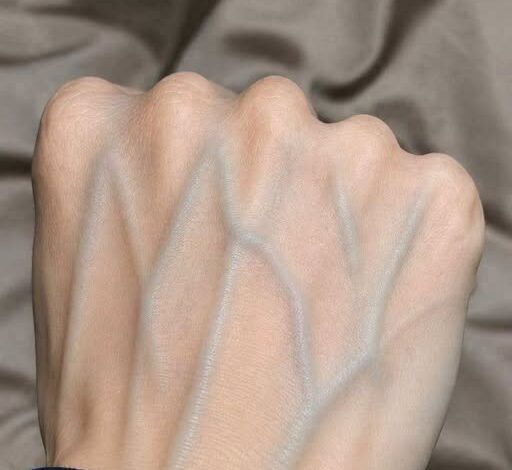
Prominent veins can catch your attention almost instantly. One day your hands, arms, or legs seem completely ordinary, and the next you notice blue or green lines standing out beneath your skin. It’s easy for your mind to jump to the worst-case scenario, wondering whether these changes signal a circulation problem or an underlying illness. In reality, visible veins are often a perfectly normal part of how the human body is built, shaped by genetics, age, body composition, and everyday habits rather than disease.
Veins play a vital role in keeping blood flowing back to the heart after it has delivered oxygen throughout the body. Because many veins lie just beneath the surface of the skin, it is completely natural for some of them to become more noticeable under certain circumstances. For many people, these changes are simply a reflection of normal anatomy rather than a warning sign.
One of the biggest factors influencing how visible veins appear is skin thickness. People with naturally thin or fair skin often notice their veins more easily because there is less tissue covering them. As we grow older, the skin gradually becomes thinner and loses some of the collagen and fat that once concealed blood vessels. As a result, veins that were always present may suddenly seem much more pronounced, even though nothing harmful has changed.
Body fat also plays an important role. Individuals with lower body fat have less cushioning between their veins and the surface of the skin, making blood vessels easier to see. This is especially common among athletes, fitness enthusiasts, and naturally lean individuals. After months or years of regular exercise, many people notice that veins on their forearms, hands, legs, or shoulders become more defined. Rather than indicating poor health, this often reflects improved muscle tone and reduced fat beneath the skin.
Physical activity itself can temporarily make veins appear larger. During exercise, muscles require more oxygen-rich blood, causing blood vessels to expand to accommodate the increased flow. Weightlifting, running, cycling, or even vigorous yard work can make veins appear fuller and more prominent for a short time afterward. Once the body returns to its resting state, the veins often become less noticeable again.
People whose work involves frequent use of their hands may experience similar changes. Carpenters, mechanics, gardeners, artists, healthcare workers, and others who regularly perform repetitive manual tasks often develop stronger forearm muscles over time. Combined with years of physical activity, these changes can make veins stand out more clearly without indicating any medical concern.
Genetics also has a significant influence. Some families naturally have more visible veins than others. If parents or close relatives have prominent veins, there is a good chance the same trait may be inherited. In many cases, what appears unusual is simply another characteristic passed down through generations, much like eye color, hair texture, or skin tone.
Although visible veins are usually harmless, context matters far more than appearance alone.
Veins that gradually become easier to see over months or years—without causing discomfort or other symptoms—are generally considered a normal variation. Many healthy people have highly visible veins throughout adulthood and never experience circulation problems because of them. The appearance itself is rarely enough to suggest that something is wrong.
However, changes that occur suddenly deserve closer attention, particularly when accompanied by additional symptoms. If a vein becomes painful, swollen, unusually warm, or surrounded by redness, the body may be signaling inflammation or another condition that requires medical evaluation. While these symptoms do not always indicate a serious problem, they should never be dismissed without proper assessment.
In some cases, a blood clot can develop within a vein, affecting normal circulation and potentially requiring prompt treatment. Warning signs may include significant swelling in one limb, tenderness, warmth, redness, or pain that develops without an obvious explanation. Although these conditions are relatively uncommon compared with harmless visible veins, recognizing the difference is important because early medical care can reduce the risk of complications.
Varicose veins represent another common reason veins become more noticeable. Unlike ordinary visible veins, varicose veins often appear enlarged, twisted, or raised above the surface of the skin. Some people experience aching, heaviness, itching, or discomfort after standing for long periods. While varicose veins are not always dangerous, they can affect quality of life and may benefit from evaluation if symptoms become bothersome.
Pregnancy can also temporarily change the appearance of veins. Increased blood volume, hormonal changes, and added pressure on blood vessels often make veins more visible, particularly in the legs. For many women, these changes improve after childbirth as the body gradually returns to its pre-pregnancy state.
The key is to pay attention not only to what you see but also to what you feel.
A vein that has always been visible and causes no discomfort is usually far less concerning than one that suddenly changes appearance alongside pain, swelling, or warmth. Monitoring patterns over time can provide valuable information. Taking occasional photographs or making note of new symptoms can help both you and your healthcare provider determine whether changes are simply part of your normal anatomy or something that deserves further investigation.
It is also worth remembering that the internet can make harmless body changes seem far more alarming than they truly are. Reading worst-case scenarios online often fuels unnecessary anxiety, especially when common, harmless conditions share certain features with rare medical problems. Looking at the whole picture—including symptoms, personal health history, and the pace of change—is far more informative than focusing on appearance alone.
For most people, visible veins are simply another expression of their unique body. They reflect genetics, aging, physical activity, and natural differences rather than illness. There is no single “normal” appearance, and what looks dramatic on one person may be completely typical for another.
Still, your body deserves attention when something genuinely changes. If prominent veins are accompanied by pain, redness, swelling, warmth, or rapid changes that concern you, seeking medical advice is always a wise decision. A healthcare professional can evaluate the situation, answer questions, and determine whether additional testing is needed.
In the end, your veins often tell a simple story—not one of disease, but of who you are. They reflect your body’s structure, your lifestyle, and the years you’ve lived. Trust your observations, but trust your body’s signals even more. When appearance and symptoms don’t match your usual pattern, asking for professional guidance can replace uncertainty with reassurance and transform worry into understanding.