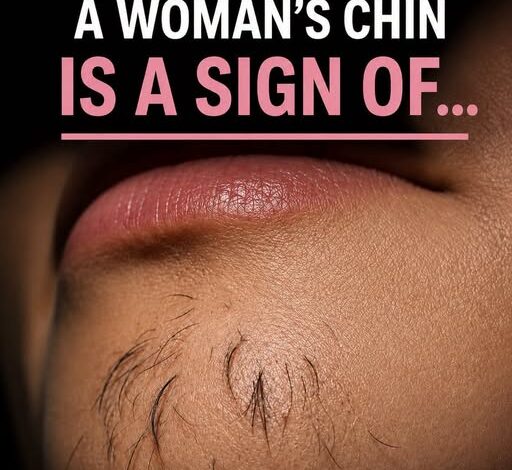
The first time a woman notices a few coarse hairs growing on her chin, the reaction is often immediate. Surprise turns into concern, followed by questions that can be difficult to ignore. Why is this happening? Is something wrong with my body? For many, the discovery feels unexpected, but in most cases, those new hairs are not a sign of serious illness. Instead, they reflect the natural hormonal changes that occur throughout life.
Although facial hair is often associated with men, women naturally produce small amounts of androgens—hormones such as testosterone that play important roles in overall health. These hormones help regulate bone strength, muscle mass, mood, and sexual function. The difference lies not only in hormone levels but also in how individual hair follicles respond to them. Even slight hormonal shifts can encourage certain facial hairs to become darker, thicker, and more noticeable.
This is why a woman who has never struggled with facial hair may suddenly begin seeing a few stubborn strands along her chin, jawline, or upper lip. The change can happen gradually over months or even years, making it seem as though it appeared overnight. In reality, the body has often been changing quietly long before the hairs become visible.
Age is one of the most common reasons these changes occur. As women grow older, hormone levels naturally fluctuate. During perimenopause and menopause, estrogen levels decline while androgen levels often remain relatively stable. Even if testosterone does not increase, the changing balance between hormones can make its effects more noticeable, allowing facial hair to become thicker or more abundant than before.
Genetics also plays a significant role. Some women inherit hair follicles that are naturally more sensitive to androgens. If mothers, grandmothers, sisters, or other close relatives developed facial hair with age, there is a good chance the same pattern may appear in future generations. In these cases, facial hair is less a medical problem and more a family trait shaped by inherited biology.
For many women, the appearance of a few coarse chin hairs is simply another part of the aging process, much like developing gray hair or noticing changes in skin texture. While it may feel frustrating, it is usually considered a normal variation rather than a cause for alarm.
However, there are situations where increased facial hair deserves closer attention.
One of the most common medical conditions associated with excess facial hair is polycystic ovary syndrome, or PCOS. This hormonal disorder affects millions of women worldwide and can increase androgen activity, leading to unwanted hair growth on the face and body. Facial hair linked to PCOS often appears alongside other symptoms such as irregular or absent menstrual periods, persistent acne, difficulty managing weight, thinning scalp hair, or fertility challenges. When several of these symptoms occur together, discussing them with a healthcare professional can help determine whether PCOS or another hormonal condition is involved.
Certain medications may also contribute to facial hair growth. Some hormone-based treatments, anabolic steroids, or medications that influence hormone production can stimulate hair follicles in susceptible individuals. Chronic stress may also play an indirect role by affecting hormone regulation throughout the body, although stress alone is rarely the sole cause of significant facial hair growth.
In much rarer cases, sudden or excessive facial hair can signal an underlying medical condition involving the adrenal glands or ovaries. These conditions are uncommon but often produce additional symptoms beyond hair growth, including deepening of the voice, rapid muscle development, unexplained weight changes, or significant alterations in menstrual cycles. When facial hair appears very quickly or is accompanied by other noticeable physical changes, medical evaluation becomes especially important.
The speed of the change often provides valuable clues. A few new hairs that develop gradually over several years are generally far less concerning than dense facial hair that appears within a short period. Paying attention to how quickly the changes occur, along with any other symptoms, can help healthcare providers determine whether further testing is necessary.
Fortunately, women who are bothered by facial hair have many options available. Traditional methods such as tweezing, waxing, threading, shaving, and depilatory creams remain popular and effective for managing small areas. Longer-lasting approaches, including laser hair removal and electrolysis, can significantly reduce hair growth for many people, although results vary depending on hair color, skin tone, and individual hormone levels.
When an underlying hormonal imbalance is identified, treatment may also help slow future hair growth. Depending on the cause, healthcare providers may recommend medications that regulate hormones or reduce androgen activity. These decisions are highly individualized and should always be made in consultation with a qualified medical professional.
Perhaps the most important thing to remember is that facial hair is far more common than many people realize. Because it is rarely discussed openly, countless women assume they are alone when they notice those first coarse hairs. In reality, millions experience the same changes throughout adulthood. The silence surrounding the topic often creates unnecessary embarrassment about something that is, for many, entirely normal.
Our bodies continue to evolve throughout every stage of life. Hormones shift, hair patterns change, and aging brings new experiences that are simply part of being human. A few unexpected chin hairs do not define femininity, beauty, or health. They are often nothing more than one small reflection of the body’s natural hormonal rhythms.
Still, listening to your body matters. If facial hair growth becomes sudden, unusually rapid, or appears alongside symptoms such as irregular periods, severe acne, unexplained weight changes, or other concerning physical changes, seeking medical advice is a sensible step. A healthcare professional can evaluate the cause, answer questions, and discuss treatment options if needed.
For most women, however, those occasional coarse hairs are simply another reminder that the body changes over time. They may be inconvenient, and they may require a pair of tweezers now and then, but they are rarely a sign that something is fundamentally wrong. More often than not, they represent a perfectly natural variation in hormonal activity—one shared by countless women, even if few openly talk about it.