My Only Daughter Passed Away in a Crash Caused by a Teen Boy – I Adopted Him, and on My Birthday He Revealed the Truth He Had Hidden for Years

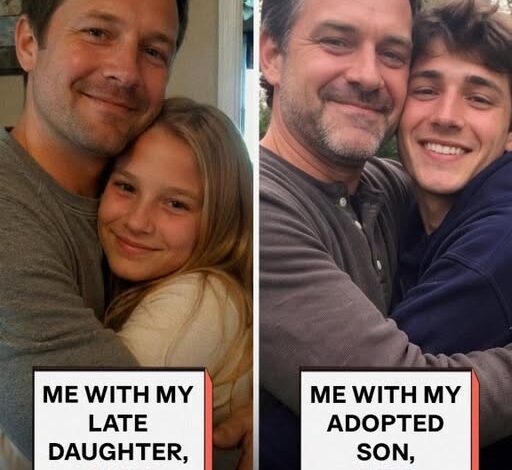
My daughter, Sarah, was 11 when a car came through an intersection and took her from me.
That sentence never gets easier to say. It doesn’t soften with time. It just becomes something you learn to carry without dropping it in public.
She had been laughing that morning.
I remember it because I almost ignored it.
She was sitting at the kitchen counter with her notebook open, writing names for dogs she said she would adopt “someday when I have a house with a yard big enough for all of them.”
I told her to eat her breakfast.
She told me she already was.
I should have looked longer.
I should have slowed down.
But I didn’t.
A car came through an intersection and took her from me.
And after that, everything split into two versions of life: before Sarah, and after Sarah.
The boy who was driving was 17.
His name was Michael.
He was an orphan.
No family at the hearing except a social worker who sat two rows back and didn’t speak unless spoken to.
In court, Michael didn’t try to excuse anything. He didn’t shift blame. He didn’t look at anyone when he spoke.
“I made a mistake,” he said, voice breaking. “I’ll live with it forever.”
That was all.
And somehow, that was worse than denial.
Because I believed him.
Or maybe I just couldn’t survive hating another child on top of losing mine.
When I made the decision to drop the charges, people thought I had lost my mind.
My wife left within a week.
She didn’t scream or argue.
She just packed a bag and said, “I can’t live in a house with him.”
I didn’t stop her.
Because part of me understood.
Grief doesn’t behave the same way in two people at the same time. It just doesn’t.
My brother stopped calling.
Friends became careful around me, like I was something fragile and unstable.
But Michael stayed.
And I told myself I didn’t do it out of compassion for him.
I did it because I couldn’t bury two lives at once.
At first, he barely spoke.
He slept on the couch without asking for a room.
He washed dishes before I could get to them.
He left notes on the fridge like:
Got groceries. Milk was on sale.
Or:
Fixed the broken porch light.
Small things.
Quiet things.
As if he was trying to take up less space than he needed.
One night I found him sitting at the kitchen table long after midnight, staring at a math textbook he wasn’t reading.
“You don’t have to do all this,” I said.
He didn’t look up.
“I want to,” he said.
That was the first time he called me “Dad.”
And I didn’t correct him.
Years passed like that.
Not healed.
Just… structured.
He grew into himself slowly, carefully, like someone afraid of breaking the space around him.
He got into college.
He worked.
He sent money home without being asked.
When I got sick, it wasn’t dramatic at first.
Fatigue. Tests. Doctors who avoided direct language.
Then the word: kidney failure.
I remember sitting in the kitchen thinking, this is just another thing I don’t get to fix.
Michael found me there.
He didn’t ask questions.
He just said, “Test me.”
I told him no.
He said it again.
“Just test me, Dad.”
And I did.
He was a match.
The surgery changed something between us.
Not in a dramatic way.
In a quieter, deeper way.
Like a line had been crossed that couldn’t be uncrossed.
He stopped sleeping on the couch after that.
Started calling the house “ours.”
Started showing up earlier.
Staying later.
Living less like someone passing through.
But even then, there were moments.
Small ones.
Where I’d look at him and feel something I couldn’t name.
Not doubt.
Not anger.
Something more complicated.
Like grief still looking for somewhere to go.
On my birthday, everything shifted again.
The party was small.
Just neighbors. A few friends. Nothing elaborate.
Michael had been helping all morning.
Grill ready.
Lights strung.
Music playing low.
But something was off.
I noticed it in the way he kept checking his phone without reading it.
In the way he kept looking at the gate like he expected someone.
“You okay?” I asked.
He smiled too quickly.
“Yeah. Just tired.”
But he wasn’t.
When he stood to make a toast, I thought it would be simple.
Something about gratitude.
Something about family.
Instead, he said:
“There’s something I need to tell you.”
The air changed immediately.
Like everyone knew before I did that this wasn’t going to be light.
“Dad… it’s about Sarah.”
My stomach dropped before he even finished the sentence.
“No,” I said. “Don’t.”
But he did anyway.
He opened the door.
And a man walked in.
Not Michael.
Someone else.
Someone older.
Confident in a way that made the room feel smaller.
“My name is Greg,” the man said quietly.
And just like that, the past stopped being past.
What followed wasn’t chaos.
It was worse.
It was truth unfolding carefully.
Piece by piece.
Greg admitted he had been the one driving.
Not Michael.
Michael had taken the blame.
Not because he caused it.
But because he had nothing else to lose.
Greg’s family had lawyers.
Connections.
Pressure.
And Michael… had nothing.
So he carried it.
For years.
Silently.
Completely.
And then came the recorder.
Sarah’s voice.
That laugh.
That impossible sound that turned the room into something unlivable.
I didn’t realize I was crying until I couldn’t breathe properly.
Eleven years collapsed into a single moment of audio.
Not healing.
Not closure.
Just memory returning all at once.
After Greg left, the house didn’t feel the same.
It felt older.
Heavier.
Like something had finally been said out loud that had been waiting years to be spoken.
Michael stayed behind, clearing plates like nothing had happened.
Like the world hadn’t just shifted under both of us.
Later, I asked him why he never told me.
He didn’t answer right away.
Because there wasn’t a simple answer.
“I thought you were surviving,” he finally said. “And I didn’t want to be another thing you had to survive.”
That was the part that broke me.
Not the confession.
The intention behind the silence.
That night, I played the recording again.
Not because I needed to hear it.
Because I wasn’t ready not to.
Michael stood in the doorway while it played.
Not entering.
Not leaving.
Just there.
And I realized something I hadn’t understood before:
Grief doesn’t end.
It just changes who stands next to you while you carry it.