The birthday balloons were still tied to the fence when the sun came up the next morning.
Some had already begun to deflate slightly in the overnight cold, their bright colors dulled beneath gray morning light. A plastic table still stood crooked in the yard where slices of untouched cake hardened beneath foil and paper plates remained scattered across the grass. One child’s shoe rested near the driveway, abandoned in the chaos hours earlier, while ribbons from opened presents clung to wet pavement after firefighters and paramedics had rushed through the neighborhood in flashing red light.
Everything looked painfully ordinary.
And that was what made the horror feel impossible to process.
Only hours before, the house had been full of laughter.
Neighbors later described hearing music drifting through open windows while children ran through the yard carrying balloons and juice boxes, their voices overlapping in the familiar, joyful chaos that belongs to birthday parties everywhere. Parents stood in clusters near folding chairs exchanging stories about work, school schedules, rising grocery prices, and whose child had suddenly become obsessed with dinosaurs or soccer or cartoons that adults pretended to understand.
It was the kind of gathering communities stop noticing because it feels so normal.
Safe.
Predictable.
The sort of evening people assume will fade quietly into memory once the dishes are cleaned and children fall asleep in the back seats of cars on the drive home.
Instead, it became the dividing line between before and after for an entire neighborhood.
Witnesses later struggled to describe exactly how the violence began because trauma distorts time strangely. Some remembered hearing shouting first. Others recalled only the sound itself — sharp cracks interrupting the music so suddenly that many people initially mistook them for fireworks or something falling over nearby.
Then came the screaming.
The gunfire shattered more than bodies that night.
It shattered assumption.
Children dropped to the ground instinctively without fully understanding why adults suddenly grabbed them with desperate force. Parents threw themselves over sons and daughters while people scrambled blindly for cover behind parked cars, fences, and furniture that offered little real protection.
Birthday decorations whipped violently in the panic-filled movement around them.
Some guests ran.
Some froze.
Some searched frantically for loved ones through smoke, confusion, and noise.
And then, almost as suddenly as it began, the gunfire stopped.
What survivors remembered afterward was not only fear.
It was silence.
A silence so heavy and unnatural it seemed to press physically against the street itself. The music had stopped. The laughter was gone. Even the children’s crying sounded distant beneath the stunned disbelief spreading through the crowd.
People emerged slowly from hiding places, disoriented and shaking, trying to understand what had happened.
Then they began seeing each other.
Someone collapsed near the sidewalk.
Another person bleeding beside the porch steps.
A mother screaming a child’s name repeatedly.
Neighbors kneeling beside bodies with trembling hands while waiting for ambulances already delayed by the chaos unfolding around the area.
By the end of the night, four people were dead.
Ten more injured.
Dozens psychologically wounded in ways that would remain invisible long after physical evidence disappeared.
And perhaps the cruelest part was how ordinary the gathering had been before violence arrived.
Mass trauma often feels especially unbearable when it invades spaces associated with innocence:
schools,
churches,
birthday parties,
family gatherings.
Places people emotionally classify as safe.
When violence enters those environments, the damage extends far beyond the immediate victims because entire communities lose trust in normal life itself.
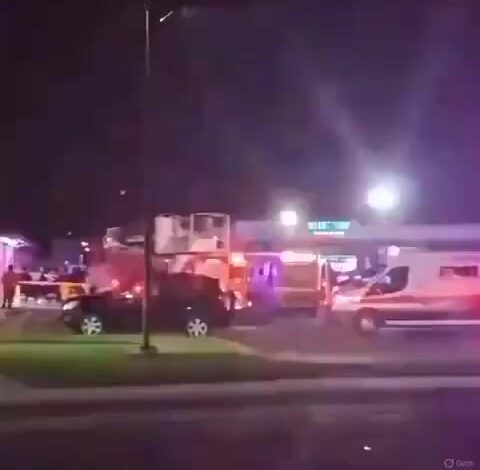
After the ambulances departed and investigators flooded the scene, the neighborhood transformed almost overnight. Yellow police tape fluttered across yards where children had played hours earlier. Patrol cars lined streets usually occupied by bicycles and parked minivans. Floodlights illuminated shattered glass, shell casings, and abandoned party decorations while detectives moved carefully through the aftermath documenting evidence.
Residents stood behind barriers wrapped in blankets despite the warmth of the night, staring silently at homes they no longer recognized emotionally.
Trauma changes geography.
A street corner becomes “where it happened.”
A driveway becomes associated with screams.
A front yard becomes memory instead of space.
And for the children who survived the shooting, those associations formed instantly.
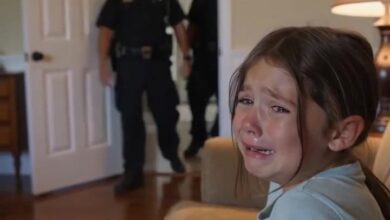
In the days afterward, many parents described dramatic behavioral changes. Children who once slept easily suddenly refused to be alone at night. Some flinched at slammed doors or fireworks. Others stopped speaking much altogether. Several reportedly asked the same heartbreaking questions repeatedly:
Why would someone shoot at a birthday party?
Did the bad people come back?
Are we safe now?
Adults struggled desperately to answer because they themselves no longer felt certain of safety either.
That is one of the deepest wounds violence inflicts on communities:
it transfers fear into ordinary routines.
Parents began checking locks repeatedly before bed.
People avoided sitting outside at night.
Neighborhood gatherings grew quieter, smaller, more cautious.
Even celebrations started carrying anxiety beneath them.
Because once joy has been interrupted by terror once, the nervous system remembers.
Counselors and crisis teams arrived quickly to assist grieving families and traumatized children, but emotional recovery after public violence rarely follows predictable timelines. Some survivors spoke openly immediately. Others withdrew completely. Many alternated between numbness and overwhelming emotion without warning.
Grief after communal trauma often behaves collectively too.
People who barely knew the victims still cried.
Neighbors who never attended the party felt unable to sleep.
Entire blocks carried the same emotional heaviness simultaneously.
The sidewalk memorial began growing almost immediately.
First candles.
Then flowers.
Then handwritten notes.
Then stuffed animals left carefully beside photographs taped to wooden posts near the scene.
Children contributed drawings in crayon and marker:
hearts,
angels,
birthday cakes,
messages written in uneven handwriting promising the victims they would not be forgotten.
Those memorials matter psychologically because they give communities something tangible to do when helplessness feels unbearable. Human beings instinctively create rituals around grief because ritual creates structure where chaos once existed.
People gathered nightly beside the memorial despite not always knowing what to say.
Some prayed.
Some hugged strangers silently.
Some simply stood together because being alone with the grief felt too heavy.
And slowly, the identities of the victims emerged publicly beyond statistics and headlines.
A father who never missed soccer games.
A teenage girl known for helping younger students with homework.
A cousin who made everyone laugh during family cookouts.
A young mother who had spent the entire evening organizing decorations for the party before violence erupted.
The humanity of the victims deepened the community’s mourning because people could now imagine not only how they died —
but how they lived.
That distinction matters profoundly.
Communities recovering from tragedy often fight desperately against reducing victims to crime-scene language alone. Families want the world to remember personalities, dreams, humor, routines, and love rather than only headlines about violence.
Authorities continued searching for suspects and motives in the weeks afterward. Investigators interviewed witnesses, reviewed surveillance footage, and tried reconstructing the exact chain of events leading to the shooting. Rumors spread rapidly online and through the neighborhood:
retaliation,
gang involvement,
mistaken identity,
personal disputes.
But while law enforcement searched for factual explanations, many residents wrestled with something emotionally larger.
How do you explain this kind of violence to children?
How do you reassure them the world remains safe when adults themselves feel profoundly uncertain?
Parents discovered quickly that children do not only absorb events directly.
They absorb adult fear too.
Some families tried protecting children by limiting news coverage and difficult conversations. Others chose honesty, believing uncertainty frightened children more than painful truth. Counselors encouraged parents to focus less on explaining evil completely and more on reinforcing safety, love, and emotional openness consistently.
Still, many children remained changed afterward.
Some became quieter.
Some more anxious.
Some unusually protective of siblings or parents.
Trauma accelerates emotional awareness in children in heartbreaking ways.
And the adults changed too.
Neighbors who previously exchanged only casual greetings now checked on one another regularly. People attended community meetings who had never participated before. Strangers embraced at vigils as though already related by grief.
Violence fractured the neighborhood.
But mourning connected it differently afterward.
That paradox appears often after tragedy:
people discover community most intensely while surviving loss together.
Yet beneath the solidarity remained anger too.
Anger at how common these scenes have become.
Anger at explanations that never feel sufficient.
Anger that children now practice lockdown drills before they fully understand multiplication.
Many residents described exhaustion more than outrage — a weary disbelief that birthday parties, schools, grocery stores, and churches increasingly require emergency response plans in modern life.
Because repeated violence changes national psychology slowly over time.
People begin adjusting expectations downward.
Accepting fear as background noise.
Treating survival itself as ordinary luck.
And perhaps that normalization frightens grieving communities almost as much as the violence itself.
The families most directly affected faced impossible realities after the cameras disappeared. Funerals had to be planned. Hospital visits continued. Bedrooms remained untouched while relatives struggled to decide whether preserving belongings felt comforting or unbearable.
Birthdays became anniversaries of grief.
Songs triggered memories unexpectedly.
Simple household objects suddenly carried emotional weight impossible to explain to outsiders.
For survivors, healing unfolded unevenly.
Some days felt almost normal.
Then a loud noise, news report, or passing siren would pull them emotionally backward instantly.
Trauma does not disappear simply because headlines fade.
It lingers in bodies.
In sleep.
In relationships.
In nervous systems trained suddenly to expect danger.
And still, somehow, the community kept trying to move forward.
Not because the pain lessened quickly.
Because survival itself requires movement eventually.
Months later, children slowly returned to playing outside again. Families resumed cookouts cautiously. The street regained fragments of normal life little by little, though never entirely the same.
Certain absences remained permanent.
Certain memories attached forever to that night.
But alongside the grief emerged another determination too:
that the victims would be remembered not only through violence, but through the love surrounding them before it happened.
And maybe that is why memorial candles continued appearing long after national attention faded.
Because communities devastated by tragedy often cling fiercely to one final act of resistance against senseless violence:
remembering that before the gunfire,
before the sirens,
before the headlines and police tape,
there was simply a birthday party —
filled with children laughing,
families gathering,
cake waiting to be cut,
and ordinary people believing, if only for a little while longer, that they were safe together.