I Bought My Childhood Home at Auction – On My First Night Back, My Mother Called Crying and Said, ‘Please Tell Me You Haven’t Found the Room Your Father Sealed Off’

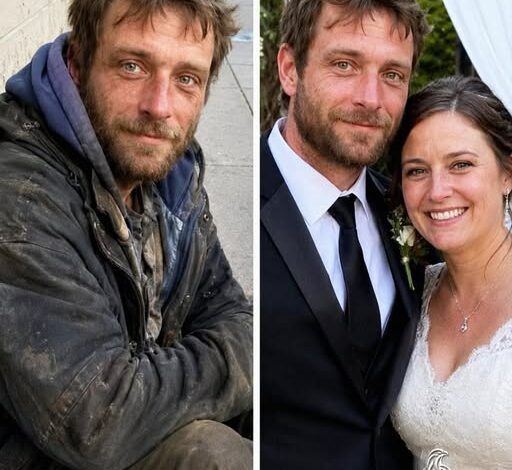
At first, it was supposed to be temporary.
That’s what I told myself the night I let him into my apartment with a backpack full of wrinkled clothes and eyes too tired for someone his age. He needed a place to stay for “a couple of weeks.” I needed a husband convincing enough to stop my mother from arranging my future like a business merger disguised as concern.
So we made a deal.
Simple.
Cold.
Transactional.
He would pretend to be my husband during family dinners and public events. In return, he’d get a roof over his head, warm food, and enough time to figure out whatever disaster had landed him sleeping in his car before I found him outside the convenience store in the rain.
I thought I understood the script perfectly.
I would stay emotionally distant.
He would stay grateful.
And eventually we would walk away from each other untouched.
But life rarely obeys the versions of itself we rehearse in advance.
At first, he barely occupied space at all.
He moved through my apartment carefully, as though afraid to leave fingerprints behind. He folded blankets every morning. Washed dishes immediately after using them. Thanked me for everything with a kind of quiet sincerity that made me strangely uncomfortable because I wasn’t used to gentleness without expectation attached to it.
Most men in my life had wanted something:
obedience,
admiration,
compliance,
access,
control.
He wanted… permission.
Permission to stay a little longer.
Permission to fix things around the apartment.
Permission to exist without becoming a burden.
That difference unsettled me more than arrogance ever could.
Then slowly, without either of us noticing exactly when it happened, routine became intimacy.
Not dramatic intimacy.
Not cinematic declarations.
Small things.
He learned how I took my coffee and started making it before I woke up.
I learned he hated thunderstorms but pretended otherwise.
He fixed the kitchen faucet I’d ignored for months because hearing it drip at night apparently bothered him more than it bothered me.
Sometimes I’d come home furious after another fight with my mother, ranting endlessly about expectations and appearances and the exhausting performance of being the “perfect daughter.” He would just sit there listening quietly, elbows resting on his knees, never interrupting unless I paused long enough for him to ask:
“Do you want advice or just someone to hear you?”
No one had ever asked me that before.
The strange thing about safety is that you usually don’t recognize it immediately.
At first, you just notice your shoulders relaxing in someone’s presence.
You notice silence becoming comfortable instead of awkward.
You notice yourself speaking honestly without preparing defenses first.
That’s how it happened with him.
The “homeless stranger” slowly became the safest part of my day.
And maybe that’s why the truth hurt so much when it finally arrived.
Not because he lied.
But because I had started believing we no longer needed secrets.
It happened late one night after I found him sitting alone on the balcony staring at documents spread across the table beside him. Legal paperwork. Bank records. Corporate filings. His hands trembled slightly when he realized I’d seen them.
For a long time, he said nothing.
Then finally:
“My brothers stole everything.”
And suddenly the man I thought I knew unfolded into someone else entirely.
Not a drifter.
Not unlucky.
Not homeless in the ordinary sense.
He came from one of the wealthiest families in the state. After his father’s illness, forged signatures and manipulated paperwork allowed his older brothers to freeze him out completely:
his inheritance,
his identity,
his legal access to the company carrying his own last name.
By the time he understood what had happened, they had already rewritten reality publicly enough that fighting back became nearly impossible. Lawyers turned against him. Accounts disappeared. Even family friends avoided him because powerful people often survive by controlling narratives first.
“They erased me,” he said quietly.
That sentence stayed with me.
Because underneath all the money and legal betrayal sat something painfully familiar:
the experience of becoming trapped inside someone else’s version of who you are.
My family controlled through expectation.
His controlled through power.
Different methods.
Same wound.
And perhaps that’s why his confession didn’t feel like a fairy-tale reveal where the hidden prince suddenly transforms everything magically.
It felt sadder than that.
Two exhausted people sitting across from each other realizing they had both spent years surviving inside lives designed by other people.
He had been erased.
I had been managed.
Neither of us fully knew who we were outside those systems yet.
That realization changed our relationship quietly afterward.
The pretending became harder because real feelings had already started growing underneath it.
Family dinners no longer felt entirely fake.
His hand resting against my back stopped feeling performative.
When my mother criticized him subtly at gatherings, I found myself becoming genuinely defensive.
And he—
he still never pushed.
Never demanded promises.
Never weaponized vulnerability.
Never used the fact that I had fallen in love with him against me.
That restraint mattered more than grand romantic gestures ever could.
People who have spent years around manipulation recognize quickly how rare it is to feel emotionally safe with someone who could hurt you but chooses not to.
Eventually, the legal fight began publicly.
Lawsuits.
Financial investigations.
Former employees stepping forward quietly once cracks appeared in the brothers’ story.
The process was ugly and exhausting because power rarely surrenders gracefully when exposed. His brothers called him unstable. Ungrateful. Vindictive. Newspapers repeated rumors. Old family acquaintances suddenly remembered false stories conveniently useful to whichever side seemed strongest politically.
Watching him endure that changed me too.
I saw how humiliation accumulates inside people.
How betrayal reshapes posture and trust.
How difficult it becomes to believe anyone loves you for yourself once wealth and power distort every relationship around you.
And still, through all of it, he remained oddly gentle.
Especially with me.
One night after another brutal court hearing, I finally asked him the question I’d been avoiding for months.
“If you get everything back,” I said carefully, “what happens to us?”
He looked at me for a long time before answering.
“You’re still talking like this was a transaction.”
And that was the moment I realized the story had changed completely.
Not because his fortune might return.
Not because my family finally approved.
Not because life suddenly became easier.
But because somewhere along the way, without contracts or rehearsals or strategic planning, we had chosen each other honestly.
Not the controlled daughter.
Not the erased heir.
Just two damaged people who happened to meet while hiding from their own lives long enough to become seen fully by someone else.
People love stories where hidden wealth solves everything neatly.
But real healing rarely works like that.
Money can restore access.
Lawyers can restore names.
Courts can restore property.
None of those things automatically restore trust.
That part happens differently.
Slowly.
Painfully.
On purpose.
Through ordinary moments:
morning coffee,
shared exhaustion,
arguments survived honestly,
choosing to stay after learning the worst parts of each other’s history.
And maybe that’s what makes their relationship feel real rather than fantastical.
They did not save each other magically.
They recognized each other.
Two people stripped down to their lowest definitions by the world around them —
the unwanted daughter,
the forgotten son —
learning, little by little, that love built freely feels completely different from love tied to obligation, inheritance, or control.
Now the future ahead of them remains uncertain.
The lawsuits continue.
Families remain complicated.
Old wounds still ache unexpectedly.
But for the first time, neither of them is living entirely according to someone else’s script anymore.
And perhaps that is the most terrifying kind of freedom:
not being rescued into perfection,
but choosing another imperfect person anyway —
deliberately,
patiently,
without disguise.