A snakebite can turn an ordinary moment into an emergency in seconds.
The first instinct may be to panic, chase the snake, tie something tightly around the limb, or try to remove the venom yourself.
Those instincts can make the situation worse.
The most important thing to remember is surprisingly simple:
Your job is not to treat the venom yourself. Your job is to get safely to medical care while limiting unnecessary movement.
First, move away from the snake.
Do not try to catch it.
Do not corner it.
And do not attempt to kill it so you can bring it to the hospital.
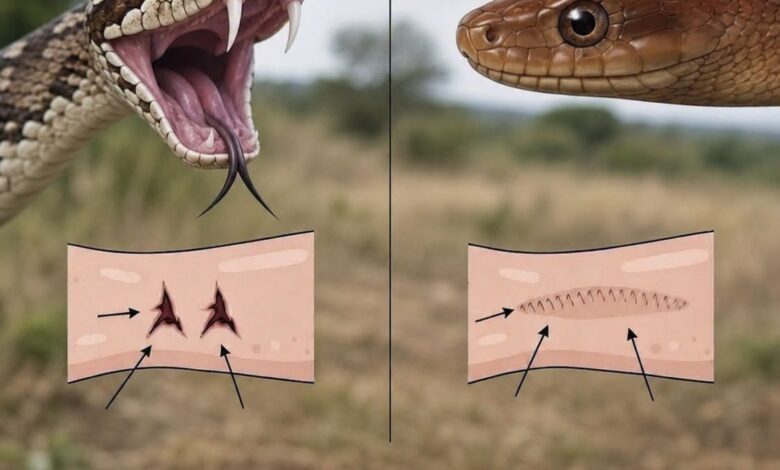
A frightened or injured snake can strike again, creating a second emergency. If you can remember its general appearance from a safe distance, that information may be useful, but identifying the species should never delay treatment or put anyone at additional risk.
Once you are safely away, call emergency medical services or arrange immediate transport to an appropriate medical facility.
Do not wait to see whether symptoms appear.
Some venom effects may develop gradually, and the absence of severe pain immediately after a bite does not guarantee that everything is fine.
Until professionals evaluate the injury, treat a suspected venomous snakebite seriously.
Keep Movement to a Minimum
Fear makes people want to move.
A snakebite is one of those situations where unnecessary exertion is generally the opposite of what you want.
Sit or lie down somewhere safe.
Keep the affected person as calm and still as circumstances allow.
Avoid running or strenuous walking if another safe means of evacuation is available.
The bitten limb should be kept still in a comfortable, neutral position rather than repeatedly moved or manipulated. Follow instructions from emergency dispatchers or local medical professionals about positioning, because first-aid recommendations can vary with the type of snake and region.
If help is coming to you, wait somewhere rescuers can reach you safely.
If you must travel to care, let somebody else drive whenever possible.
Remove Tight Objects Early
Swelling can develop around a venomous bite.
That makes rings, watches, bracelets, tight shoes, and restrictive clothing potentially troublesome.
Remove these items from the affected area before significant swelling develops.
Do it gently.
The objective is not to massage, squeeze, or manipulate the bite.
It is simply to prevent something tight from becoming trapped as the limb enlarges.
Protect the Wound—Don’t Experiment With It
If appropriate and it does not delay evacuation, the area can be gently protected with a clean, loose dressing.
But this is not the moment for aggressive cleaning or home remedies.
Do not scrub deeply.
Do not squeeze the wound.
Do not attempt to force blood or venom out.
And don’t repeatedly handle the bite trying to determine how serious it is.
Medical professionals need to evaluate the injury.
Never Cut the Bite
The old movie image is familiar.
Someone gets bitten.
Another person grabs a knife.
They slice across the fang marks and attempt to drain the venom.
Don’t do it.
Cutting a snakebite can create additional tissue damage, bleeding, contamination, and infection without reliably removing the venom already delivered into the body.
You are transforming one injury into several.
The knife stays away.
Don’t Suck Out the Venom
This is another famous piece of wilderness folklore.
It is not recommended first aid.
Trying to suck venom from the wound does not reliably extract a meaningful amount and can introduce bacteria or cause additional injury.
Commercial suction devices should not be treated as substitutes for proper emergency medical care either.
Once venom has been injected, this is no longer a problem you can solve by pulling something back through two tiny punctures.
Don’t Apply Ice
A snakebite may hurt and swell, making ice seem logical.
But ice or extreme cold can worsen local tissue injury in venomous bites.
Skip the ice pack.
Skip freezing sprays.
Skip attempts to “neutralize” venom with temperature.
Be Extremely Cautious With Tourniquets
A tight tourniquet intended to stop circulation is not routine first aid for snakebite and can cause serious harm.
There are specialized immobilization techniques recommended for certain snake species and circumstances in some parts of the world, but these are not the same thing as tying a belt, rope, or cord tightly around the limb.
Regional differences matter here.
The correct approach to a snakebite in Australia, for example, may differ from recommendations for many North American pit-viper bites.
This is why emergency-dispatch or poison-center instructions are more valuable than remembered survival advice.
Follow local professional guidance.
Do not improvise.
Skip Alcohol and Unnecessary Stimulants
This is not the time for a stiff drink.
Alcohol does not neutralize snake venom.
Neither does coffee or an energy drink.
The patient needs medical assessment, not a home attempt to alter circulation, alertness, or pain.
Avoid unnecessary food, drinks, medications, or substances unless emergency professionals advise otherwise, particularly if severe symptoms are developing or procedures may be required.
Don’t Wait for Dramatic Symptoms
One of the most dangerous thoughts after a bite is:
“I feel okay, so maybe nothing happened.”
Some bites may inject little or no venom.
Others can become serious.
You cannot reliably determine which situation you’re dealing with simply by how frightened you feel or how the wound initially looks.
Symptoms can include pain and swelling, bruising, weakness, nausea, abnormal bleeding, neurological problems, breathing difficulty, or other systemic effects depending on the species and venom.
But you should not wait for that list to begin appearing before seeking help.
The decision to obtain medical evaluation comes first.
The symptoms do not need to earn you permission.
Don’t Waste Time Becoming a Snake Detective
People understandably want to know:
“What bit me?”
Identification can help clinicians in some situations, but attempting to capture the animal is not worth another bite.
If a photograph can be taken safely from a substantial distance without approaching or delaying evacuation, it may potentially be useful.
But don’t make it a mission.
Do not pick up a snake that appears dead.
Do not carry one into an emergency department.
And don’t rely too heavily on your own identification unless you have genuine expertise.
Color and markings can be misleading, particularly during a frightening, fast-moving encounter.
Medical teams can often make treatment decisions using the circumstances, local species, examination, symptoms, laboratory findings, and expert consultation.
Your responsibility is to bring the patient.
Not the snake.
What Happens at the Hospital?
Once the patient reaches medical care, clinicians can monitor the things that cannot be safely evaluated at home.
Vital signs.
Swelling.
Neurological function.
Bleeding abnormalities.
Breathing.
Laboratory values.
Progression of symptoms.
The wound itself.
Not every snakebite requires antivenom.
When clinically indicated, however, antivenom can be a critical treatment for systemic or severe envenomation.
It belongs in professional medical care because treatment decisions depend on the type and severity of envenomation, and antivenom itself can require careful monitoring.
Hospitals can also provide pain management, wound care, respiratory or cardiovascular support, and treatment of complications when necessary.
That is why getting to medical care matters more than performing elaborate first aid.
The Quietest Person May Be Helping the Most
Snakebite scenes can become chaotic.
Someone is frightened.
Other people are shouting instructions.
One person remembers something from a movie.
Another searches online.
Someone wants to find the snake.
Another wants to tie off the limb.
The most useful person may be the one who calmly interrupts all of it.
“Move away from the snake.”
“Sit down.”
“I’m calling for help.”
“Don’t touch the wound.”
“Take that ring off before the hand swells.”
“I’m staying with you.”
Emergency care often begins with preventing additional mistakes.
If the Person Becomes Critically Ill
Follow the emergency dispatcher’s instructions.
If the person becomes unresponsive and is not breathing normally, emergency services can guide appropriate resuscitation measures while help is on the way.
The priorities then become immediate life support.
Again, this is why calling emergency services early matters.
You want professional guidance available before the situation deteriorates, not afterward.
Prevention Is Easier Than Treatment
Most people don’t plan on encountering a snake.
That makes simple habits valuable in places where venomous species occur.
Wear appropriate footwear and long clothing when moving through snake habitat.
Use a flashlight at night.
Be careful when reaching into wood piles, rock crevices, thick vegetation, sheds, or other places you cannot clearly see.
Never deliberately handle a wild snake because you believe you recognize the species.
Teach children to back away rather than investigate.
And remember that snakes generally do not need to be confronted simply because one has been spotted outdoors.
Give the animal space.
Distance prevents bites better than bravery does.
Remember the Priorities
After a suspected venomous snakebite, you do not need to become a wilderness medic.
You need to make a few good decisions.
Get away from the snake.
Call for emergency medical help immediately.
Keep the person calm and minimize unnecessary movement.
Remove rings, watches, and other constricting items before swelling develops.
Protect the injured area without cutting, squeezing, sucking, freezing, or aggressively manipulating it.
Follow local emergency instructions.
And get to appropriate medical care as quickly and safely as possible.
Everything else is secondary.
Snakebite folklore survives because dramatic interventions feel satisfying.
Cutting.
Sucking.
Tourniquets.
Ice.
Chasing the snake.
They create the impression that somebody is fighting the venom.
But good emergency first aid often looks much less dramatic.
A phone call.
A person sitting still.
A ring removed.
A limb protected.
A calm voice.
Transportation already on the way.
Then trained clinicians take over.
That isn’t doing nothing.
It is doing what matters.
Because after a snakebite, the goal isn’t to prove how much survival knowledge you remember.
It’s to avoid turning one dangerous injury into several.
Stay safe.
Get help.
And let medicine—not myth—handle the venom.