I knew something was wrong the moment Ethan reached for his jacket too quickly.
It was such a small movement that another person might not have noticed.
But after years together, you learn somebody’s ordinary rhythms.
How they drop their keys.
Which pocket they use for their phone.
The expression they make when they are about to tell a harmless lie about eating the last cookie.
So when I saw him slip something metallic into his pocket and then turn away from me almost immediately, my mind reacted before reason did.
“What was that?”
“Nothing.”
Nothing.
The most dangerous word in a worried relationship.
Because “nothing” creates space.
And fear loves empty space.
“What do you mean, nothing?”
He shrugged.
“It’s just something from earlier.”
“Can I see it?”
His face changed.
Not dramatically.
A pause.
A little tension around his mouth.
That was enough.
My imagination went to work.
I wish I could say I responded calmly.
I didn’t.
I didn’t accuse him of anything directly, but I started collecting evidence in my head.
He had been staying out later after work.
True.
He had seemed distracted.
Also true.
He had been protective of his phone once or twice.
Maybe true.
There had been evenings when he said he needed some time alone.
Definitely true.
Separate facts began arranging themselves into a story.
The problem was that I had written the ending before I understood the middle.
Something was hidden.
Therefore something was wrong.
Something was wrong.
Therefore it involved me.
That is how anxiety narrows the world.
It makes every unexplained behavior feel personal.
For the rest of the evening, I watched Ethan too closely.
He noticed.
“Are you okay?”
“Fine.”
Now I was the one saying it.
He looked unconvinced.
So was I.
That night, after he fell asleep, I replayed the object in my mind.
Metal.
Small.
Pointed.
Why had he hidden it?
Why had he looked embarrassed?
Why hadn’t he just shown me?
By two in the morning, I had invented possibilities ranging from secret purchases to some bizarre second life I could barely articulate.
None made much sense.
That didn’t stop them.
Fear rarely requires plausibility.
It only requires uncertainty.
The next morning, I asked again.
“What was in your pocket?”
Ethan stopped pouring coffee.
For several seconds, he said nothing.
Then he reached into his jacket.
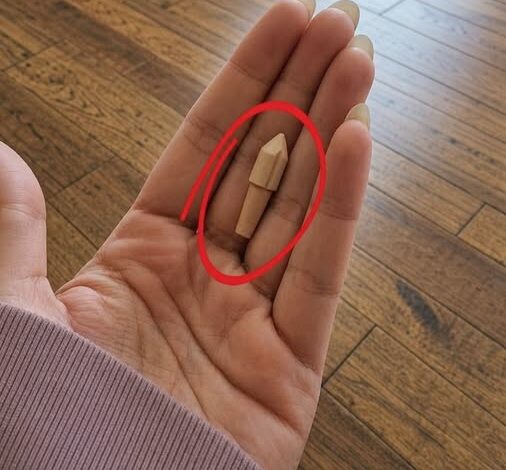
He put the object on the kitchen counter.
I stared at it.
It looked almost disappointingly ordinary.
A short metal point.
Threaded at one end.
“What is that?”
“An archery field point.”
I looked at him.
“A what?”
“It screws into an arrow.”
There was a pause.
“An arrow?”
He nodded.
“You’re doing archery?”
Another nod.
“How long?”
“A few months.”
I should have felt relieved.
Instead, I felt confused.
“Why didn’t you tell me?”
That question changed his expression more than anything else had.
He looked embarrassed.
Not guilty.
Embarrassed.
“I don’t know.”
“Ethan.”
He leaned against the counter.
“I didn’t think you’d get it.”
That stung.
“Get what?”
He picked up the field point and rolled it between his fingers.
“I started going after work.”
“Why?”
He hesitated.
And suddenly I understood that this was the real secret.
Not archery.
Why he needed it.
“You know how I’ve been stressed lately?”
Of course I knew.
Or at least I thought I did.
Work had been grinding him down for months.
Deadlines.
Calls.
A manager who seemed to communicate exclusively through urgency.
He came home tired.
Some nights he talked.
Others he disappeared into silence.
I had interpreted that silence as distance.
Maybe sometimes it was.
But not for the reasons I had imagined.
“I needed something where nobody needed anything from me,” he said.
I stayed quiet.
He continued.
“One of the guys at work mentioned this range. I tried it once.”
“And?”
“And I liked it.”
He gave a small, almost defensive laugh.
“It sounds stupid.”
“No.”
“It kind of does.”
“It doesn’t.”
He looked at me carefully, as though deciding whether to believe that.
Then he described it.
The range.
The targets.
The strange quiet that arrived once he stood on the line.
The routine of placing his feet.
Setting the arrow.
Drawing.
Breathing.
Waiting.
Releasing.
“I can’t think about work while I’m doing it,” he said. “If I’m distracted, I miss.”
For someone whose mind had spent months ricocheting between obligations, that concentration had become relief.
One target.
One breath.
One shot.
Nothing else.
I felt something inside me soften.
Not entirely.
There was still a question.
“Why keep it from me?”
He stared down at the counter.
“Because it felt private.”
That answer surprised me.
Not secret.
Private.
There is a difference I had forgotten.
Relationships create intimacy, but intimacy does not require every corner of a person to become shared property.
People still need places inside themselves that are theirs.
A hobby.
A thought.
A ritual.
A way of recovering from the day before rejoining the world.
Ethan had found one.
And because he hadn’t immediately invited me into it, I had mistaken the closed door for evidence of betrayal.
“I thought you’d think it was weird,” he admitted.
“Why?”
He shrugged.
“Middle-aged guy shooting arrows after work because breathing exercises on an app make him angry.”
I laughed before I could stop myself.
He looked offended.
“See?”
“No. I’m laughing because the breathing app part sounds exactly like you.”
He smiled reluctantly.
That was the first moment the tension broke.
Then he surprised me again.
“Do you want to come?”
“To the range?”
“Yeah.”
I almost said no.
Not because I didn’t want to see it.
Because part of me understood this had been his place.
I didn’t want my curiosity to become another invasion.
“You don’t have to show me.”
“I know.”
“Are you sure?”
He nodded.
“I want you to understand.”
So that Saturday, I went.
The archery range looked nothing like the dramatic version my imagination produced when I heard the word.
No medieval fantasy.
No heroic music.
Just lanes, targets, equipment, safety rules, people concentrating.
Ethan changed when he stepped onto the line.
That was the part I remember most.
His shoulders dropped.
His breathing slowed.
The restless energy he carried at home seemed to drain out of him.
He picked up the bow with familiarity.
Not expert confidence.
Comfort.
There is a difference.
He showed me the arrows.
The field points.
How the parts fit together.
The mysterious piece of metal that had kept me awake was suddenly just hardware.
I felt ridiculous.
But not because I had worried.
Because of how complete the story in my head had become.
I had moved from:
I don’t know what that is
to:
Something is wrong between us
without collecting a single fact in between.
Ethan drew the bow.
Held.
Released.
The arrow struck the target.
Not the center.
Close enough.
He exhaled.
And I saw it.
The calm.
This wasn’t some hobby he had chosen because he wanted another thing to own.
It was a ritual.
A reset.
The body required enough concentration that the mind finally stopped wandering.
I thought about all the evenings he had come home afterward.
He had seemed quieter.
I had sometimes interpreted that as withdrawal.
Maybe it had been peace.
That possibility was humbling.
We are not always reliable translators of the people we love.
We see behavior.
Then we attach meaning.
They are silent, therefore angry.
They want space, therefore pulling away.
They protect something private, therefore hiding something dangerous.
Sometimes we’re right.
Sometimes we are simply afraid.
Ethan handed me the bow.
“Your turn.”
I looked at him.
“No chance.”
“You came all this way.”
“I came to observe.”
“You’ve been observing me for years. Try something new.”
So I did.
Badly.
My first arrow landed far enough from the center that Ethan made the mistake of laughing.
“Oh, that’s funny?”
“A little.”
My second was better.
By the fourth, something happened.
Not enlightenment.
Not hidden talent.
Just concentration.
The moment before release demanded enough attention that everything else disappeared.
I understood.
Only for a few seconds.
But I understood.
On the drive home, we talked more honestly than we had in weeks.
I told him what I had imagined.
Not every absurd detail.
I preserved some dignity.
But enough.
He looked genuinely shocked.
“You thought I was hiding another relationship?”
“I didn’t know what I thought.”
“Yes, you did.”
“Fine. My brain went places.”
He was quiet.
Then he said:
“You could have asked.”
“I did.”
“You interrogated.”
That was fair.
There is a difference between asking for information and demanding reassurance for a story you’ve already decided is true.
I had approached him as though he needed to prove innocence.
That made vulnerability harder.
He admitted something too.
He should have told me more.
Not because I was entitled to every detail of his private life.
Because repeatedly saying “nothing” when something clearly mattered invited mistrust.
Privacy doesn’t require deception.
He could have said:
“It’s something from a hobby I’ve been trying. I’m not ready to talk about it yet.”
I might not have loved that answer.
But it would have been honest.
That became one of the quiet lessons we took home.
Ask before assuming.
But also speak before silence becomes misleading.
Trust requires both.
The experience made me reconsider what closeness actually means.
I used to think intimacy meant knowing everything.
Every worry.
Every plan.
Every thought.
Every password.
Every corner.
But maybe genuine intimacy includes respecting the fact that another person remains another person.
Love doesn’t dissolve individuality.
It makes individuality safer to reveal.
Ethan didn’t need me to become an archer.
He didn’t even need me at the range every week.
He needed to know that when he showed me something slightly strange, slightly vulnerable, slightly difficult to explain, I wouldn’t immediately turn it into evidence against him.
And I needed to know that when something changed in his life, he wouldn’t hide behind vagueness until my imagination filled the silence.
Those needs could coexist.
Months later, archery became ordinary.
Ethan still went after work occasionally.
Sometimes I joined him.
Usually I didn’t.
There were evenings when he would come through the door carrying his gear and I would ask:
“Good session?”
“Terrible.”
“Work?”
“No. I just couldn’t hit anything.”
Then we’d eat dinner.
That was all.
The mysterious world I once feared had become one more detail in the person I loved.
And there was something strangely comforting about discovering, after years together, that I still didn’t know everything about him.
Long relationships can create the illusion that surprise means danger.
We think:
If I really know this person, nothing should catch me off guard.
But human beings continue changing.
They develop new interests.
Private fears.
Different ways of coping.
Unexpected friendships.
New dreams.
Knowing someone deeply does not mean completing them like a puzzle.
It means staying curious while they continue becoming.
That is what the field point eventually came to represent for me.
Not secrecy.
Curiosity.
A small reminder that incomplete information should remain incomplete until we know more.
Fear wants to finish the sentence.
Trust is sometimes willing to leave a blank.
Not forever.
Just long enough to ask:
“What does this mean to you?”
Instead of:
“What does this mean about me?”
That distinction saved us from a much larger argument.
Perhaps from several.
Because once I noticed the pattern, I saw how often I centered myself in Ethan’s moods.
If he was quiet, what had I done?
If he was distant, what was wrong with us?
If he wanted time alone, why didn’t he want me?
Sometimes the answer had nothing to do with me.
That wasn’t rejection.
It was reality.
The person you love has an interior life you do not control.
They had one before you.
They will have one while loving you.
Healthy closeness isn’t about eliminating that private space.
It is about making sure privacy and trust can survive beside each other.
I still have moments when my imagination outruns evidence.
I’m human.
Ethan still sometimes says “nothing” when he clearly means something.
He’s human too.
But now one of us usually catches it.
“What story are you telling yourself?”
We ask that sometimes.
It sounds slightly ridiculous.
It works.
Because stories are powerful.
The one I originally told myself about the object in Ethan’s pocket was built entirely from fear.
The truth was much quieter.
A tired man had discovered that drawing a bow helped him breathe.
He was embarrassed by how much he needed it.
So he kept it to himself.
That was all.
And yet discovering that small truth changed the way I saw him.
Not because archery revealed some dramatic hidden identity.
Because it reminded me that even the people closest to us contain rooms we haven’t entered.
Sometimes those rooms hold something frightening.
Sometimes they hold a target, a bow, a handful of arrows, and a little peace.
The only way to know is to stop standing outside inventing what might be behind the door.
Ask.
Listen.
Then let the answer be what it is.
That day at the range, I watched Ethan draw another arrow.
His breathing slowed.
His posture settled.
The bowstring tightened.
Then release.
The arrow moved too quickly for my eyes to follow.
A second later, it landed near the center.
Ethan smiled.
Not the public smile.
Not the reassuring one.
The small, satisfied expression of someone who had found exactly what he came looking for.
I realized I had spent weeks worrying that he was building a life away from me.
He wasn’t.
He was building a quiet place inside himself so he could return to our life steadier.
The difference was everything.
We left the range with no dramatic promise that we would never misunderstand each other again.
That would have been dishonest.
Instead, we carried home something more useful.
A new rule.
When something feels mysterious, don’t immediately make it dangerous.
Ask first.
Because sometimes the thing hidden in someone’s pocket isn’t evidence that love is ending.
Sometimes it’s simply a tiny piece of the person they’re still becoming.
And being invited to understand that person again can be its own kind of intimacy.