Mary Trump wasn’t laughing.
While social media zoomed in on photographs, traded jokes about Donald Trump’s unusually full-looking hair, and debated whether the change involved styling, extensions, a hairpiece, or something else entirely, Mary saw something different.
She saw a memory.
And for her, it wasn’t funny.
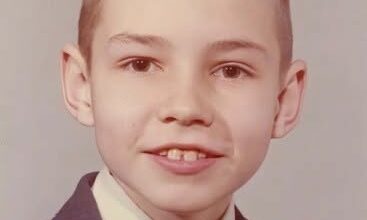
It reminded her of Fred Trump Sr., her grandfather and Donald Trump’s father, whose later years included dementia and an eventual Alzheimer’s diagnosis.
That family history gives Mary’s interpretation an emotional weight that internet jokes don’t carry.
But it also requires an important distinction.
A relative recognizing a familiar pattern is not the same thing as a physician making a diagnosis.
A hairstyle cannot diagnose dementia.
Neither can a photograph.
Still, Mary’s concern wasn’t really about hair.
It was about what she believed the hair represented.
She remembered watching her grandfather change.
Fred Trump Sr. had spent much of his life projecting control.
He was a successful real-estate developer, a family patriarch, and a man deeply invested in appearances.
Then age began taking things away.
According to Mary’s recollections, his relationship with his appearance became increasingly unusual as his cognitive condition deteriorated.
Details that might sound comic when separated from their context weren’t funny to her because she remembered the person attached to them.
The hair dye.
The mustache.
The toupee.
The increasing preoccupation with correcting what the mirror showed him.
To an outsider, those details could become family anecdotes.
To someone watching a loved one decline, they could feel like mile markers.
That is the lens through which Mary says she looks at her uncle now.
Donald Trump’s hair has been part of his public identity for decades.
Long before politics, comedians joked about it.
Television cameras studied it.
Interviewers asked about it.
Trump himself has repeatedly demonstrated an awareness of how he looks on camera.
So a change in his hairstyle does not, by itself, establish anything about his neurological health.
People change hairstyles.
They use different products.
They receive cosmetic treatments.
Lighting changes appearances.
Photographs distort.
Hair changes with age.
There are countless ordinary explanations.
Mary’s argument is not that fuller hair equals dementia.
Her argument is personal.
She believes she has seen a similar pattern before.
That difference matters.
When you’ve watched someone you love experience cognitive decline, seemingly insignificant behaviors can acquire enormous meaning.
A repeated question.
A misplaced object.
A forgotten name.
An unusual fixation.
A personality change.
Something everyone else dismisses as eccentric may terrify the family member who remembers what happened last time.
That’s what makes Mary’s reaction so different from the memes.
The internet sees novelty.
She sees repetition.
And repetition inside a family can be frightening.
Imagine watching your grandfather slowly lose pieces of himself.
Then, decades later, noticing something in his son that reminds you of those years.
You might be wrong.
You might be overinterpreting.
Memory itself may influence what similarities you notice.
But emotionally, the association can still be powerful.
That is why Mary’s warning deserves to be understood accurately rather than exaggerated.
She can speak about what she witnessed in her grandfather.
She can describe similarities she believes she sees in her uncle.
She can express concern.
What she cannot establish from a hairstyle is a medical diagnosis.
No commentator can.
Dementia is not one disease.
It is a broad term covering significant cognitive decline that can have different causes.
Alzheimer’s disease is one cause.
Proper evaluation involves medical history, cognitive assessment, functional changes, and sometimes laboratory testing, imaging, or other clinical investigation.
Hair is not on the diagnostic checklist.
Neither is vanity.
Neither is bad styling.
And that distinction becomes especially important when the person being discussed is a political figure.
Donald Trump is not merely Mary’s uncle.
He is one of the most scrutinized political figures in the world.
Questions about a political leader’s cognitive fitness are legitimate when grounded in meaningful evidence because the responsibilities of high office are enormous.
But those questions can easily become partisan entertainment.
Every verbal stumble becomes a diagnosis.
Every photograph becomes proof.
Every unusual gesture becomes a symptom.
Opponents see confirmation.
Supporters see propaganda.
Actual medicine disappears somewhere between them.
That helps nobody.
If concerns exist about a leader’s cognitive health, the strongest case comes from credible medical evaluation and documented patterns of functioning—not speculation about hair.
Mary’s perspective is more interesting when understood psychologically rather than diagnostically.
She is describing recognition.
Her grandfather’s decline apparently changed the way she interprets certain behaviors within her family.
What strangers see as vanity, she may see through the memory of illness.
That doesn’t make her interpretation medically conclusive.
It explains why she takes it seriously.
And vanity itself is a complicated subject in the Trump family story.
Donald Trump built much of his public identity around winning, strength, wealth, youthfulness, and dominance.
His appearance became part of the brand.
The suits.
The tan.
The hair.
The carefully constructed visual language of success.
For someone whose identity depends heavily on projecting strength, aging creates an unavoidable conflict.
The mirror changes even when the brand doesn’t want to.
Hair thins.
Skin changes.
Bodies slow down.
Faces age.
This happens to everyone fortunate enough to live long enough.
People respond differently.
Some accept it.
Some fight it.
Some dye their hair.
Some pursue cosmetic procedures.
Some obsess.
None of those reactions automatically indicates cognitive disease.
They can indicate something much simpler:
Nobody enjoys watching time become visible.
For a public figure, that pressure is amplified.
Millions of photographs are taken.
Every unflattering angle travels instantly.
A minor change becomes a trending topic.
A new hairstyle becomes international commentary.
Imagine living under that microscope at any age.
Now imagine doing it while your political opponents are actively searching for evidence that you are physically or mentally diminished.
Appearance becomes strategy.
That alone could explain extraordinary attention to grooming.
But Mary’s concern goes deeper because of the family history she carries.
Fred Trump Sr.’s illness isn’t an abstract statistic to her.
It belongs to childhood rooms and family memories.
She remembers what decline looked like before everyone else knew how to name it.
And family members often remember illness through strange details.
Not only diagnoses.
Objects.
Habits.
Expressions.
Clothing.
Food.
The way someone held a newspaper.
The question they suddenly started asking repeatedly.
The thing they became strangely obsessed with.
Memory stores decline in fragments.
For Mary, appearance may be one of those fragments.
That is why laughing at her concern misses part of what she is saying.
She’s not simply participating in another round of jokes about Donald Trump’s hair.
She’s connecting a present image with an old family fear.
Still, family experience can cut both ways.
It can make someone sensitive to genuine warning signs.
It can also make them more likely to interpret ambiguous behavior through the framework of a previous illness.
Anyone who has watched a parent develop dementia may recognize this instinct.
You forget a word.
Suddenly you wonder.
You misplace your keys.
You remember your mother doing the same thing.
You walk into a room and forget why.
For one frightening second, ordinary forgetfulness becomes inheritance.
But resemblance is not diagnosis.
That principle applies whether we’re talking about ourselves, relatives, celebrities, or presidents.
Family history can affect risk for some conditions.
It does not make every similarity destiny.
And cosmetic choices remain especially weak evidence.
Suppose Donald Trump appeared tomorrow with completely different hair.
Short.
Gray.
Unstyled.
Would that prove his cognition had improved?
Obviously not.
Then fuller hair cannot logically prove the opposite.
That’s a useful test whenever appearance-based speculation begins masquerading as medical analysis.
Ask whether reversing the appearance would reverse the diagnosis.
If the answer is no, the evidence probably isn’t diagnostic in the first place.
There is another danger in turning dementia into an insult.
Cognitive disease is not a punchline.
Millions of families live through it.
They watch people they love lose memories, independence, language, judgment, and sometimes recognition of the people closest to them.
They manage medications.
Appointments.
Safety.
Finances.
Confusion.
Fear.
Repeated conversations.
Eventually, some have to make devastating decisions about care.
When “demented” becomes shorthand for “politician I think behaves badly,” those experiences get flattened into partisan mockery.
Someone can be dishonest without dementia.
Someone can be narcissistic without dementia.
Someone can make terrible decisions while cognitively intact.
Someone can stumble over words without having Alzheimer’s disease.
And someone with genuine cognitive impairment deserves medical evaluation, not ridicule.
Those distinctions should survive politics.
Mary’s family history actually underscores why.
She knows that behind a diagnosis is not a meme.
It’s a family.
Fred Trump Sr. was a powerful businessman.
Then he became an elderly man experiencing serious cognitive decline.
Whatever one thinks about him historically, illness eventually reduces status to something brutally human.
Money cannot negotiate with memory.
Influence cannot order the brain to remain unchanged.
Family members are left watching.
That may be the real shadow hanging over Mary’s comments.
Not Trump’s hairstyle.
Mortality.
Aging.
Inheritance.
The possibility of watching history repeat itself inside your own family.
Those fears are universal even when the family involved is famous.
There is something unsettling about recognizing your parents in yourself as you age.
The same expressions.
The same posture.
The same habits.
Then sometimes the same illnesses.
For Mary, seeing her uncle may also mean seeing traces of her grandfather.
That doesn’t make every resemblance medically meaningful.
It makes the resemblance emotionally charged.
The responsible response is therefore neither:
“Mary proved Trump has dementia.”
Nor:
“She’s ridiculous because she’s talking about hair.”
Both interpretations oversimplify what she is actually describing.
Her observation can be taken seriously as a family member’s concern while remaining clearly separated from medical fact.
That distinction becomes even more important because political incentives reward certainty.
Nuance doesn’t travel as quickly as accusation.
“Relative notices something that reminds her of grandfather’s decline but cannot know whether it has medical significance” isn’t an irresistible headline.
“Trump’s hair proves dementia” is.
But the first statement is much closer to what can responsibly be concluded.
The internet rarely rewards that restraint.
It rewards before-and-after photographs.
Circles.
Arrows.
Slow-motion clips.
Confident captions.
People begin diagnosing strangers from pixels.
The same phenomenon happens with countless public figures.
A bruise becomes a terminal disease.
A tremor becomes Parkinson’s.
Weight loss becomes cancer.
A stumble becomes dementia.
Sometimes later information gives context.
Often it doesn’t.
The speculation simply disappears when the next photograph arrives.
For the person being discussed, however, health is real.
That is why visible clues should be treated as questions rather than verdicts.
Has there been a meaningful change?
Is there reliable evidence?
What have qualified clinicians reported?
Are there documented changes in functioning?
Could there be ordinary explanations?
Those questions are less exciting.
They’re also far more useful.
Mary’s comments raise another question that goes beyond Donald Trump entirely:
What do we owe aging leaders?
Not protection from legitimate scrutiny.
The public has a serious interest in whether people holding enormous power remain capable of performing their duties.
But scrutiny should be rigorous.
If cognitive fitness matters, then demand meaningful evidence.
Transparent medical information where appropriate.
Serious journalism.
Careful observation of sustained functional patterns.
Not amateur neurology based on a hairstyle.
That standard should apply regardless of party.
Otherwise, cognitive health becomes just another weapon deployed selectively against whichever elderly politician someone dislikes.
And then nobody learns anything.
Perhaps the most revealing part of Mary’s reaction is that she isn’t primarily fascinated by whether the hair is real.
The internet wants to solve the cosmetic mystery.
Wig?
Weave?
Extensions?
Styling?
She is asking a different question.
Why does this remind me so strongly of something I’ve already lived through?
That question belongs to memory more than medicine.
And memory can be powerful without being diagnostic.
Maybe Donald Trump’s hairstyle means nothing beyond grooming.
Maybe his appearance reflects the ordinary vanity of a famously image-conscious man.
Maybe Mary sees genuine behavioral similarities that concern her.
Those possibilities can coexist until stronger evidence resolves them.
We don’t have to pretend certainty where certainty doesn’t exist.
In fact, refusing premature certainty may be the most important lesson.
Families dealing with dementia learn how much can remain uncertain.
Was that forgetfulness normal aging?
Was that strange behavior meaningful?
When did the illness actually begin?
Which moment was the first sign?
Often, only hindsight creates a clean story.
While you’re living through it, the picture is messier.
Mary has hindsight about her grandfather.
She does not have hindsight about her uncle.
That difference is everything.
So perhaps the photographs should not make us laugh quite so quickly.
But neither should they make us diagnose.
They can remind us of something more uncomfortable.
Powerful people age.
Famous people age.
Presidents age.
Family patriarchs age.
Bodies change.
Brains can change.
And eventually even people who spend their lives constructing an image discover that there are parts of aging no image can permanently control.
Mary Trump looks at her uncle’s appearance and sees an echo of her grandfather.
Whether that echo has medical significance is a question photographs cannot answer.
But the fear behind her reaction is understandable.
She has watched decline enter this family before.
Now she believes she recognizes something familiar.
She may ultimately be right about some concerns.
She may be wrong.
Only credible evidence can settle questions about cognitive health.
Until then, Donald Trump’s hair remains exactly that:
hair.
The family history is real.
The concern is real.
The diagnosis is not ours to make.