He Called Her Emergency a “Heavy Period”—Then Came Home to an Empty Bassinet and a Police Recording..

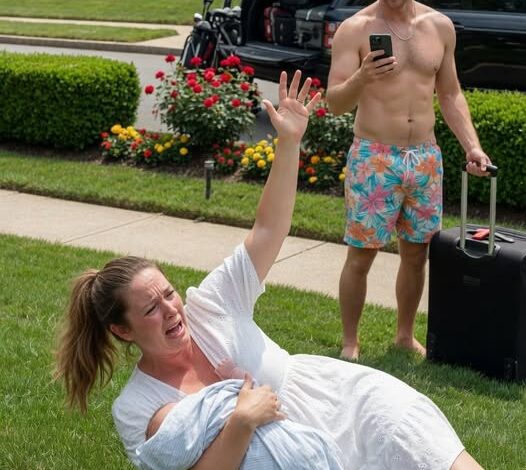
Mark Vance returned from his birthday getaway sunburned, relaxed, and carrying a luxury shopping bag with a designer watch boxed carefully inside.
He expected the kind of silence he usually enjoyed after ignoring responsibility — a spotless house, sleeping baby, and a wife too emotionally drained to challenge him about disappearing for the weekend.
Instead, he opened the front door to flashing police lights reflecting against the hallway walls, two officers standing near the staircase, and a nursery that smelled faintly of bleach and dried blood.
The cream-colored carpet beneath the rocking chair had been cut away in sections.
The bassinet was empty.
And for the first time in years, Mark looked genuinely afraid.
Three days earlier, he had left his postpartum wife bleeding on the nursery floor while he drove toward a mountain resort to celebrate his birthday. During those same three days, he uploaded smiling videos of steak dinners, whiskey toasts, cigar lounges, and balcony selfies captioned with phrases about “peace,” “freedom,” and “finally choosing himself.”
By the time he returned home, investigators had already watched every second of it.
But the story that would soon explode across social media did not begin with police officers or evidence bags.
It began ten days after Elara gave birth to their son, Leo, when her body started quietly failing while her husband decided her suffering was inconvenient.
That Friday morning, Elara sat on the nursery floor gripping the side of the crib because standing had suddenly become difficult. Her hospital discharge papers lay unfolded nearby, stained at the corners from how often she had reread the warning signs.
Heavy bleeding.
Dizziness.
Weakness.
Fainting.
Seek immediate medical attention.
She knew something was wrong.
The blood loss was getting worse, not better.
Leo whimpered softly from the bassinet beside her, hungry and restless in the way newborns are, unaware that his mother was trying desperately not to collapse in front of him.
Mark entered the nursery already dressed for his birthday trip, expensive sweater perfectly fitted, overnight bag slung over one shoulder, car keys spinning around his finger casually like he was late for a golf weekend instead of preparing to abandon a medical emergency.
Elara tried explaining through shaking breaths that she needed help.
Not later.
Not after the trip.
Now.
She told him she couldn’t stand properly anymore.
Mark barely looked away from the hallway mirror while adjusting his collar.
According to the baby monitor audio investigators later recovered, his voice remained calm — almost annoyed — while she struggled to stay conscious.
“Stop being a drama queen, Elara. It’s my birthday. I’m not letting your heavy period ruin the vibe.”
That sentence would spread across the internet within days.
People replayed it with disbelief.
With fury.
With horror.
Some called it narcissism.
Others called it emotional abuse.
Many said it sounded like the exact moment love stopped being recognizable.
Elara begged him to call an ambulance.
She told him she was scared.
Mark dismissed her immediately, saying postpartum bleeding was normal and accusing her of overreacting because she didn’t want him leaving for the weekend. He even referenced his own mother, insisting she had multiple children “without acting like this.”
The cruelty wasn’t just what he said.
It was how ordinary he made her suffering sound.
As though collapsing after childbirth was merely bad timing for his birthday plans.
The nursery around them looked almost painfully beautiful in retrospect: pale wooden shelves lined with folded blankets, soft white curtains, stuffed animals arranged perfectly for photos, designer wallpaper chosen carefully for social media posts announcing Leo’s arrival.
It was a room designed to look peaceful online.
Not a room prepared for a woman hemorrhaging while her husband checked resort reservations.
Leo started crying louder when Mark raised his voice.
Elara tried reaching toward the bassinet instinctively, but her hand slipped against the rug and she fell sideways into the rocking chair hard enough to knock diapers and wipes across the floor.
The baby monitor captured everything:
Leo crying,
Elara gasping,
drawers opening,
objects falling,
Mark sighing in irritation.
Then he said something investigators would later describe as emotionally devastating in its indifference:
“Don’t call me unless the house is actually on fire.”
Seconds later, the front door slammed.
Then came the sound of his sports car disappearing down the driveway toward the mountains.
And suddenly, the nursery became terrifyingly quiet.
Elara later described that silence as the exact moment she realized she could genuinely die there.
Not because help was unavailable.
Because the person closest to her chose not to care enough to get it.
She tried crawling toward her phone on the changing table, dragging herself weakly across the carpet while her vision blurred at the edges. Her legs no longer responded properly. Her fingers shook so badly she knocked baby bottles and folded clothes onto the floor trying to reach the table.
When she finally got hold of the phone, the screen lit up with a notification.
Not emergency services.
Mark’s social media story.
He was already at the resort balcony laughing with friends, holding a drink in one hand while joking about “high-maintenance wives.”
“Sometimes,” he said into the camera with a grin, “you just gotta choose yourself.”
Those words would later become almost impossible for the public to forget.
Elara tried unlocking the phone to call for help, but the numbers blurred together. Blood smeared faintly across the screen from her trembling fingers.
Leo’s cries became weaker beside her.
She whispered his name once.
Then everything faded white.
The next seventy-two hours would later be reconstructed minute by minute through security cameras, phone records, baby monitor audio, and witness statements.
At 9:26 a.m., Mark’s car left the driveway.
At 9:31, his first resort video uploaded.
At 9:44, the monitor recorded Elara attempting to speak again.
At 10:02, Leo cried continuously for several minutes before becoming quieter from exhaustion.
Then, around 10:18, next-door neighbor Mrs. Alvarez heard what sounded like furniture crashing inside the house.
She would later tell investigators she almost ignored it.
Young parents make noise.
Babies cry.
People argue.
She didn’t want to intrude.
That hesitation nearly became fatal.
By late morning, she noticed the crying hadn’t stopped.
She called Elara’s phone twice.
No answer.
Then she walked across the lawn and knocked on the front door herself.
Behind the door, she could hear Leo crying weakly inside.
The house remained locked.
So she called emergency services.
Paramedics forced entry minutes later and found Elara unconscious beside the rocking chair, dangerously pale from blood loss, while Leo lay dehydrated but alive in the bassinet nearby.
Doctors later confirmed she was suffering from severe postpartum hemorrhaging and shock.
Another delay could have killed her.
Mark, meanwhile, remained unreachable.
His phone stayed on Do Not Disturb exactly as he promised before leaving.
Hospital staff called repeatedly.
Police called repeatedly.
Elara’s sister Mara called repeatedly.
Nothing.
Yet his social media accounts stayed active the entire weekend.
Videos kept appearing:
Mark laughing over expensive dinners,
Mark smoking cigars beside mountain views,
Mark joking about finally relaxing away from “stress.”
One clip showed him buying the luxury watch he proudly carried home afterward.
That watch quickly became symbolic online.
People said he valued time more on his wrist than in his wife’s body.
By Monday morning, investigators had already reviewed the baby monitor recording alongside Mark’s public posts.
When he finally returned home just after 11 a.m., he walked inside humming casually, shopping bag swinging at his side.
The security camera captured him smiling while unlocking the front door.
He called Elara’s name once lightly, then again with irritation when nobody answered.
He walked past untouched baby bottles in the kitchen.
Past Elara’s cold coffee mug still sitting beside the sink.
Past folded laundry abandoned mid-task before she collapsed.
Then he reached the nursery doorway.
And stopped.
The bassinet was empty.
The carpet was stained dark beneath the rocking chair.
The room smelled sterile in the unmistakable way recently cleaned trauma scenes do.
The shopping bag slipped from his hand.
Behind him, an officer quietly said his name.
Mark turned immediately, demanding to know where his wife and son were.
The officer told him Leo was alive.
She paused before mentioning Elara.
That pause changed his face completely.
For the first time, there was no performance left.
Investigators played the baby monitor recording for him right there in the hallway.
“Stop being a drama queen, Elara.”
They let him hear Leo crying.
Let him hear Elara begging.
Let him hear the front door slam.
Then they showed him his own resort video playing on Elara’s phone while she tried to stay conscious on the nursery floor.
That moment transformed the situation from marital tragedy into evidence.
Mark insisted he didn’t realize it was serious.
Police asked why he ignored her when she explicitly begged for a hospital.
He claimed she had always been emotional.
Investigators pointed toward the discharge papers warning about hemorrhaging lying unfolded beside the changing table.
He said he thought she was exaggerating.
Then officers asked the question he could not answer:
Why turn your phone off for three days after leaving a postpartum woman alone with a newborn?
Silence followed.
Then his mother called.
Her voice exploded through speakerphone before he could lower it.
“Tell me this isn’t true, Mark. Tell me you didn’t leave that girl dying on the floor.”
The hallway went completely still.
For years, Mark had used stories about his mother’s “strength” to dismiss Elara’s pain.
Now even his mother sounded horrified by him.
Investigators later uncovered texts Mark had sent friends before the trip complaining Elara might “fake some emergency” to ruin his birthday plans.
That discovery intensified public outrage dramatically.
Because it proved something important:
he had prepared himself not to believe her before she even asked for help.
At the hospital, Elara woke slowly and immediately asked for Leo before anything else.
When Mara told her he was safe, she cried so hard nurses had to calm her breathing.
Later, police explained what they found.
Elara listened quietly.
Then she said a sentence investigators never forgot:
“He heard me.”
Not “he misunderstood.”
Not “he didn’t know.”
“He heard me.”
That line became the emotional center of the case.
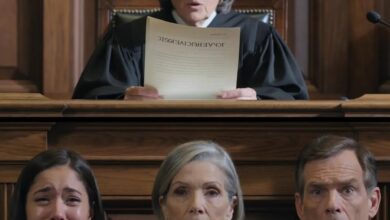
The legal process moved quickly because the evidence was unusually direct. Prosecutors explored charges connected to criminal neglect and reckless endangerment while Mark’s attorney argued he was not medically trained and could not have diagnosed postpartum hemorrhaging himself.
The public response was immediate.
Nobody expected him to diagnose it.
They expected him to call someone who could.
Doctors, nurses, and mothers flooded social media explaining how often women’s postpartum pain gets minimized until it becomes life-threatening. Men also spoke publicly, saying Mark’s behavior reflected entitlement, not confusion.
The conversation expanded far beyond one marriage.
People debated how often women are taught to endure suffering quietly.
How many emergencies get dismissed as “dramatic.”
How many men demand children while avoiding responsibility once care becomes inconvenient.
Mark’s friends disappeared from his online comments almost overnight.
The resort quietly removed photos showing him in the background.
His employer released a carefully worded statement distancing itself from the controversy.
But the internet remembered everything.
Screenshots spread everywhere:
Mark raising a whiskey glass beside the caption “choose yourself.”
Photos of the nursery sealed with evidence tape.
The smiling birthday videos uploaded while Elara fought to survive.
The contrast horrified people.
Weeks later, Elara finally released a public statement.
It was brief.
She thanked Mrs. Alvarez, the paramedics, the doctors, and her sister.
Then she wrote one sentence that spread across social media faster than any of Mark’s videos ever had:
“Love is measured by who answers when you say you cannot stand.”
People printed it onto posters.
Shared it in videos.
Sent it privately to daughters, wives, sisters, and friends.
Because beneath the scandal, that was the truth people recognized most painfully.
Not every abandonment looks dramatic.
Sometimes it looks like a husband walking out for a birthday weekend while convincing himself his wife is exaggerating.
Sometimes it looks like silencing a phone.
Sometimes it looks like laughter echoing from a resort balcony while a newborn cries beside his unconscious mother at home.
Elara eventually moved out of the house permanently.
She said she didn’t want Leo learning to walk across floors where she nearly died unheard.
The nursery was dismantled slowly afterward.
The cream rug removed as evidence.
The carefully curated perfection stripped away piece by piece.
Mark’s expensive birthday watch was logged among his belongings after the investigation intensified.
Online, people turned it into a bitter metaphor:
He bought himself time while stealing hers.
Months later, Elara spoke once more about what she wanted Leo to understand when he became old enough to hear the story.
Not hatred.
Not revenge.
She wanted him to remember the neighbor who listened.
The doctors who moved quickly.
The sister who came immediately.
The strangers who helped save his mother.
And she wanted him to know one final truth:
Love does not require medical expertise to recognize a plea for help.